

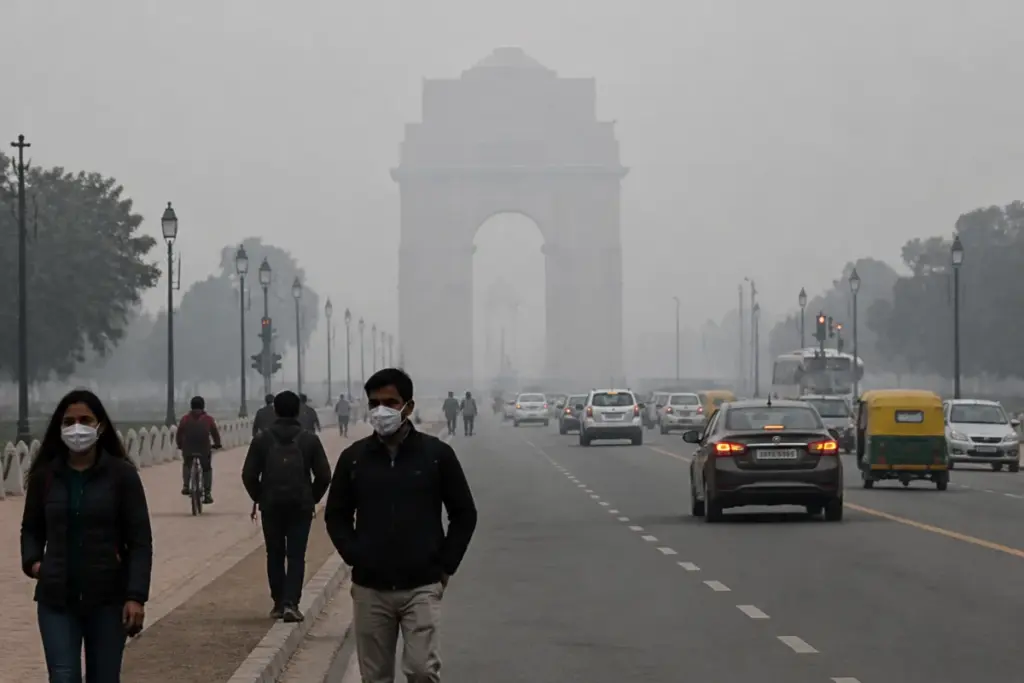
Delhi AQI entered the poor category on October 21, 2026, prompting the Commission for Air Quality Management (CAQM) to impose Stage 1 of the Graded Response Action Plan (GRAP) across Delhi-NCR. The measures restrict open burning, certain vehicles, construction activity, industrial emissions and the routine use of diesel generators.
The air quality index in Delhi-NCR moved into the 201-300 range, classified as ‘poor’. The deterioration came as a layer of smog covered parts of the capital, including the area around India Gate. Delhi recorded a minimum temperature of 18 degrees Celsius on Wednesday, below the seasonal average, while air quality remained in the poor category.
Under Stage 1, the public burning of biomass and municipal solid waste is prohibited. Hotels, restaurants and open eateries cannot use coal or firewood as fuel in tandoors. Gas-based, electric or other clean-fuel appliances are permitted instead. The plan also restricts the plying of overaged diesel and petrol vehicles and requires action against visibly polluting vehicles, including possible impounding and penalties.
Trucks that do not have a destination within Delhi are barred from passing through the capital and are to be diverted through the Eastern and Western Peripheral Expressways. Inter-city and inter-State buses from Haryana, Uttar Pradesh, Rajasthan, Punjab, Himachal Pradesh, Madhya Pradesh, Uttarakhand and Jammu and Kashmir cannot operate in Delhi-NCR unless they are electric, CNG-powered or use BS-VI-approved diesel.
Construction and demolition projects on plots measuring 500 square metres or more cannot operate unless they are registered on the relevant State government portal and meet dust-monitoring requirements. Construction waste must be transported in covered vehicles and stored in covered environments. The measures are intended to address dust from building activity, one of the urban sources covered under the graded response system.
CAQM has also directed strict action against illegal or non-compliant industrial units and industries operating in non-conforming areas. Industries, brick kilns and hot-mix plants must follow emission standards and use approved fuels. Thermal power plants within a 300-km radius of Delhi are required to enforce emission norms, with action against units that fail to comply.
The GRAP measures include stricter enforcement of Pollution Under Control certificates and traffic management to reduce idling and congestion. Diesel generators cannot be used as a regular power source. Generators running on LPG, natural gas, biogas, propane or butane face no restrictions under the listed provisions, while older diesel generator sets are subject to capacity, emission-system and dual-fuel requirements.
Restricted diesel generators may be used for specified emergency services, including lifts and escalators, hospitals and other medical facilities, railway services, Delhi Metro-related services, airports, inter-State bus terminals, sewage treatment plants, water-pumping stations, national-security projects and telecommunications or data services.
CAQM has advised residents to monitor air quality through the SAMEER application and check the GRAP stage on its website. Citizens have also been asked to keep vehicles properly tuned, maintain tyre pressure, avoid idling, keep PUC certificates current, use public transport or pooled vehicles, segregate waste and report polluting activities through the 311, Green Delhi and SAMEER applications. The restrictions will remain subject to the air-quality conditions and the GRAP framework in force.


