

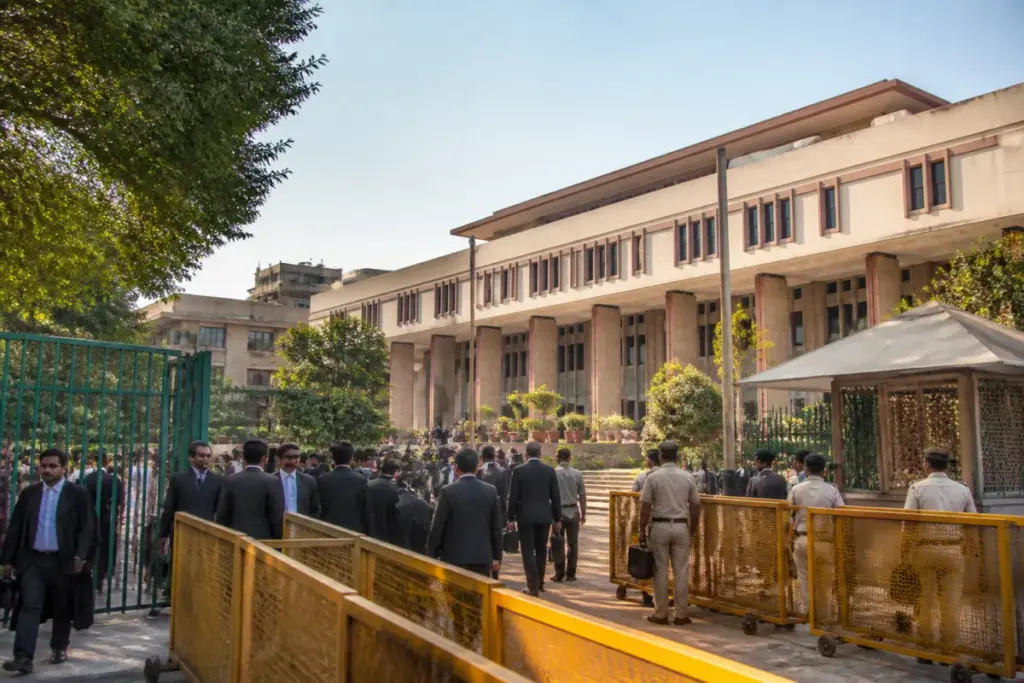
The Delhi High Court on Wednesday questioned why Cockroach Janata Party leaders Saurabh Das and Ashutosh Ranka approached it directly to challenge their judicial custody when a hearing was already scheduled before a Special Executive Magistrate, according to Live Hindustan – NCR. The court also criticised their alleged visit to Jantar Mantar after the site had been denotified and asked them to await the proceedings before considering further legal remedies.
A bench headed by Justice Subramonium Prasad was hearing a petition concerning the two leaders. The court noted that the matter was listed before the Special Executive Magistrate at 2 pm and advised the petitioners to first see what happened in that hearing. It said that if the decision went in their favour, the matter would end there, while an adverse order could be challenged before a revisional court and subsequently before the High Court.
The petitioners’ lawyer, Abhik Chimni, repeatedly sought a hearing and relief from the High Court. The bench, however, referred to the alleged violation of the bail bond and said that the Bharatiya Nagarik Suraksha Sanhita provides for action when a bail bond is breached.
“On October 11, when your bail bond was accepted and sureties were given, and when the bail bond is broken, there is a provision for action under the BNSS,” Justice Prasad said, according to the report. The judge added that the authorities were showing greater leniency by issuing notices instead of immediately following the full process.
The hearing also focused on the implications of visiting a demonstration site that had already been denotified. The court said the issue of the denotification was pending before the Supreme Court and that there was no stay on the notification. It observed that the leaders had gone to Jantar Mantar and allegedly broken barricades despite having furnished a bail bond.
The court said such actions could encourage 10 to 20 more people to violate the applicable restrictions and create circumstances in which individuals outside the organisers’ control could cause disruption. It also stressed that permission from the police was not intended only to prevent a demonstration. According to the report, the court said permission was also necessary to prevent unwanted elements from entering a gathering and damaging the organisers’ credibility.
Justice Prasad referred to violent incidents abroad while discussing the risks associated with protests that organisers may not be able to control. The court said an initiative described as peaceful could turn into arson and looting if organisers were unable to manage those joining it.
The bench also questioned the leaders’ description of their movement as a Gen Z protest. When the lawyer said Das was 27 and Ranka was 32, the court asked their ages and stated that they were not Gen Z. The lawyer told the court that people born after 1997 were generally described as Gen Z.
The CJP leaders subsequently withdrew their petition after the court’s observations and advice to wait for the Special Executive Magistrate’s proceedings. The next legal step will depend on the order passed in that hearing and any remedies available to the petitioners thereafter.


