

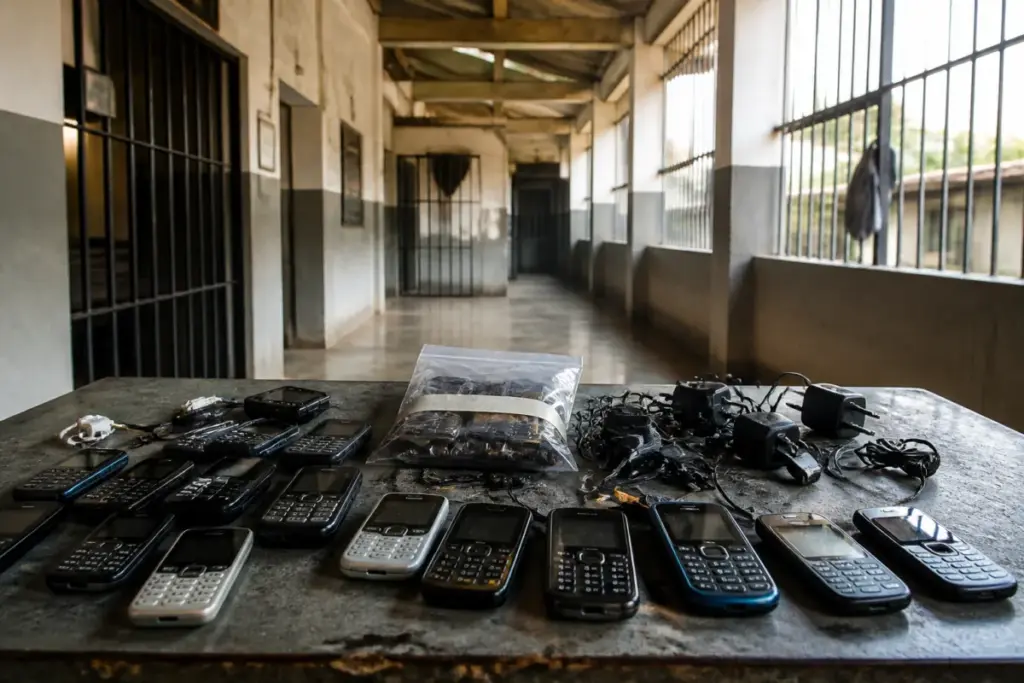
Tihar Jail mobile phones were repeatedly concealed in toilets, water pipes, potted plants, wall cavities and even strapped to an inmate’s back, according to RTI records obtained by The Indian Express, which document 350 phones recovered in 285 incidents between 2020 and 2025.
The records relate to Central Jail No. 3, one of the 15 jails in the Tihar and Mandoli prison complex. The wider complex houses more than 10,000 inmates, while the six-jail Mandoli complex is located in northeast Delhi. Central Jail No. 3 supplied details of each recovery, including the location where the communication equipment was found.
The records show that 202 of the 350 recovered phones, or 58%, were thumb-sized Kechaoda models. These Chinese-made devices cost a little over Rs 1,000 and were described in the report as the world’s smallest mobile phones. Samsung Duos models accounted for another 88 recoveries, or 25% of the total.
Other recovered brands included Oppo, Redmi, Vivo, Melrose and Realme, along with lower-budget Indian brands such as Hero, Ringme, Snexian, Blackzone and Lvix. Only two iPhones and six Nokia smartphones were listed among the recoveries. Most of the recovered Android devices had dual-SIM capability.
The locations recorded in the prison inventory indicate that searches and construction or maintenance work often uncovered the devices. Phones were found inside toilet cisterns, attached toilets, common toilet areas, wall cavities, plastic boxes and tiffins. One Samsung Duos phone was recovered from the roof of a common toilet, while another was found at the base of a peepal tree. A Kechaoda phone was found while digging near an MCV box, and another was recovered while digging in the ground near a prison temple.
The records also describe phones being hidden inside a water pipe and an RO water purifier. In one case, a phone was found wrapped in plastic inside the attached toilet of Cell No. 26. Another Samsung Duos device was found strapped to an inmate’s back. The recovery of phones from locations requiring digging highlights the role of prison maintenance and construction work in uncovering concealed equipment.
The records list 17 phones whose IMEI serial numbers had been erased. Other seized items included earphones, memory cards, data cables and pen drives. Prison staff also recovered 19 improvised or hand-made chargers, suggesting that inmates were able to assemble charging equipment inside the complex. During one search operation in June 2023, seven mobile phones and seven improvised chargers were recovered together.
The RTI material also refers to internet-based communication. Central Jail No. 12 stated that prison staff became aware of inmates using voice over internet protocol, or VoIP, on January 1, 2019, although no VoIP equipment was seized. The same response said 60 penalties had been imposed on inmates found using mobile phones over five years.
The Mandoli complex has separately reported the recovery of digital storage devices. Central Jail No. 15 reported 27 pen drives recovered between 2020 and 2026, while Central Jail No. 14 reported one. The supplied records do not provide a consolidated figure for all communication devices recovered across every jail in the complex.
Prison authorities have listed mobile-phone jammers, CCTV cameras, surprise searches in barracks and toilets, cross-frisking by Tamil Nadu Special Police and intelligence gathering among the measures used to prevent unauthorised communication. The records obtained through the RTI process provide the most detailed account in the supplied material of how phones entered or remained concealed inside the prison environment and how they were subsequently detected.


