

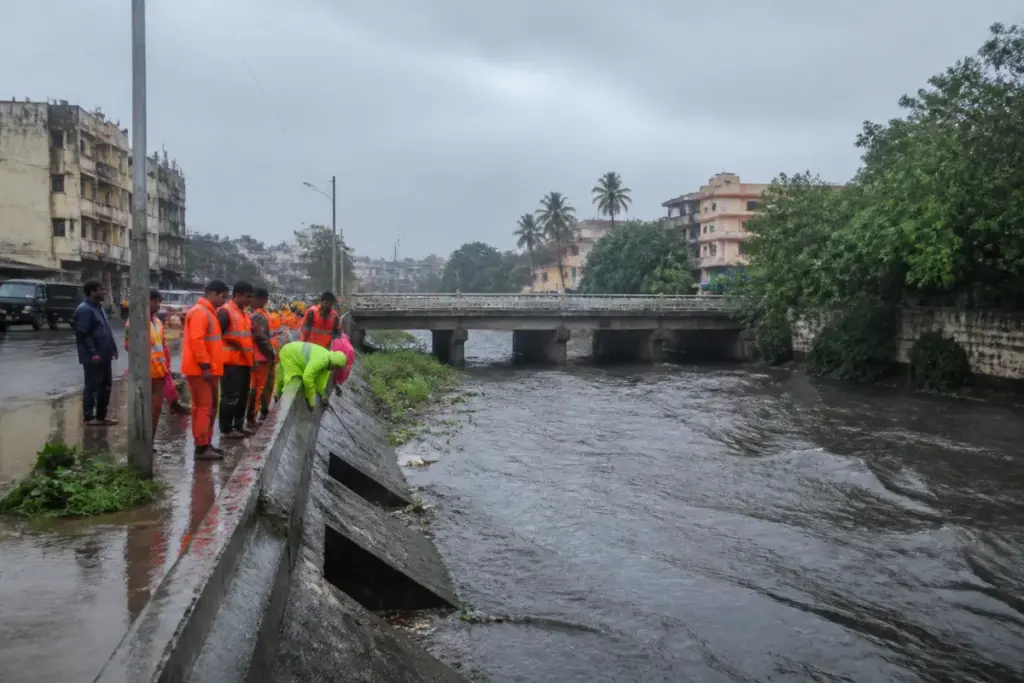
Chennai’s flood preparedness has come under scrutiny after a report alleged that senior Water Resources Department officials and engineers left their assigned districts during the northeast monsoon holiday period, potentially weakening coordination over stormwater channels and flood-control works. The allegation has not been independently confirmed in the supplied material.
A report published by Dinamalar said officials travelled to their native places during the Ayudha Puja holiday, even though departmental rules require personnel responsible for waterway management to remain in the districts where they are posted during the monsoon. The report did not identify the officials or provide an official response from the Water Resources Department.
The department is responsible for maintaining key waterways in and around Chennai, including the Adyar, Cooum, Buckingham Canal and Kosasthalaiyar. Desilting works are undertaken before and during the rainy season to maintain the movement of water. The report said the Tamil Nadu government had allocated Rs 40 crore for this year’s works, but alleged that desilting and the removal of blockages at river mouths had not been carried out adequately.
The report linked those alleged shortcomings to flooding after heavy rain on October 17, stating that water flowed onto major roads and into residential areas of Chennai. It also said many people faced difficulty returning home after the rain. The report’s account, however, does not establish through independent inspection records, engineering assessments or official data whether incomplete desilting directly caused the flooding or slowed the drainage of floodwater.
The reported administrative concern is the availability of officers responsible for coordinating field works. Assistant engineers, assistant executive engineers and executive engineers are assigned to monitor individual waterways, while chief engineers and supervisory officials are expected to provide guidance. According to the report, the absence of these personnel could have made coordination with contractors more difficult during a period of rainfall.
Dinamalar also reported that similar staff absences were alleged in Tiruvallur, Kancheepuram, Chengalpattu, Cuddalore, Thanjavur, Tiruvarur, Nagapattinam and Tiruchirappalli districts. These claims require confirmation from departmental attendance records, duty rosters, field inspection reports and statements from the concerned district authorities.
The issue matters because Chennai’s flood response depends not only on the physical capacity of its waterways but also on continuous institutional coordination. Desilting, removal of obstructions, operation of pumping and drainage systems, and communication with contractors require officers to be available when rainfall intensifies. A gap in supervision can affect the timing of field decisions, although the supplied report does not establish that such a gap occurred or caused specific damage.
The Water Resources Department and the Tamil Nadu government have not provided a response in the supplied material. Verification should establish whether officers were officially permitted to leave their posts, what emergency duty arrangements were in place, how the Rs 40 crore allocation was spent, and whether the reported flood conditions were linked to maintenance deficiencies. The government’s confirmation of monsoon duty arrangements and the status of waterway works will determine whether the allegations amount to an administrative lapse or remain an unverified report.


