

Oil prices rose on Wednesday as attacks on tankers and threats to energy infrastructure increased concerns about Middle East supplies, pushing Brent crude above $110 a barrel and keeping shipping routes under close watch.
Brent crude futures climbed $1.34, or 1.23 per cent, to $110.10 per barrel, while US West Texas Intermediate crude rose $1.18, or 1.21 per cent, to $99 per barrel. The gains followed a decline in the previous session, when prices eased after Iran’s president discussed mediation efforts with Pakistan’s army chief during a meeting in Tehran.
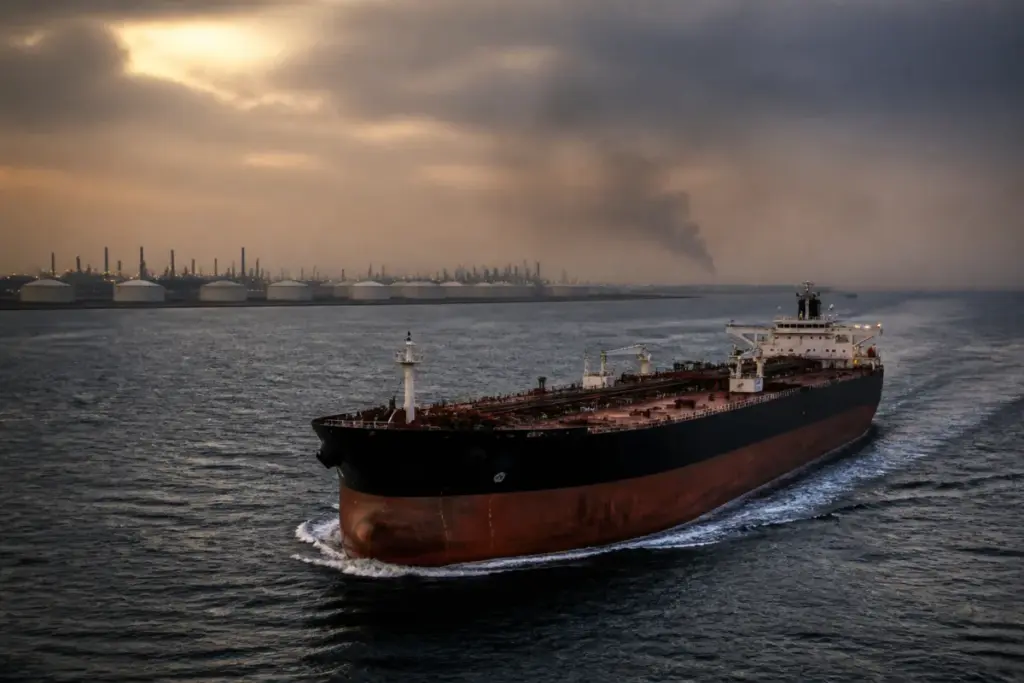
Supply concerns intensified after a supertanker caught fire after striking a sea mine south of the Strait of Hormuz, according to Iran’s Revolutionary Guards Navy. Iranian media reported that the vessel had been “violating” Iranian regulations. The Strait of Hormuz is a major route for global oil shipments, and the reported incident has added to market concerns over the security of regional energy trade.
At least 18 vessel attacks were reported over a two-week period, ship-tracking firm Kpler said in a note on Monday. LSEG analysts said the attacks had expanded beyond the Strait of Hormuz, with vessels being targeted as far south as the Gulf of Oman. According to the analysts, the wider attacks threaten loadings outside the Arab Gulf and ship-to-ship transfers that have supported Middle East oil shipments during the conflict.
The Houthis on Monday claimed responsibility for attacks on a Saudi Aramco site in Yanbu, the Shaybah oilfield and airports in Riyadh and Abha, Saudi Arabia. Reuters also reported that the death toll from a Houthi attack on Yemeni government forces on Monday had risen to 73 as fighting intensified. Iranian foreign minister Abbas Araqchi said in a television interview aired on Tuesday that Tehran had not received a response from Saudi Arabia or Yemen’s Houthis to its offer to help broker peace talks.
Despite Wednesday’s increase, crude prices remained below the previous session’s intraday high. Brent settled at $108.79 a barrel on Tuesday, down 76 cents, or 0.69 per cent, after reaching a five-month high of $111.99. The November WTI contract, which expired on Tuesday, settled $1.87 lower at $101.79, a decline of 1.8 per cent.
Fuel availability is also becoming a concern. Two US Energy Department officials said on Tuesday that they were working with refiners around the world to increase fuel production as a diesel shortage pushed prices higher. An extended Reuters poll found that analysts expected US crude inventories to have fallen by about 800,000 barrels in the week ended October 16, alongside declines in refined petroleum product stocks.
Market participants are monitoring further developments across the Middle East, particularly threats to shipping routes and energy infrastructure, for their potential effect on crude supplies and prices.


