

The Calcutta High Court has allowed the West Bengal government to appoint a retired judge to head a special commission of inquiry into the Chorbagan stampede that killed 19 people and injured 24, while the state has begun inspecting safety arrangements at major Durga Puja pandals in Kolkata.
The court’s decision modifies the state government’s initial request for an inquiry commission headed by a sitting judge. The Chief Justice said a serving judge could not be assigned to the commission because of specific Supreme Court guidelines and the acute shortage of judges.
The state government can now select a suitable retired judge to lead the inquiry. The commission will examine the circumstances that led to the stampede and investigate possible lapses or negligence connected with the tragedy.
The Chief Justice said the commission would conduct a detailed investigation into the causes of the incident and determine whether any individuals or authorities were responsible for serious negligence. The High Court will not directly monitor the inquiry at this stage because it will be headed by an experienced retired judge.
The court may examine the matter later, if necessary, after the commission submits its complete and final report. The inquiry is therefore expected to provide the formal mechanism for establishing how the stampede occurred and whether failures in crowd management, venue arrangements or official oversight contributed to the deaths and injuries.
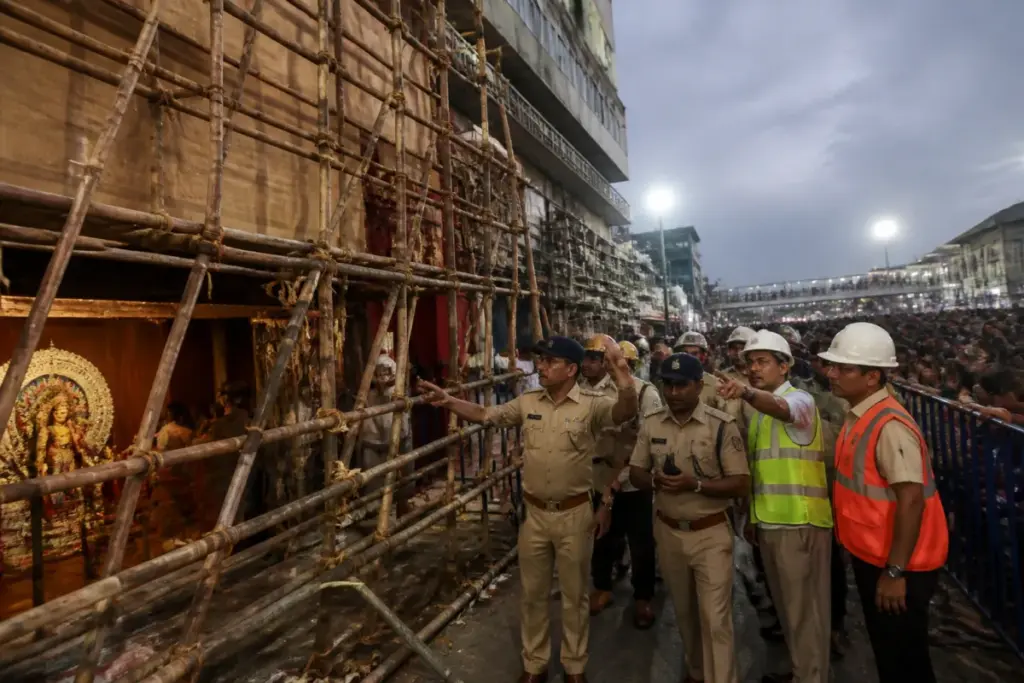
The tragedy has also prompted the state government to form a special team to inspect arrangements at Kolkata’s major Durga Puja pandals. The team includes Disaster Management Secretary Rajesh Singh, Fire Services Director General Anuj Sharma and Special Task Force Additional Director General Javed Shamim. Kolkata Police will assist the inspections, while the Director General of Police will guide the team.
The team will submit its report to state Home Secretary Sanghamitra Ghosh. Puja committees will be required to follow the recommendations emerging from the inspections, according to the report.
One immediate concern is the structural safety of pandals and the movement of visitors through crowded venues. If a pandal is found to be unsafe or at risk of collapse, organisers may be required to restrict celebrations to rituals conducted by priests. LED screens could be installed outside such pandals so that visitors can watch programmes without entering the premises.
The court-approved inquiry and the parallel inspections place accountability and public safety at the centre of Kolkata’s festival management arrangements. The next formal step is the state government’s selection of a retired judge to lead the commission, followed by the commission’s investigation and submission of its final report.


