

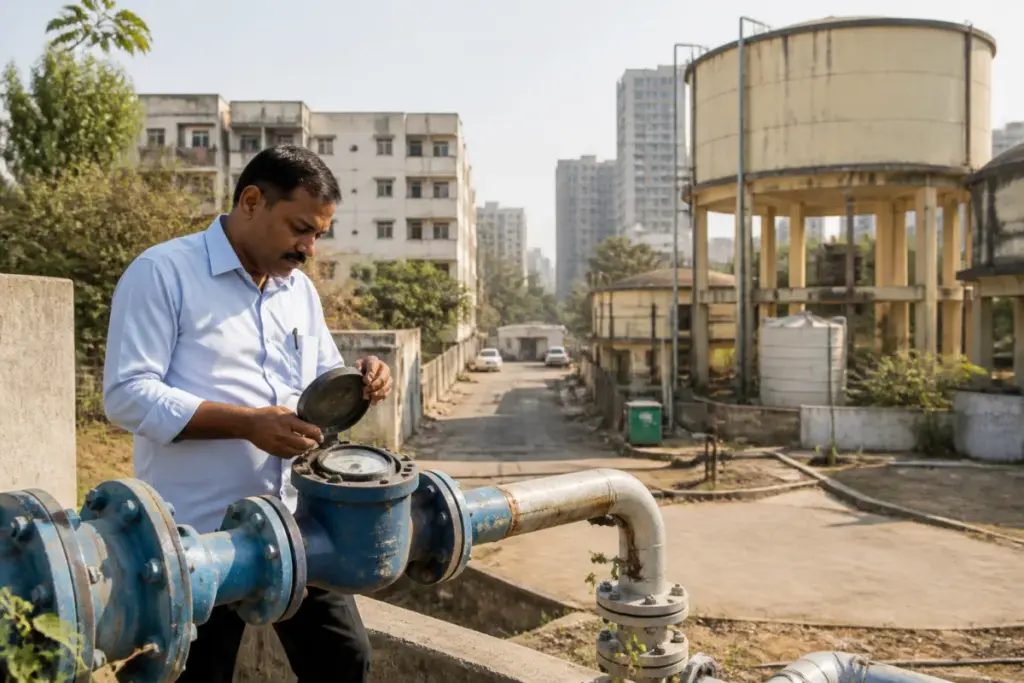
Pune water cuts of 20% have been ordered for 38 government and private establishments in Pune district as the state water resources department moves to protect drinking water supplies amid declining dam storage. The directive will remain in force until the next monsoon, with action threatened against establishments that fail to comply.
The affected list includes the Pune Municipal Corporation, Pimpri Chinchwad Municipal Corporation, industrial areas, 11 gram panchayats, educational institutions, factories, residential complexes and other establishments. Officials said the priority is to conserve available reserves and ensure that drinking water remains available through the coming months.
The Khadakwasla dam chain currently holds around 25 TMC of water, nearly 12% below the level recorded during the corresponding period last year. The storage position has raised concerns over water availability, particularly as authorities plan allocations across 88 dams, according to Kiran Deshmukh, executive engineer of the Khadakwasla division of the water resources department.
The directive places municipal corporations and other large water users within a broader district-level conservation effort. While the order applies to a range of public and private establishments, the supplied report does not specify individual reduction targets beyond the prescribed 20% cut or detail how consumption will be measured at each location.
Authorities have warned that the names of establishments that do not implement the cuts will be forwarded to the district collector for further action. The department has not specified the nature or timing of penalties in the supplied report, but officials have indicated that non-compliance will trigger administrative follow-up.
The enforcement plan also targets unauthorised water extraction and wastage. The revenue department, Maharashtra State Electricity Distribution Company Ltd, police and water resources department will work together against illegal extraction. Pumps and motors used for unauthorised extraction may be seized, while electricity connections may be disconnected in cases classified as water theft.
The measures extend beyond restrictions on consumption. Establishments have been advised to use treated sewage, wherever feasible, for gardens, construction activity and industrial processes. Such substitution is intended to reduce the use of potable water for activities that do not require drinking-quality supplies.
The directive highlights the administrative challenge of managing Pune’s water demand across municipal, industrial, institutional and residential users. It also links the city’s water security to storage conditions across the wider dam system rather than to the reserves of a single reservoir. Officials said drinking water supply would receive the highest priority as the department manages limited reserves until the next monsoon.


