

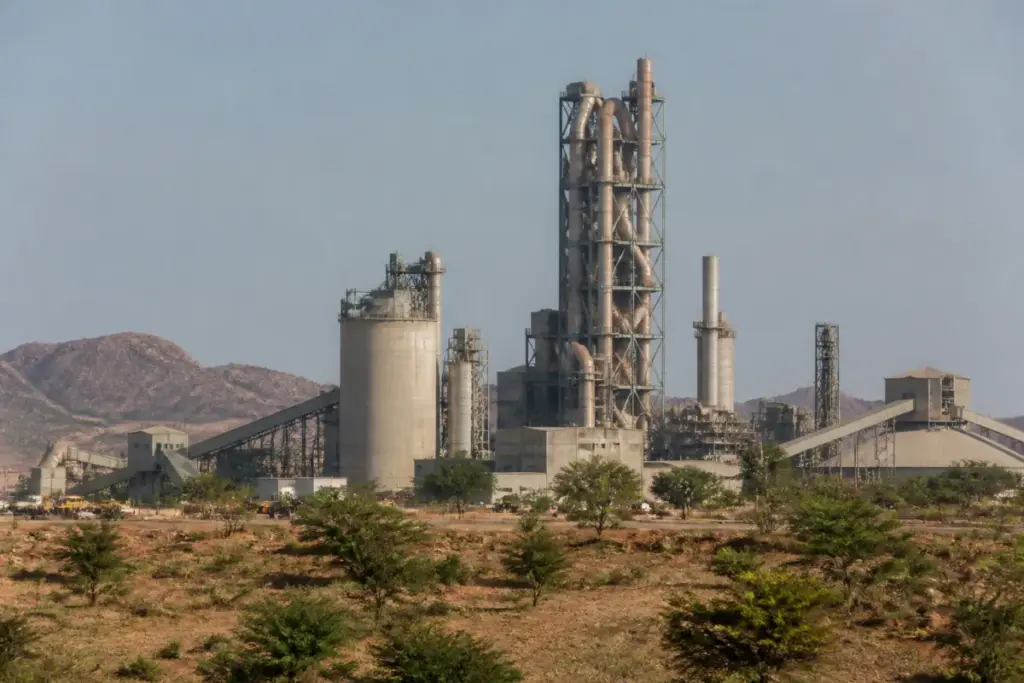
UltraTech Cement has commissioned its ₹2,650-crore Petnikota Cement Works in Andhra Pradesh’s Nandyal district, adding 3.3 million tonnes per annum of clinkerisation capacity and 3.6 MTPA of cement dispatch capacity in the Rayalaseema region.
The integrated cement plant is located at Petnikota village in Kolimigundla mandal. Construction began in May 2025 and the facility was commissioned in 14 months, according to a statement cited by The Hindu BusinessLine. The project is designed to support UltraTech’s capacity expansion in Andhra Pradesh while creating industrial employment in the district.
The plant is expected to provide direct employment to 650 people and indirect employment to another 2,000, taking the total employment impact cited for the project to 2,650 jobs. The company has described the facility as a state-of-the-art plant built for large-scale clinker production and cement dispatch.
A key feature of the project is its proposed energy and water-use design. UltraTech said the plant has been designed to operate on 100 per cent green energy and does not have a captive thermal power plant. The facility also uses zero groundwater, according to the statement.
The project’s location in Nandyal places it within the Rayalaseema region, where industrial investments can affect local employment, logistics and the supply chain for construction materials. Cement plants typically require coordinated movement of raw materials and finished products, although the supplied announcement does not provide details of the plant’s transport arrangements, raw-material sources or distribution network.
Andhra Pradesh Information Technology Minister Nara Lokesh referred to the investment and the plant’s environmental design in a release. “From groundbreaking to commissioning in just 14 months. UltraTech, India’s largest cement company, has expanded its capacity in Andhra Pradesh with its ₹2,650 crore Petnikota Cement Works in Nandyal district,” he said.
Lokesh also cited the facility’s zero-groundwater-use design, its planned reliance on green energy and the employment it is expected to create. The statement did not provide a detailed breakdown of the green-energy sources, the project’s emissions profile, its water-management systems or the implementation arrangements for indirect employment.
For Andhra Pradesh’s built environment, the new capacity adds to the state’s industrial base for a material central to housing, roads and other construction activity. The announcement, however, does not specify the plant’s expected production ramp-up, annual revenue contribution or the markets to which the cement will be dispatched.
UltraTech’s Petnikota facility therefore combines a substantial regional manufacturing investment with an environmental operating claim that will require performance data over time to assess. The company’s stated capacity, employment projections and green-energy design are the details currently available about the project.


