

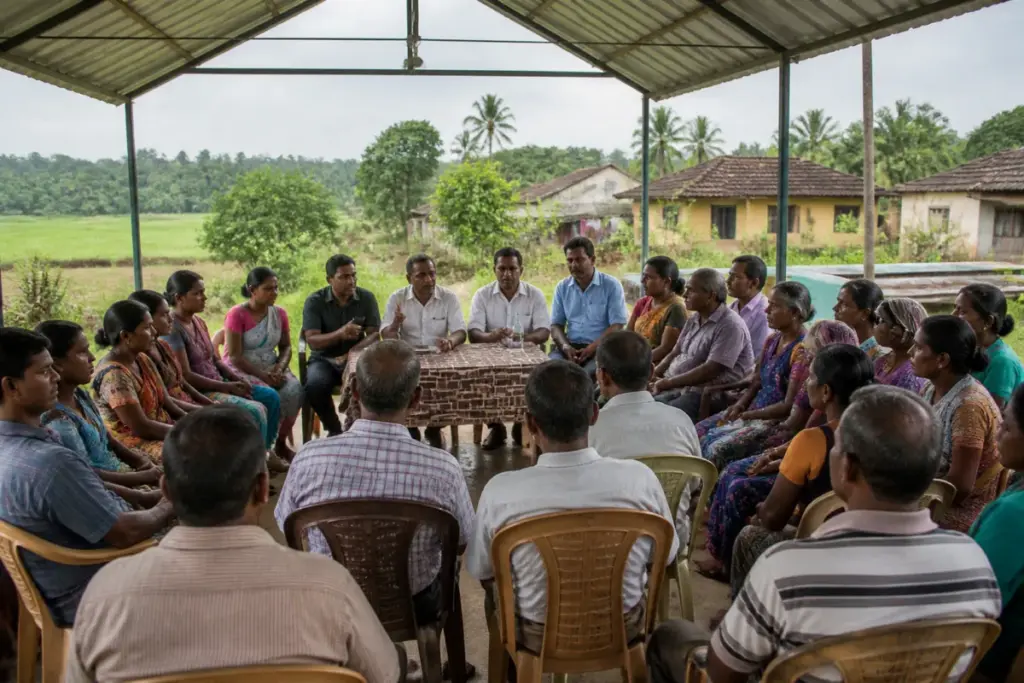
Representatives of tribal communities in Goa have demanded that elected representatives and senior officials spend time in remote villages, assess local conditions and prepare time-bound development plans for roads, drinking water, healthcare, education and livelihoods.
The demands were raised at a meeting in Kheddem, Quepem, on Monday, attended by at least 150 people from the Balli–Adnem panchayat. Scheduled Tribe functionaries and representatives from Quepem, Ponda, Sanquelim, Canacona, Sanguem and Salcete also participated.
Speakers called on officials to spend at least two days in remote tribal settlements to understand the difficulties faced by residents. The meeting alleged that several settlements continue to lack basic infrastructure despite spending through various government programmes. Participants also raised concerns over agricultural insecurity, limited livelihood options, weak grievance redressal and difficulties in accessing welfare schemes.
The gathering highlighted more than 2,500 backlog vacancies reserved for Scheduled Tribe candidates in government departments. It also noted that about 9,500 Individual Forest Rights claims remain undecided. Participants said benefits under the tribal sub-plan had not reached many eligible families and demanded that funds earmarked for tribal development reach their intended beneficiaries and produce measurable outcomes.
The tribal representatives sought time-bound decisions supported by transparent monitoring and regular public reporting. They also called for protection of tribal land, traditional livelihoods and community rights as development projects expand across the state.
Dheeraj Talpekar of Khola in Quepem outlined welfare schemes available to ST beneficiaries but said complex online applications, extensive documentation and administrative delays were preventing poor families, farmers and students from accessing them. He called for village-level seva camps and simpler application procedures.
The concerns point to an administrative gap between the announcement or allocation of development programmes and their reach at settlement level. For residents of remote villages, access depends not only on sanctioned funds but also on roads, local officials, documentation support and timely decisions on land and forest rights claims.
Women’s wing coordinator Harsha Wadkar warned that development projects could damage tribal lands, biodiversity and cultivated areas. She said such impacts could threaten livelihoods, rituals and community life and called for stronger safeguards.
The meeting demanded regular public disclosure of progress on village development plans, pending vacancies and forest rights claims. It also sought direct engagement between senior officials and affected communities so that local needs are recorded before schemes and projects are implemented.


