

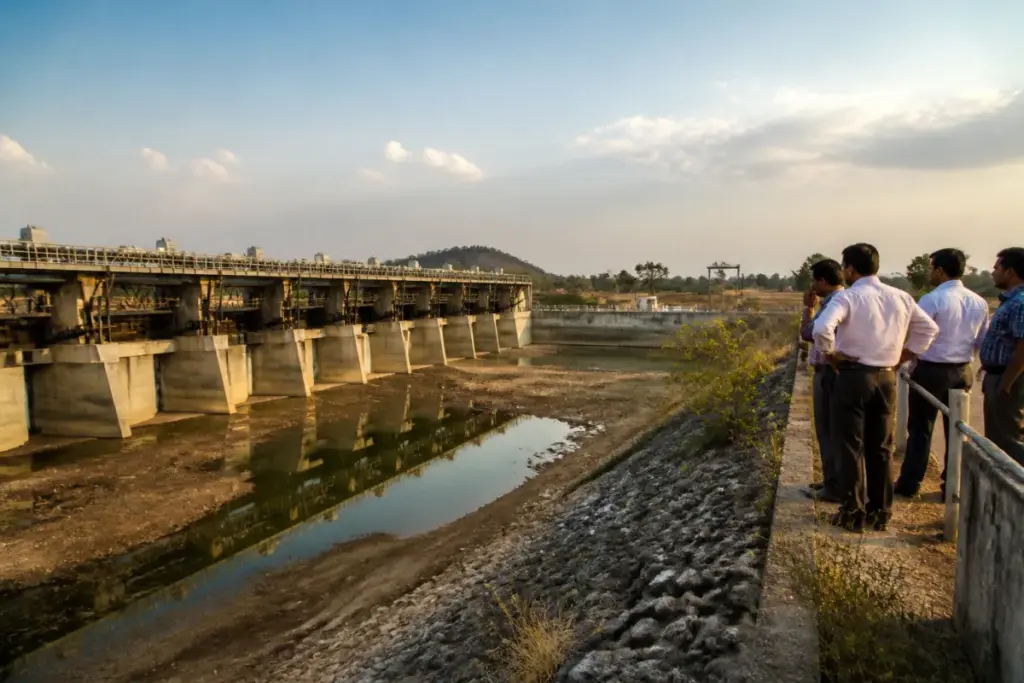
Telangana has directed officials to prioritise drinking water in the management of the state’s water resources as concerns over deficient rainfall and possible summer scarcity grow, Agriculture Minister Tummala Nageswara Rao said during an inspection of the Dummugudem anicut dam in Bhadradri-Kothagudem district.
Rao inspected the dam near Ammagaripalli in Ashwapuram mandal and said water conservation was a shared responsibility in view of the expected effects of Super El Niño. He said the weather phenomenon, associated with global climate change, could lead to severe water shortages if rainfall remained deficient.
The minister said water availability for the coming summer was a growing concern and called for precautionary measures in the management of both water and energy resources. The state government was also making arrangements to prevent power shortages during the summer, according to the report.
Rao instructed officials to coordinate their decisions so that water was diverted for purposes other than drinking only after drinking-water requirements had been met. If available supplies were insufficient to meet drinking-water needs, the use of water for other purposes should be restricted, he said.
The Dummugudem barrage has a storage capacity of 0.8 tmc ft, but officials can currently store approximately 0.5 tmc ft, Rao said. The gap has prompted the Chief Minister to direct officials to examine the technical possibilities of increasing storage through the use of sandbags.
The instruction places the barrage’s usable storage capacity at the centre of preparations for the coming summer. The report does not specify the timeline for the technical evaluation, the quantity of additional water that could be stored through sandbags, or whether the proposed measure has already been tested at the site.
The minister also asked farmers to consider current weather conditions before deciding which crops to cultivate. He noted that cultivation could require an investment of Rs 2 lakh to Rs 3 lakh per acre and advised farmers to assess the availability of water, electricity and groundwater before selecting crops.
The remarks link water management with power availability and farm planning, making the Dummugudem inspection part of a wider preparedness exercise. For households and local administrations, the immediate issue is whether water retained in the system will be sufficient to protect drinking-water supplies through the summer.
The minister’s direction requires officials to coordinate water use around drinking-water needs and evaluate ways to improve storage at the barrage. The report does not provide a separate schedule for the evaluation or details of further measures planned beyond the stated summer preparedness arrangements.


