

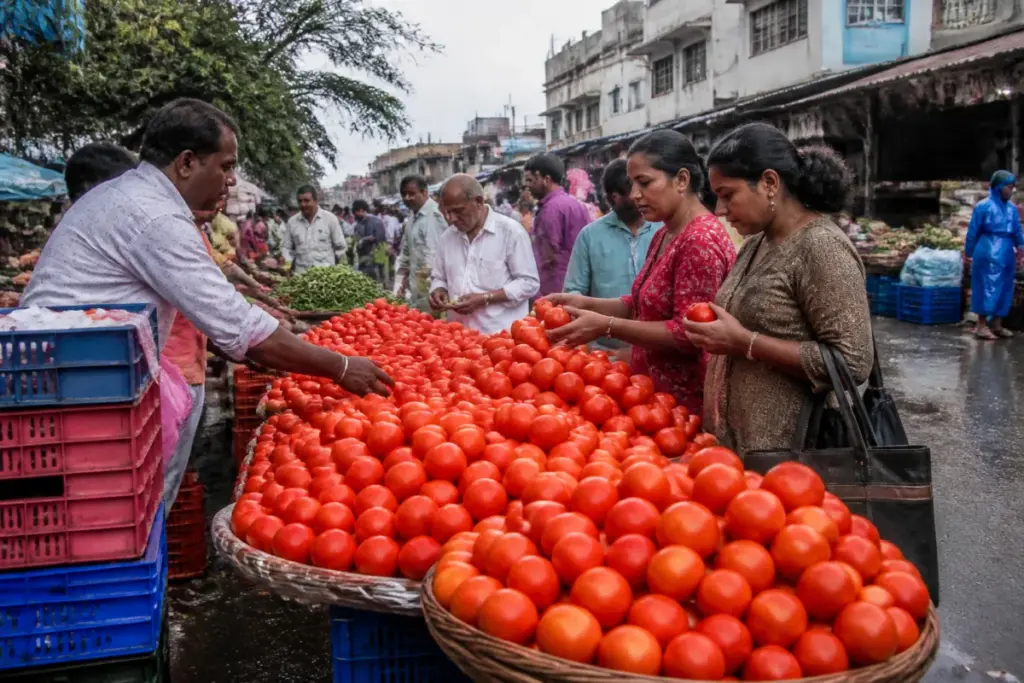
Tomato prices in Bengaluru have fallen sharply in parts of the city, dropping from about Rs 50 per kg to as low as Rs 10 within a week, but the reduction has not been uniform across localities, varieties or quality grades.
A Times of India dipstick survey found that vendors in South End Circle, Basavanagudi and other areas were quoting prices between Rs 20 and Rs 40 per kg. In South End Circle, one vendor said the price had declined from Rs 50 to Rs 30 per kg in four days. The vendor also reported weaker demand from customers during the festive season.
A Basavanagudi vendor said tomatoes were selling at Rs 40, Rs 30 and even Rs 20 per kg, depending on quality and variety. The vendor attributed the decline to substantial unsold stock after recent rainfall, despite the presence of festival-related demand.
The fall was not visible across Bengaluru. Several vendors in Koramangala said prices had remained between Rs 25 and Rs 35 per kg for some time and that they had not seen a sudden drop. Online platforms were listing tomatoes at approximately Rs 30-40 per kg, with prices varying according to variety, size and quality.
Vendors and market participants cited a glut in production, slower offtake and tapering demand as the main reasons for the price decline. The gap between the lowest reported street price and prices on online platforms indicates that consumers may experience different levels of relief depending on where they shop and which type of tomato they buy.
Bengaluru’s tomato supply comes from within Karnataka as well as Tamil Nadu. Kolar is Karnataka’s largest tomato-producing area, with around 15,000 acres under the crop, according to the report. Produce from the region is also sent to northern states and neighbouring countries, including Bangladesh.
The current movement therefore reflects more than a simple city-wide retail price change. It shows how supply, demand, crop output, distribution and local retail conditions can produce sharply different prices within the same urban market. For consumers, the reported fall may mean cheaper tomatoes in some neighbourhoods, while households shopping in other areas may continue to pay between Rs 25 and Rs 40 per kg.
The price trend will depend on how quickly existing stocks are absorbed and how supplies from producing regions move through wholesale and retail channels. The reported prices remain subject to differences in variety, size, quality and locality.


