

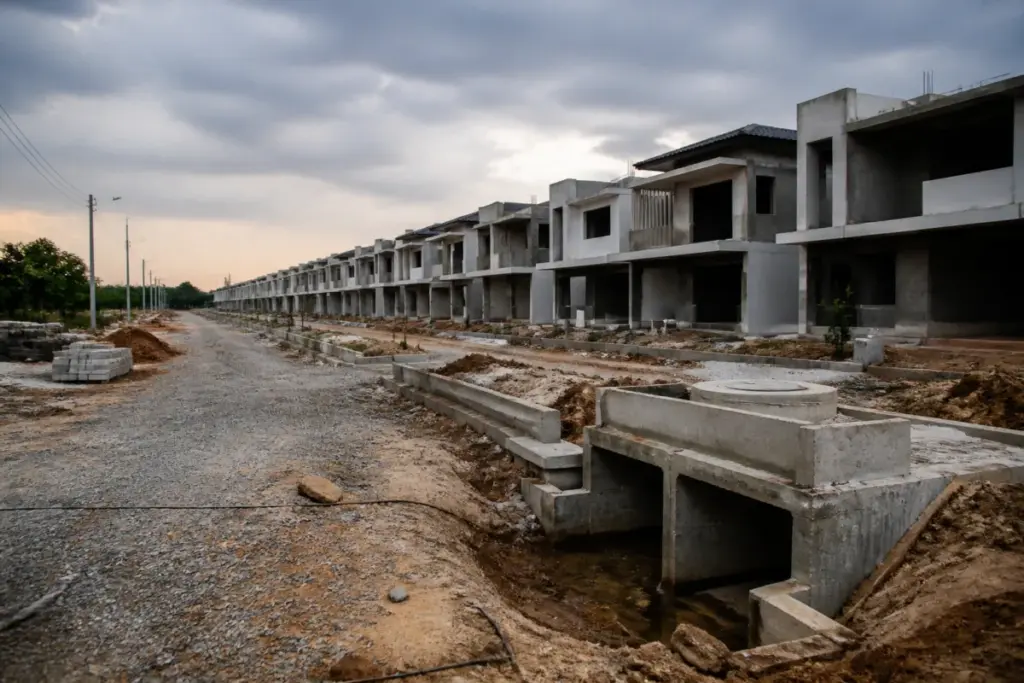
The Karnataka High Court has upheld the cancellation of occupancy certificates issued to 33 incomplete villas in the Raffles Park project near Hoskote on Bengaluru’s outskirts, finding that the certificates were granted without the inspections and technical checks required under the rules.
A single-judge bench led by Justice Suraj Govindaraj dismissed a petition filed by Raffles Residency Private Limited challenging the cancellation ordered by Samethanahalli Gram Panchayat. The court held that the occupancy certificates had been issued even though the villas were incomplete and not fit for occupation.
According to the court’s findings, officials had issued the certificates without conducting a site inspection, verifying whether construction matched the sanctioned plan or obtaining the necessary technical opinion. The project was developed by Raffles Residency Private Limited within the jurisdiction of Samethanahalli Gram Panchayat in Hoskote taluk.
The ruling also directs the gram panchayat and the principal secretary of the Rural Development and Panchayat Raj Department to complete an investigation into the role of C. Muniraju, who was the gram panchayat development officer when the certificates were issued, along with other officials. The investigation had been ordered on July 7, 2025.
The court has said that disciplinary or other legal action should follow if the inquiry establishes negligence or dereliction of duty. A compliance report is to be submitted within three months, according to the report.
A site inspection conducted in accordance with the court’s directions identified several deficiencies in the project. These included the shifting of the sewage treatment plant, encroachment on a stormwater drain, incomplete internal roads and improper maintenance of a diesel generator. The findings formed part of the court’s consideration of whether the villas could legitimately be treated as completed and suitable for occupation.
The court also directed the gram panchayat to examine the role of the project’s architectural firm, Messrs Karan Grover and Associates. The firm had issued a completion certificate, but the court observed that the certificate did not reflect the actual condition of the project and had certified an incomplete development as complete. The gram panchayat may refer the matter to the Council of Architecture or another competent authority if necessary.
The order places the responsibility for occupancy certification beyond a procedural stamp. For projects on Bengaluru’s expanding outskirts, the case highlights the role of gram panchayats in checking whether private developments have completed essential infrastructure and complied with approved plans before homes are occupied.
The court has, however, clarified that cancellation of the occupancy certificates alone cannot determine whether the Raffles Park project should be treated as an ‘ongoing project’ under the Real Estate (Regulation and Development) Act, 2016. That issue remains before the Karnataka Real Estate Regulatory Authority and must be decided in those proceedings.


