

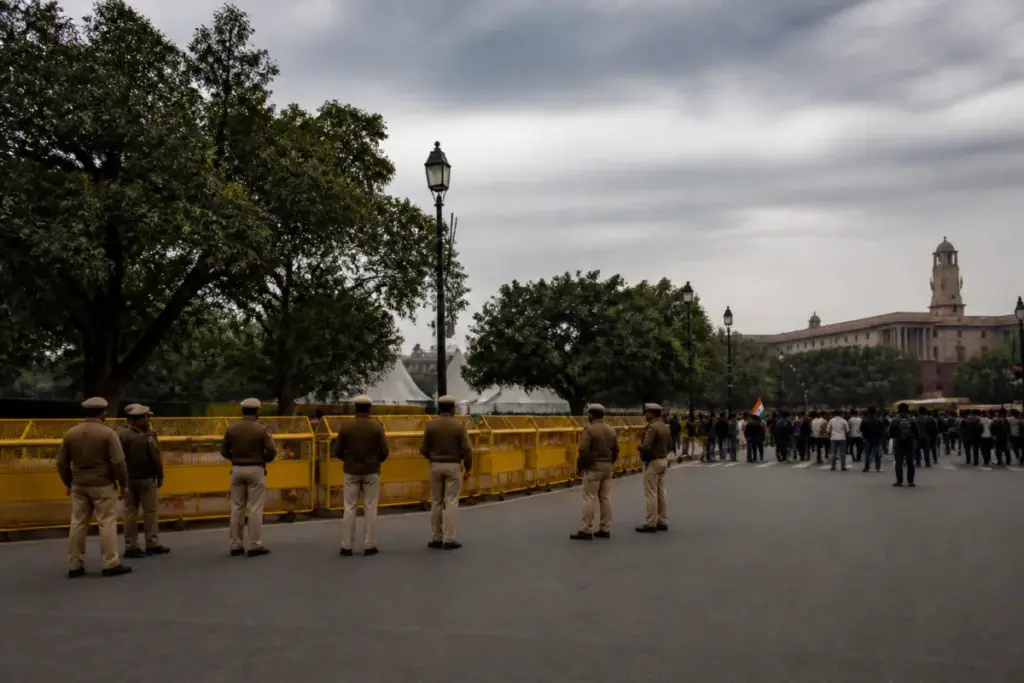
The detention of four people linked to a protest by the Cockroach Janata Party (CJP) in Delhi has produced different release outcomes, with Abhijeet Dipke and Neha Bora released while co-coordinators Sourav Das and Ashutosh Ranka remained in custody as of October 19. The differences stem from separate police actions, alleged violations and the legal conditions imposed in each case, according to the report by Live Hindustan, citing Hindustan Times, NDTV, police officials and CJP representatives.
Neha Bora, president of the All India Students’ Association, was detained from the Mandi House area on October 16. Hindustan Times reported that Delhi Police took action against her under Section 65 of the Delhi Police Act. The provision allows police to detain and remove a person who does not follow directions issued by officers. She was released the following morning after the required formalities were completed.
Dipke, the CJP founder, was also detained on October 16 ahead of the proposed ‘Lehra Do Tiranga’ march in Connaught Place. He was produced before a magistrate under Sections 126 and 170 of the Bharatiya Nagarik Suraksha Sanhita. The magistrate released him after he furnished a bond of Rs 50,000 and gave a written undertaking to maintain peace. His release was therefore linked to a preventive legal process rather than an unconditional discharge.
Das and Ranka were detained earlier, on October 13, during a protest at Jantar Mantar. Police alleged that the two entered the area despite restrictions and violated peace bonds submitted earlier. On October 14, a Special Executive Magistrate sent them to five days of judicial custody. The report said the magistrate recorded an apprehension that their release could result in another law-and-order problem. That apprehension was part of the preventive proceedings and did not amount to a finding that the two had been convicted of an offence.
A third CJP member, Ajinkya Shinde, was released after being required to maintain peace for six months. NDTV, citing officials, reported that one reason for Dipke’s release was that he had not reached the march location, while police alleged that Das and Ranka entered Jantar Mantar despite being prohibited from doing so and attempted to create disorder.
The case has also raised questions over the administrative process for securing the release of Das and Ranka. Ratna Singh, CJP’s legal head, alleged that their release was being deliberately delayed. She said guarantor documents had been submitted from October 15, but that police repeatedly raised fresh objections. According to her account, a hearing scheduled for noon on October 18 began only around 5pm after the magistrate arrived, and was then postponed to the following day after the magistrate cited receiving threats.
Singh described the delay as a police conspiracy. Police denied deliberately obstructing the release process. The available report does not establish whether the allegations about procedural delay or the alleged attempt to create disorder will be upheld by a court or competent authority.
The developments illustrate how preventive detention, peace bonds, police directions and magistrate orders can produce different outcomes for people involved in the same protest movement. The immediate next step is the hearing concerning Das and Ranka’s release and the objections raised during the process.


