

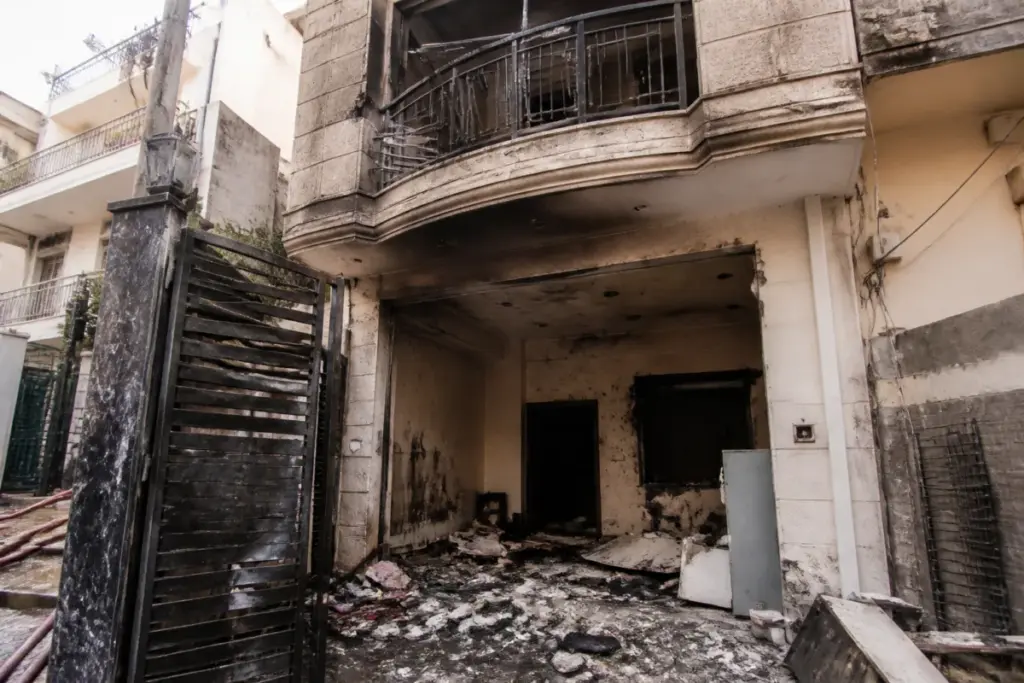
The Najafgarh LPG blast that killed four members of one family over 12 days was not only a household tragedy. It also showed how quickly an ordinary urban dwelling can become a high-risk fire environment when a suspected gas leak, a closed room and a nearby ignition source combine. The incident left an infant without his parents, injured a four-year-old girl and exposed the limits of safety arrangements inside dense residential neighbourhoods.
The explosion occurred on the night of September 22 at a home in Ranaji Enclave, Najafgarh. Police found six people, including children, with burn injuries. They were taken first to Indira Gandhi International Hospital and later shifted to Safdarjung Hospital. Four members of the family subsequently died: Monika, 29, on September 28; her brother Keshav, 25, on October 1; Keshav’s wife, Sonam, 24, on October 3; and their mother, Kamlesh, 50, the following day.
The human consequences have continued beyond the deaths. Three-month-old Yuvansh, Keshav and Sonam’s son, now lives with his grandfather, Ramji Lal. Monika’s four-year-old daughter, Diya, survived with injuries. Monika had been visiting her parents with Diya when the explosion took place. Her husband and other family members live in Badshahpur, Gurgaon, according to the police account cited in the report.
Police have not established the exact cause. A senior police officer said a domestic LPG cylinder may have leaked, allowing gas to accumulate inside a room and form a combustible gas-air mixture. The mixture may then have ignited after coming into contact with a possible ignition source. The language is significant: the suspected sequence explains the investigation’s working theory, but it is not a final finding.
The room was completely shut, with no opening on any side, police said. That condition may have influenced the spread and intensity of the flames. The blast occurred on the ground floor, while damage was also visible on the first floor, where a gate was affected. Those who sustained serious injuries suffered burns over around 60% of their bodies, according to the officer.
This combination of circumstances points to a basic but frequently overlooked feature of urban safety: a home is also a confined built environment. LPG is used inside spaces designed primarily for living, cooking and sleeping. When ventilation is poor or a room is sealed, a leak can create a dangerous concentration before residents understand what is happening. The Najafgarh case does not establish that inadequate ventilation caused the blast, but police have specifically identified the closed room as a factor that may have intensified the fire.
That distinction matters for public understanding. A cylinder explosion is often described as a single equipment failure. The account in this case instead describes a possible chain involving leakage, accumulation, enclosure and ignition. Each element belongs to a different part of the urban safety system. The cylinder and regulator relate to household fuel use; ventilation relates to building conditions; ignition sources relate to resident behaviour and electrical or flame-based equipment; the consequences depend partly on access, escape and emergency medical care.
The incident also illustrates how the severity of a residential fire is not measured only by the moment of ignition. Six people were injured, and the four deaths occurred across 12 days. That period reflects the prolonged medical and social impact of severe burns. The report states that the seriously injured suffered burns over approximately 60% of their bodies, but it does not provide further medical details or explain the treatment pathway after the patients were shifted to Safdarjung Hospital.
The family’s circumstances also show why domestic fire incidents become wider urban governance concerns. A fatal fire can disrupt care arrangements, housing stability and household income in addition to causing immediate injuries. In this case, the surviving infant is being cared for by his grandfather, while the surviving four-year-old girl has lost her mother and also suffered injuries. The supplied account does not establish the status of compensation, rehabilitation or official support for the children, leaving those aspects outside what can be confirmed.
The police registered an FIR at Najafgarh police station under Sections 287 and 106(1) of the Bharatiya Nyaya Sanhita. The provisions cited concern negligent conduct involving fire or combustible matter and causing death by negligence. The registration of the FIR establishes that a criminal investigation is underway; it does not by itself establish liability or confirm the precise source of the leak.
The investigation therefore sits at the intersection of household safety and enforcement. Police must determine how the suspected leak occurred, whether the cylinder or connected equipment had a defect, whether any safety practice was breached and how the fire spread through the home. The supplied report does not state whether the cylinder, regulator, hose or cooking appliance has been examined, nor whether the gas distributor or any other agency has been asked to provide records.
The case also raises questions about the reach of preventive safety systems. LPG safety depends on more than the presence of a cylinder. It involves installation, maintenance, ventilation, user awareness, response to a suspected leak and the ability of residents to leave quickly. Yet the report provides no information on whether the family had received a safety inspection, whether the room was used for cooking or sleeping, or whether smoke and gas detection equipment was present. Those unknowns cannot be filled with assumptions, but they identify the areas that a complete investigation would need to examine.
Delhi has seen another serious LPG-related incident in the same year. In February, a firefighter died and at least 13 people, including fire and police personnel, were injured after an LPG cylinder exploded during a fire at a building in Majlis Park. The two incidents are not presented as having the same cause, and the available material does not support a direct comparison of their circumstances. They do, however, show that LPG-related hazards can affect both residents and emergency responders in the built environment.
The Majlis Park incident adds an important institutional dimension. Household fire safety is usually understood as a private responsibility, but a serious incident quickly involves police, fire services, hospitals and local administration. In Najafgarh, the injured were moved between hospitals, the police registered a case and the investigation continued after the deaths. In Majlis Park, responders themselves were among those injured. Urban fire risk therefore extends from the home to the emergency system that must enter and manage it.
The evidence supplied in the Najafgarh report remains limited in some respects. It identifies the location, date of the blast, number of injured people, subsequent deaths, burn severity, suspected LPG leakage, room conditions, police action and the family’s immediate situation. It does not provide a final forensic conclusion, a fire department assessment, a building plan, information about the gas supplier or details of any inspection or compensation process. Any broader claim about citywide LPG safety performance would require evidence not present here.
What the case does establish is narrower but important. A suspected leak inside a closed room produced consequences that extended across floors, injured six people and resulted in four deaths over nearly two weeks. The incident demonstrates how the safety of urban housing depends on the interaction between domestic fuel systems and the physical conditions of rooms. It also shows that the effects of a fire continue through hospitals, families and public institutions long after the flames are extinguished.
The next decisive step is the completion of the police investigation and the establishment of the exact cause. That finding will determine whether the incident was linked to a faulty component, a leak, an ignition source, room conditions or another factor. Until then, the Najafgarh blast should be understood as a documented case of severe residential fire harm, but not as proof of a single confirmed failure. The FIR, forensic findings and any official response on household LPG safety will determine what lessons can be established beyond this family’s loss.


