

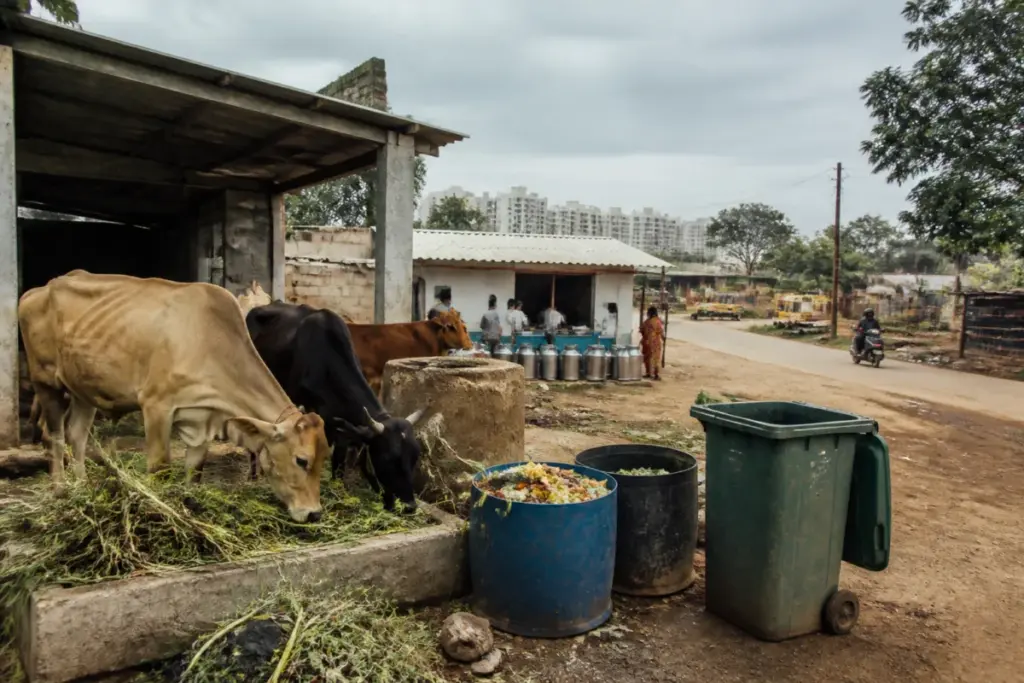
A milk safety concern has emerged in villages around Yelahanka after residents reported that cattle are being fed leftover hotel food, meat waste and bones, with some of the resulting milk allegedly entering local dairy collection networks. Bengaluru Cooperative Milk Union officials have acknowledged that a notice was issued to a milk producers’ society, but said the milk in question has not yet been tested.
The reported practice has been identified in parts of Hesaraghatta hobli, including Lingenahalli, Koluvarayanahalli, Shettikempanahalli and Kakolu, as well as more than 20 surrounding villages, according to a report by Vijay Karnataka. Residents have alleged that decomposed rice, sambar, meat waste and bones are being transported from hotels in Bengaluru and sold to cattle owners.
The waste is reportedly sold at between Rs 100 and Rs 200 per drum. Local residents and milk-sector representatives said some cattle owners use it instead of, or along with, green fodder because a bundle of grass can cost between Rs 300 and Rs 400. The lower cost is alleged to be encouraging the practice in villages around Rajanukunte, where the number of meat shops and paying-guest facilities has also increased the volume of waste.
The report has raised concerns about milk quality, but it does not establish that the milk is contaminated or toxic. No laboratory test results were cited. Prasanna V. P., deputy manager of the Bengaluru Cooperative Milk Union, said the union would act on complaints and had already issued a notice to a society that was collecting such milk. He also said that no milk had been tested so far.
Manjunath, president of the Koluvarayanahalli Milk Producers’ Cooperative Society, said the practice had allegedly continued for about a year despite complaints seeking an inspection and strict action. He said the society had stopped accepting milk from producers suspected of using hotel waste, but some suppliers were then taking it to neighbouring milk collection societies.
The reported movement of milk between collection centres highlights a coordination problem in local dairy oversight. A rejection by one society may not prevent the same supply from entering another network unless collection points share information and conduct systematic testing. The account also points to a wider urban waste-management issue: food waste generated in Bengaluru is reportedly being moved into peri-urban livestock systems without clear controls over segregation, storage or end use.
Residents have called for field officers to inspect all dairies in the area and send collected milk samples to laboratories immediately. Farmer Narayanappa also demanded action by the food safety authorities and police against those allegedly feeding hotel waste to cattle. Any enforcement action, however, would need to be based on documented inspections, sample results and applicable food-safety and animal-feed rules.
The Bengaluru Cooperative Milk Union has said it will take action when complaints are received. The next key step is a formal inspection and laboratory testing of milk and feed samples from the affected villages, which would determine whether the reported practice has caused a measurable food-safety violation.


