

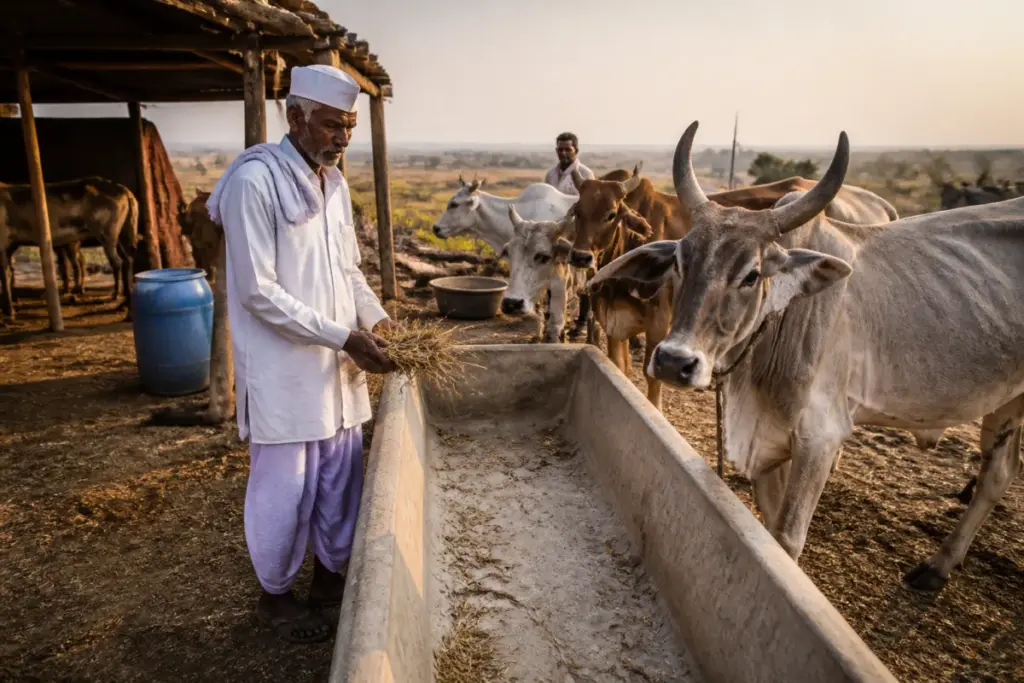
Farmers in the Mirajgaon area of Maharashtra are facing a severe shortage of livestock feed and water, with many reportedly being forced to sell cattle at low prices as fodder crops run out and dairy production declines, according to a report by Sakal – Pune.
The report says farmers are struggling to feed cattle after supplies of maize, kadwal and other fodder crops were exhausted. Water shortages are adding to the pressure. Women in the area are reportedly walking five to six kilometres to collect drinking water, while younger residents are moving towards cities because of the lack of water and employment.
The shortage is also affecting the local cattle market. With fewer buyers, farmers are receiving what the report describes as nominal prices for animals they have maintained for years. The fall in milk production is worsening household financial stress, particularly for families dependent on dairy income.
Farmers have raised concerns that the situation could become more difficult as sugarcane harvesting continues. If all the sugarcane is transported to factories, fodder availability may decline further. The report records a demand that farmers with larger holdings reserve at least 20% of their sugarcane for use as animal feed.
The immediate policy dispute is over how government assistance should be delivered. Farmers have said that waiting for fodder camps would not adequately address their needs because families may have to leave their homes and stay at the camps along with their animals. This could create a difficult choice between caring for livestock and managing household responsibilities.
Some farmers have also alleged corruption in fodder camps. Instead of relying only on camps, they are seeking direct per-animal financial assistance so that groups of farmers can arrange feed locally. The demand is for support to begin immediately rather than waiting until December.
Raju Randive, identified in the report as a member of a farmers’ organisation, said that the government should provide per-animal assistance without delay. He claimed that 70% of the estimated 28,000 livestock in the Mirajgaon circle could be lost if urgent measures are not taken.
The report does not cite a government response or confirm whether the requested subsidy has been approved. The immediate questions are whether authorities will assess the livestock population, arrange water and fodder supplies, and decide between direct transfers and fodder camps before the shortage causes further distress to farming households.


