

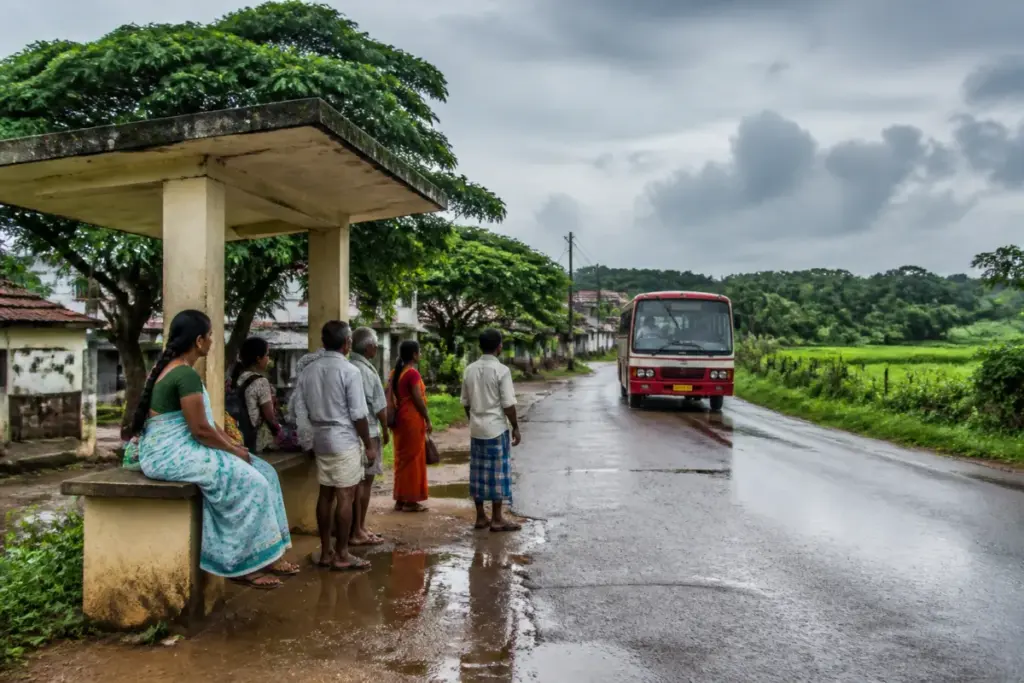
Karnataka has begun preparing a plan to build 1,000 rural bus shelters under the VB-G RAM G employment guarantee scheme, following reports that passengers in villages across the state are waiting for buses in the sun and rain without basic shelter.
Rural Development and Panchayat Raj Minister Eshwar Khandre asked department officials to identify villages with high passenger footfall and prepare designs suited to the rural character and local heritage of each area. His office said the direction was issued in a written communication to the department secretary and the VB-G RAM G commissioner.
Officials have been asked to estimate the material and wage costs for the proposed construction and submit a detailed plan within 15 days. The scheme permits both the construction of new bus shelters and the maintenance of existing ones, allowing the proposal to address locations where facilities are absent as well as shelters that have deteriorated.
The initiative is expected to cover villages selected on the basis of passenger use. Karnataka has 5,927 gram panchayats, and reports cited by the minister’s office indicate that several villages continue to lack shelters despite having Karnataka State Road Transport Corporation bus services. In some locations, existing structures have reportedly become dilapidated and are on the verge of collapse.
The proposed shelters would serve as small but important pieces of rural transport infrastructure. For passengers, the absence of a shelter can turn an ordinary wait for a bus into exposure to extreme heat, rain and unsafe roadside conditions. The issue is particularly significant in villages where residents depend on bus services to reach schools, markets, healthcare facilities and workplaces, although the supplied announcement does not specify the number of affected passengers or the individual villages to be selected.
The plan also links passenger amenities with employment generation. The VB-G RAM G scheme can provide work for unskilled labourers involved in construction and maintenance, while local materials and designs may allow the facilities to reflect the identity of the villages where they are built. The material, wage and location details will become clearer once officials complete the proposal.
The next formal milestone is the submission of the comprehensive plan within 15 days. It is expected to identify the 1,000 villages, specify the proposed designs and set out the estimated construction and wage costs under the scheme.


