

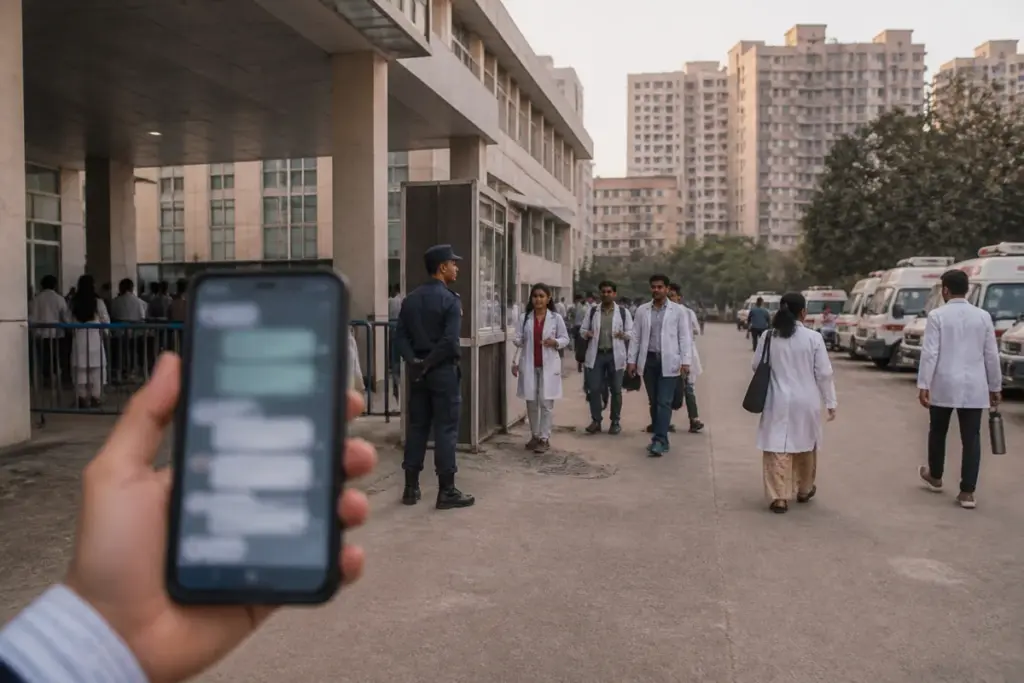
An allegation that resident doctor positions in Delhi government hospitals were being offered for money has triggered a demand for a formal investigation, but the supplied material does not independently establish that any appointment or payment took place. The claim is based on screenshots of alleged WhatsApp conversations circulated on social media and a request by the Indian Medical Association’s Junior Doctors Network for probes by the Central Bureau of Investigation and the Income Tax Department.
Dr Dhruv Chauhan, national spokesperson for the IMA Junior Doctors Network, has written to Union Health Minister J P Nadda and Delhi Health Minister Dr Pankaj Singh seeking an investigation into the matter. The allegations concern resident doctor positions at Indira Gandhi Hospital and Narela, both in Delhi’s government healthcare system.
According to the report, a video shared on social media displayed screenshots of conversations from WhatsApp groups named “Delhi Government Medical Jobs” and “Delhi Government JRship Updates”. The screenshots allegedly showed people asking about resident doctor positions and receiving quoted amounts for posts at the two hospitals. The material circulated online reportedly cited a rate of Rs 1.60 lakh for Indira Gandhi Hospital and Rs 1.30 lakh for Narela.
The alleged conversations also reportedly referred to a two-stage payment arrangement, with half the amount to be paid in advance and the balance after appointment. One message allegedly suggested that cash payment would be preferable, while an online transfer was also presented as an option. These details remain allegations contained in circulated screenshots and have not been verified in the supplied material through hospital records, payment documents, an official inquiry or a statement from the hospitals concerned.
The video was shared on Saturday by a social-media account identified as “@medicodoi”. The report does not state that the account independently authenticated the screenshots or identify the people who allegedly operated the WhatsApp groups. It also does not report confirmation from Indira Gandhi Hospital, the Narela facility, Delhi’s health department, the Union Health Ministry, the police, the CBI or the Income Tax Department.
Dr Chauhan has alleged that money-based appointments to government positions would disadvantage qualified candidates. He has called for the identities of the WhatsApp group administrators and members to be established, along with an examination of payment evidence and the relevant hospital recruitment lists.
That proposed comparison is central to determining whether the alleged conversations relate to genuine recruitment activity or represent an attempt to defraud job seekers. A verification exercise would need to establish whether the hospitals had vacant resident doctor positions during the period in question, how those positions were advertised, which authority conducted the recruitment, and whether the names of selected candidates corresponded with any messages or payment demands. The supplied report does not provide those records.
The allegation raises a governance issue beyond the two hospitals: the credibility of recruitment for public healthcare posts. Government hospital appointments involve institutional procedures and affect both the doctors seeking positions and the patients who depend on the resulting staffing. Any proven manipulation of recruitment would therefore have implications for fairness, accountability and confidence in public healthcare administration. At present, however, the supplied evidence is not sufficient to conclude that such manipulation occurred.
The distinction is important because the available material contains three separate elements: a video circulated on social media, screenshots said to show discussions about prices, and a demand from an IMA representative for an investigation. None of these elements, as described in the report, establishes the authenticity of the messages, confirms that money changed hands or demonstrates that a resident doctor was appointed through an illicit transaction.
The next step sought by the IMA representative is an investigation that can identify the group operators and participants, trace any alleged payments and compare the communications with official recruitment lists. The supplied material does not record whether the central or Delhi governments have ordered such an inquiry, whether either hospital has responded, or whether any law-enforcement agency has begun examining the allegations.


