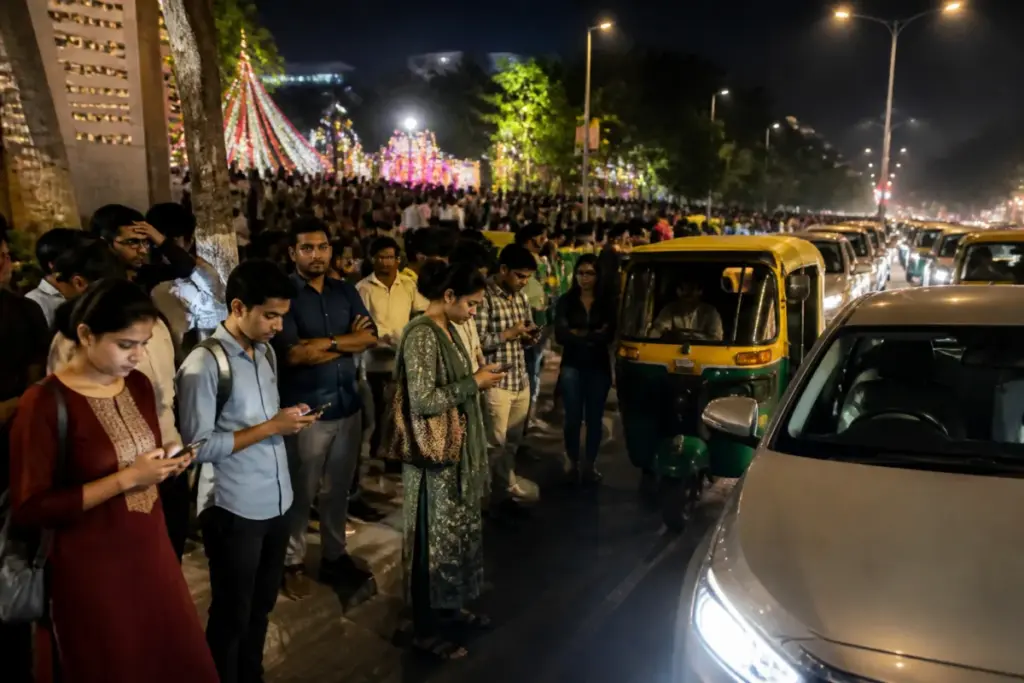
Ahmedabad cab fares have risen sharply during Navratri, with online taxi and auto-rickshaw rides reportedly costing two-and-a-half to three times more during night peak hours and early mornings, placing an added burden on festival-goers, workers and students.
According to a report by Gujarat Samachar, journeys that earlier cost between Rs 100 and Rs 150 are now being offered at prices ranging from Rs 200 to Rs 250. The increase has been reported not only on routes serving garba venues but also for trips to ordinary neighbourhoods across the city.
The fare pressure comes after official changes to auto-rickshaw and taxi rates in August had already increased the cost of urban travel. During the Navratri period, the report said, some online-booked rides were effectively charging between Rs 28 and Rs 32 per kilometre. The higher rates have become particularly visible at night, when people travel to and from garba events, and in the early morning hours after programmes end.
The reported increase is linked to demand-based pricing on online cab and auto-rickshaw services. As the number of passengers rises during the festival, fares displayed on booking platforms increase. This has affected passengers travelling for several purposes, including office commutes, college journeys and trips to residential areas that are not directly connected to festival venues.
The impact is also being felt by passengers who depend on app-based transport because of timing or convenience. Workers returning late from their jobs and students travelling at night may have fewer alternatives when fares rise. The report said that passengers are consequently being forced to spend more to complete journeys that would normally cost considerably less.
The Gujarat Samachar report also alleged that drivers in many cases were reluctant to accept rides unless passengers added a tip. It said some drivers hesitated to take bookings at the fare shown on the app, leaving passengers with limited practical choice but to offer additional money or wait for another vehicle.
The situation highlights the dependence of Ahmedabad’s festival travel on privately operated, app-based vehicles during periods of concentrated demand. It also shows how quickly the cost of short-distance mobility can change when large numbers of people travel at the same time, particularly during late-night and early-morning periods.
The report did not cite a response from the ride-hailing companies, transport authorities or the civic administration regarding the reported fare increases, driver refusals or additional tips. No new enforcement measure or temporary fare-control arrangement was identified in the supplied report. The reported fare pattern is therefore expected to remain a matter of concern for passengers making online bookings during the continuing Navratri travel rush.