Bihar has completed an electric vehicle charging station in Purnia and begun work on facilities in Patna, Muzaffarpur, Darbhanga and Gaya, as the state transport department moves to expand charging access for public and private vehicles.
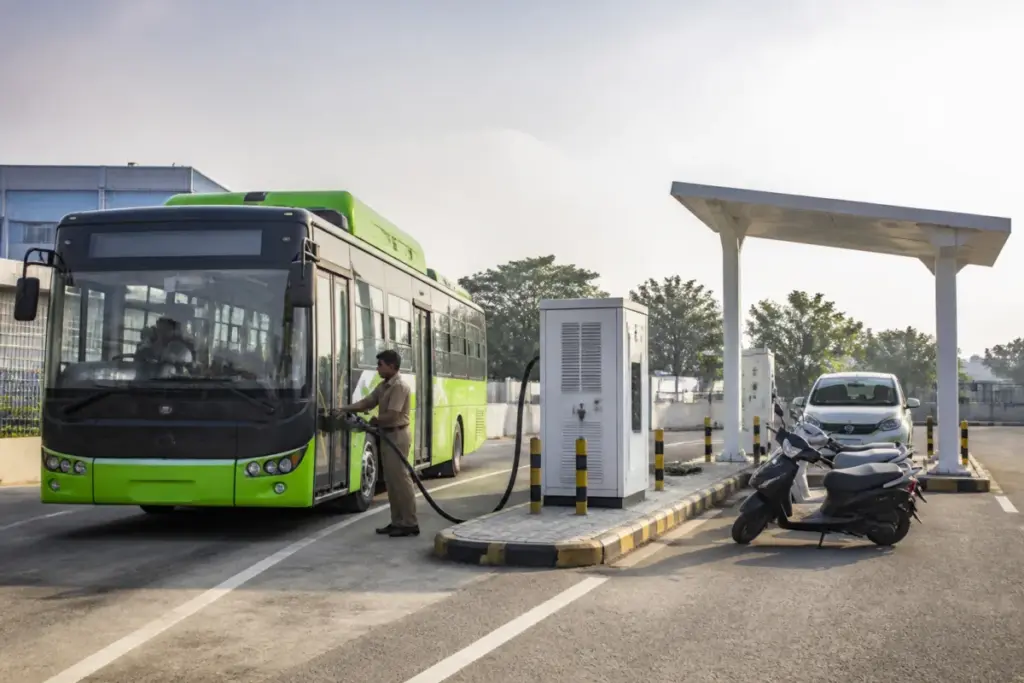
According to a department communique, eight charging points are being established under the rollout. Each depot facility is designed to serve up to 50 buses, while charging an electric bus is expected to take about one to one-and-a-half hours.
Charging stations are already operational at bus depots in Phulwarisharif, Rajgir and Muzaffarpur, the department said. The new network is intended to support electric buses as well as private two-wheelers, three-wheelers and cars.
In Patna, direct-current charging stations for private vehicles are being installed at 10 government office campuses and public facilities. The listed locations include the Main Secretariat, state assembly, collectorate, Vishwesaraiya Bhawan, Vikas Bhawan, Sinchai Bhawan, the multimodal hub at Kankarbagh, Beur Mor and Hardinge Road.
Indian Oil Corporation Ltd is establishing the Patna facilities under a memorandum of understanding with the transport department. The department said charging a car at the facilities would take around 45 to 60 minutes, and that the stations would also serve two-wheelers and three-wheelers.
The rollout comes with a subsidy scheme aimed at increasing private investment in charging infrastructure. Eligible private entities and individuals can receive a subsidy equivalent to 25% of the cost of machinery and equipment, subject to a maximum of Rs 10 lakh per unit.
Under the scheme, charging stations can be established at government buildings, commercial complexes, hotels, hospitals, shopping malls, multiplexes, residential apartments and housing societies with more than five families. Petrol pumps, highway dhabas and restaurants, bus stands and parking areas are also eligible locations.
The department said the state is developing the charging network to make electric mobility more accessible. The latest expansion combines depot-based infrastructure for buses with public and private charging sites, while the department’s communique did not specify commissioning dates for the facilities still under construction.