

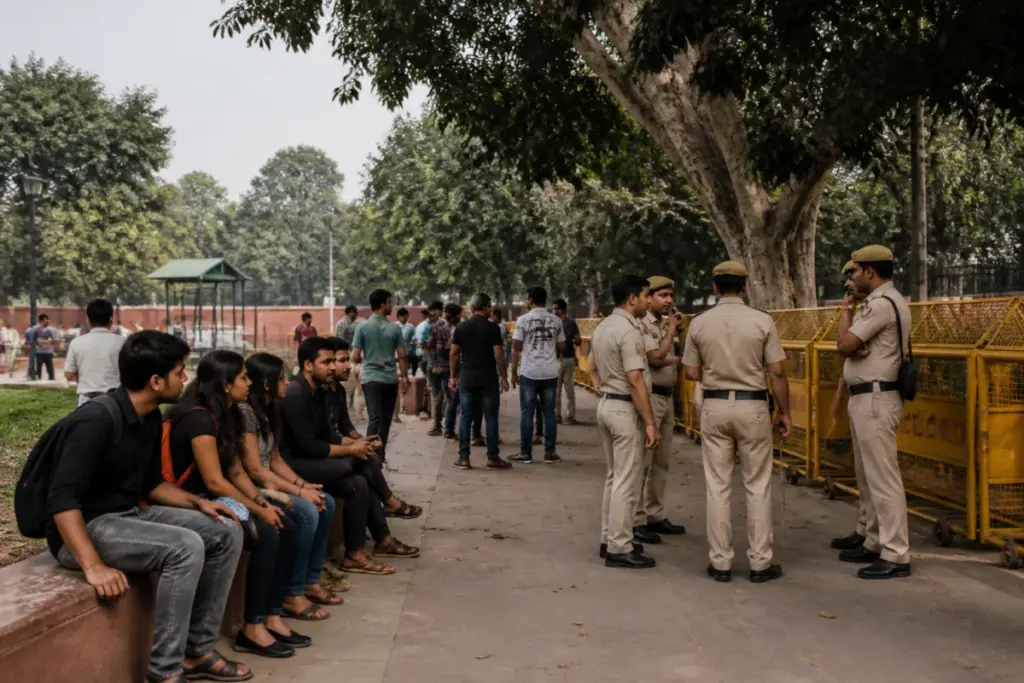
The High Powered Enquiry Committee appointed by the Supreme Court to examine violence at Jantar Mantar and other locations has opened an online portal for complaints and representations from affected people, including police personnel.
The committee said its portal, hpec.nic.in, allows vulnerable witnesses to seek protection and affected people to keep their identities confidential if they choose. It has encouraged complainants and other stakeholders to submit material using the formats provided on the website.
The panel will prioritise complaints concerning the alleged use of pellet guns, targeted violence, harassment of women protesters, excessive force and destruction of property by either side. Its mandate is based on issues listed in paragraphs 12 and 13 of the Supreme Court’s August 18, 2026 order and paragraph 5(i) of the court’s September 10, 2026 order.
“Affected persons and other stakeholders have been encouraged to submit complaints and representations using the applicable formats available on the portal,” a committee spokesperson said, according to the notice cited by The Indian Express.
The committee has also invited information and suggestions relating to the matters covered by the two Supreme Court orders. Submissions can be made online, in person, by post or by email. People wishing to submit material in person can visit the HPEC office at Shiksha Sadan, 17, Rouse Avenue Institutional Area, New Delhi 110002, between 2 pm and 4 pm on working days.
Postal submissions may be sent to the same address, while electronic submissions can be emailed to hpec2026.enquiry@nic.in. The committee’s notice did not set out a separate deadline for filing complaints in the information supplied for the report.
The inquiry follows protests in Delhi in July by the Cockroach Janta Party over the NEET paper leak issue. During the group’s “Sansad Chalo March” on July 20, protesters alleged that police used violence, including pellet guns. The committee’s terms cover events at Jantar Mantar as well as places outside Delhi in the same period.
The complaints mechanism places witness protection and confidential submissions at the centre of the inquiry process. It also provides a formal route for police personnel, protesters and other affected parties to place evidence before a panel operating under the Supreme Court’s orders. Further action will depend on the complaints, representations and other material received by the committee.


