

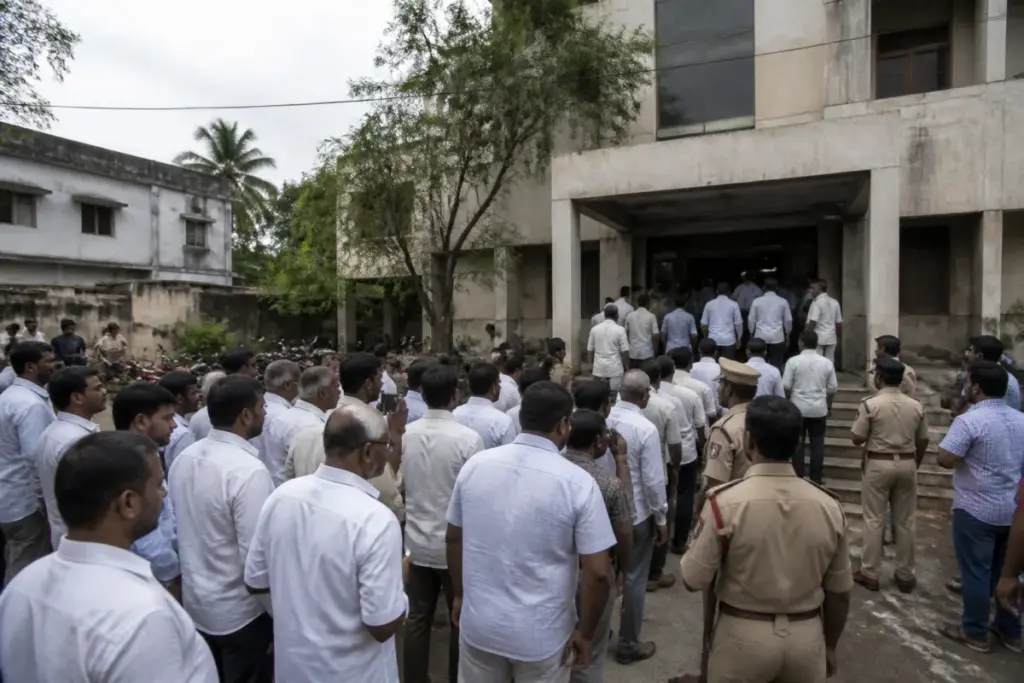
YSRC president Y.S. Jagan Mohan Reddy has demanded President’s Rule in Andhra Pradesh, alleging that violence, intimidation and police bias have undermined the nomination process for the ongoing local body elections.
In a post on X, the former chief minister accused Chief Minister N. Chandrababu Naidu of allowing ruling coalition supporters to interfere with opposition candidates and their proposers. The allegations have not been independently confirmed in the supplied report, and no response from the Andhra Pradesh government or police has been cited.
Jagan Mohan Reddy alleged that YSRC candidates were threatened with knives and sticks, while nomination centres were surrounded to prevent them from submitting papers. He further claimed that nomination documents were snatched and torn inside the offices of Returning Officers, who are responsible for receiving and scrutinising election papers.
The YSRC president also alleged that some party candidates were picked up by the police at night to stop them from filing nominations. According to his post, three YSRC MPs who accompanied candidates as proposers were attacked and had their nomination papers torn in the presence of police personnel.
The allegations cover several parts of the state, including Kadapa, Pulivendula, Kamalapuram, Jammalamadugu, Rajampet, Rayachoti, Punganur, Tirupati, Darsi, Dachepalle and Gurazala. These locations span multiple districts and include areas that have been politically significant in Andhra Pradesh’s electoral contests.
Jagan Mohan Reddy questioned whether ordinary citizens and opposition candidates could participate safely in the local body election process. He alleged that police personnel were protecting ruling coalition supporters instead of ensuring free and fair nominations, and demanded accountability for the reported attacks.
He also raised questions about reported police firing in Pulivendula and sought an explanation for the incident. The demand for President’s Rule places the allegations within a wider constitutional and political dispute over the functioning of the state administration, but the supplied report does not provide details of any formal complaint, inquiry, election authority action or police statement.
The immediate significance for local governance is that disputes during the nomination stage can determine which candidates are able to contest before voting begins. The next official steps would include responses from the state government, police and election authorities to the allegations and any action concerning the reported incidents.


