

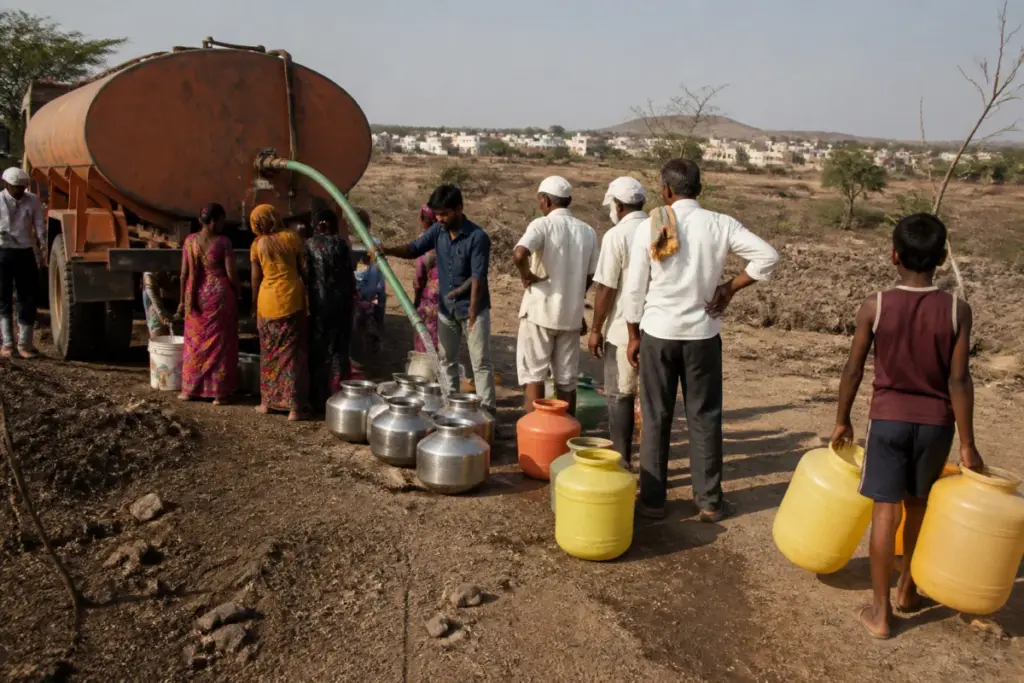
Beed’s drought management response is being tightened around drinking-water supply, crop-loss assessments, crop insurance and livestock support after Deputy Chief Minister and district guardian minister Sunetra Ajit Pawar reviewed the situation with senior officials on Saturday. The district is currently receiving drinking water through 225 tankers, with instructions issued to track their operations through GPS.
The review meeting was held at the Beed district collectorate in the presence of legislators Prakash Solunke and Dhananjay Munde, District Collector Vivek Johnson, Zilla Parishad chief executive officer Jitin Rehman, Superintendent of Police Navneet Kawat, Resident Deputy Collector Shivkumar Swami, District Superintendent Agriculture Officer Subhash Salve and District Planning Officer Sheela Misal, along with senior officials from other departments.
Pawar directed the administration to complete crop-loss assessments, or panchnamas, immediately. Most of the assessments are nearing completion, and officials were told to accelerate further action under the applicable rules once the reports are received. Agricultural and revenue officials were also instructed to maintain transparency and accuracy throughout the crop insurance process.
Drinking water was given the highest priority during the meeting. Officials were asked to monitor the tankers supplying water through GPS and ensure that potable water is not used for construction under any circumstances. Residents were also urged to use water sparingly during the drought and shortage conditions.
The administration was instructed to begin water-conservation works urgently, including recharging water sources, deepening rivers and streams, removing silt and repairing wells. These measures are intended to support local water availability while the district manages the immediate shortage, although the report did not specify project-wise timelines, budgets or implementing agencies for the works.
Fodder availability for livestock was another focus of the review. Pawar asked the administration to plan in advance for the fodder requirement and provide farmers with training in silage, hydroponic fodder and azolla fodder production. The directions place responsibility on district departments to prepare for livestock needs rather than wait for conditions to worsen.
Officials and employees from all departments were told to remain at their headquarters and provide maximum assistance to residents. They were also asked to increase communication with farmers, offer counselling and provide mental support during the crisis. The review emphasised coordinated planning for water, fodder and employment generation to provide immediate relief.
Pawar appealed to citizens to avoid unnecessary expenditure during the drought, including spending on weddings and birthday celebrations, and suggested organising mass marriage ceremonies. She said the state government was taking measures at all levels to help farmers recover from the natural crisis and that the administration was working at full capacity.
The immediate administrative milestones are the completion of crop-loss assessments, receipt of their reports, action under the applicable crop-insurance rules and continued monitoring of the 225 water tankers. The district’s next response will also depend on how quickly water-conservation and fodder-planning measures are taken up across affected areas.


