

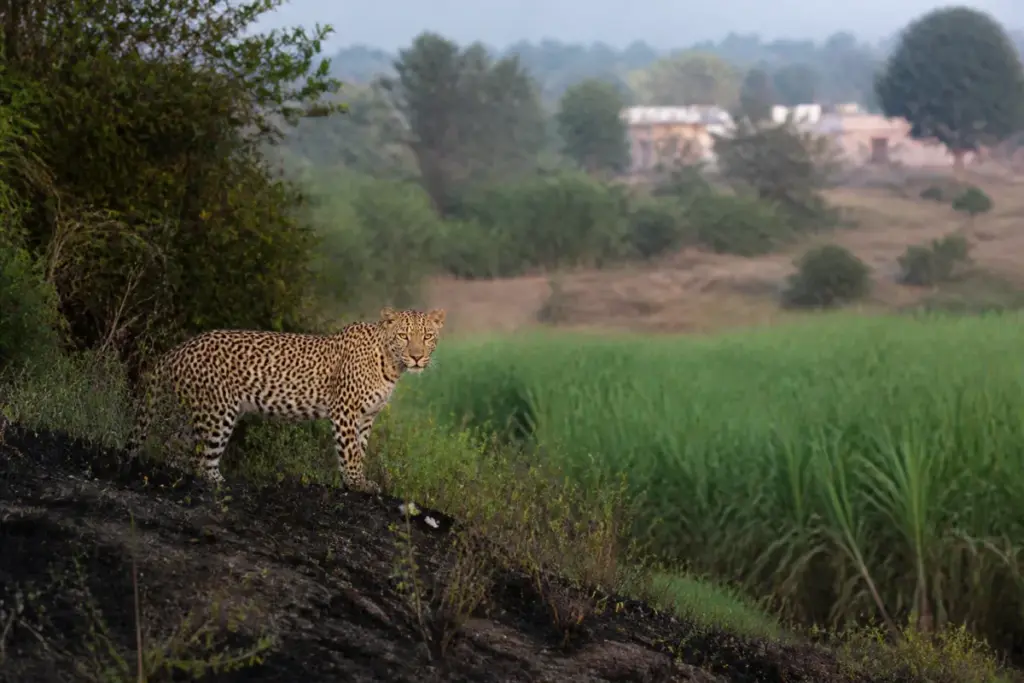
The Maharashtra Forest Department has launched a pilot study using immunocontraceptive vaccines to control leopard reproduction in Junnar, Pune district, where leopards frequently enter settlements and sugarcane fields. Two female leopards have received the vaccine and were safely released into the forest, according to Pune Chief Conservator of Forests Ashish Thakare.
The intervention, known as immunocontraception, is being tested as a scientific method to regulate leopard reproduction in an area with a high leopard density and recurring human-wildlife conflict. The first phase of the campaign has been completed, the Forest Department said.
The study received official approval from the Union Ministry of Environment, Forest and Climate Change under the Wildlife (Protection) Act, 1972. The project is being implemented under the strategic leadership of Principal Chief Conservator of Forests (Wildlife) M. Srinivas Reddy, Additional Principal Chief Conservator of Forests (Wildlife-West) Dr Ravikiran Govekar, Mumbai Chief Conservator of Forests Dr Jitendra Ramgaokar, Pune Chief Conservator of Forests Ashish Thakare and Dr Shantibhushan Jha.
The two vaccinated leopards are being monitored for the vaccine’s biological effects. Blood samples are being examined through the Indian Council of Medical Research to track hormonal changes and assess the long-term impact of the intervention, according to the information released by the Forest Department.
The ICMR-National Institute for Research in Reproductive and Child Health, Mumbai, is participating as the research partner. The animal rescue organisation Team RESQ is providing veterinary support during the operation, with animal safety identified as a priority throughout the process.
Junnar’s landscape includes extensive sugarcane cultivation and settlements located close to forested areas. The Forest Department said the concentration of leopards in the region has contributed to their continued presence around human habitation. The animals’ use of sugarcane fields also makes encounters more difficult to manage because the crop provides cover close to homes and agricultural activity.
The pilot is intended to establish whether immunocontraception can be used safely and effectively to manage leopard reproduction. The Forest Department has not presented the intervention as an immediate solution to individual conflict incidents, and the ongoing monitoring will determine its longer-term effects. The findings from the study will be important in assessing whether the method can be considered for wider wildlife-management use.
The project is being conducted with veterinary and laboratory monitoring after the required approval under wildlife-protection law. Further assessment will depend on the health of the vaccinated leopards, hormonal test results and evidence on the vaccine’s longer-term impact.


