

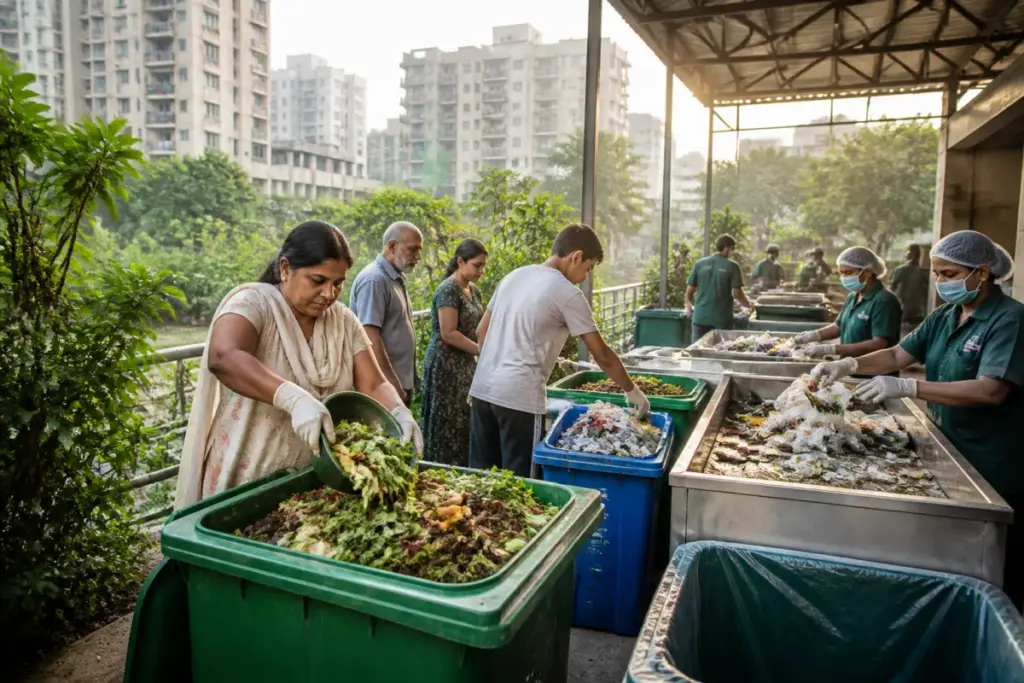
Delhi’s zero-waste colonies are set to cross 1,200 as the Municipal Corporation of Delhi expands a programme focused on decentralised waste processing, source segregation and reducing the amount of garbage sent to landfill sites. The civic body launched Reform Utsav 2026 on Saturday and invited more than 400 potential bulk waste generator colonies and resident welfare associations to work towards zero-waste status.
The initiative is aimed at strengthening solid waste management across the capital by encouraging colonies and RWAs to process waste locally, promote recycling and improve segregation at the point of generation. The MCD said more than 823 colonies and RWAs have already been declared zero-waste locations. The addition of over 400 potential participants could take the total number beyond 1,200.
Under the programme, the identified colonies and RWAs have been invited to sign memoranda of understanding with the civic body. The MCD is also using Reform Utsav 2026 to enable existing zero-waste colonies to share their experiences and the methods they have used to improve waste handling.
Mayor Pravesh Wahi said the corporation has been working continuously to convert colonies and RWAs into zero-waste locations. The new programme will also be used to raise awareness about the Solid Waste Management Rules, 2026, according to the report.
The initiative places resident welfare associations and local communities at the centre of waste management implementation. The MCD is encouraging them to understand and adopt systems for segregating and processing waste at source instead of sending mixed waste through the conventional collection chain.
Sandeep Kapoor, chairman of the MCD’s Environment Management Services committee, said the corporation had taken several steps to improve Delhi’s sanitation system. During the Reform Utsav programme, officials shared information on the process of segregating and processing waste at the site where it is generated.
The civic body said decentralised waste resource management would help reduce the quantity of waste reaching landfill sites and support the goal of “zero waste to landfill”. The approach depends on processing waste closer to where it is produced, although the report does not provide details of the technologies, financing arrangements or implementation timelines that will apply to each participating colony.
The expansion comes as Delhi’s solid waste system continues to depend on effective segregation, local processing and coordinated participation by households, RWAs and municipal agencies. The proposed MoUs are expected to formalise the participation of the more than 400 identified colonies and RWAs as they work towards obtaining zero-waste status under the MCD’s programme.


