

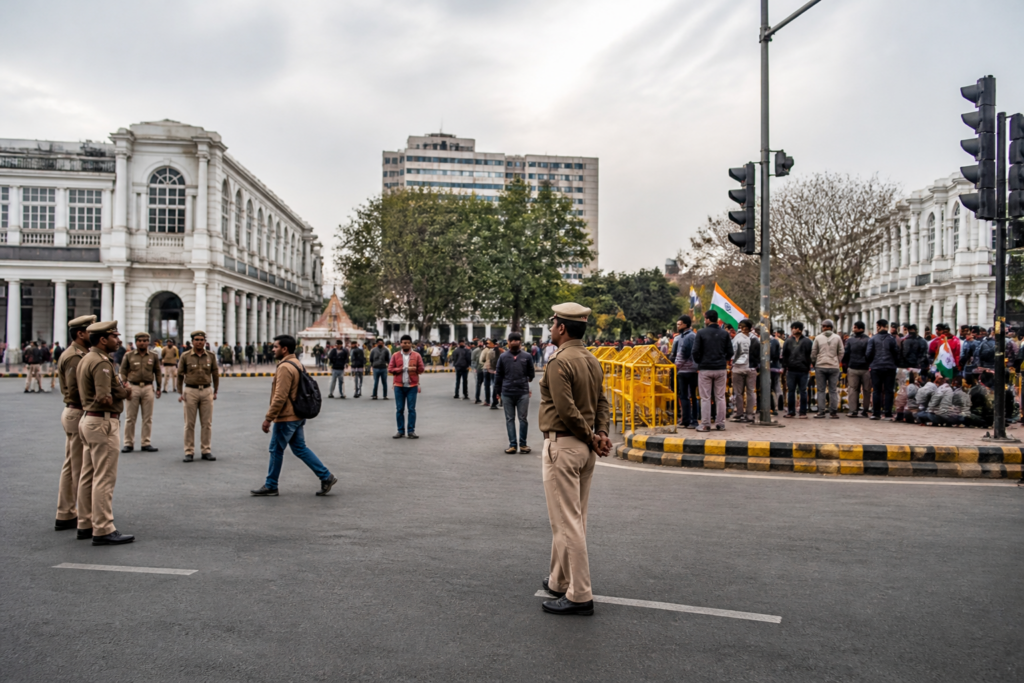
Delhi Police released All India Students’ Association (AISA) national president Neha Bora early on Saturday after detaining her the previous evening ahead of a proposed march at Connaught Place in central Delhi. Bora alleged that protesters were held overnight, denied timely access to lawyers and treated like serious criminals.
According to Live Hindustan’s report, Bora was detained on the evening of October 16 under Section 65 of the Delhi Police Act as a precautionary measure before the ‘Lahara Do Tiranga’ march organised by the Cockroach Janta Party. The report does not state whether the march took place or whether any formal case was registered against Bora.
After her release, Bora told ANI that the detention reflected a wider pattern in which ordinary citizens were taken into custody during the day or evening, held through the night and released the following morning or later. She questioned the legal basis for keeping people in custody overnight and alleged that the conduct amounted to a violation of law and order rather than its enforcement.
Bora also referred to provisions of the Bharatiya Nagarik Suraksha Sanhita concerning the detention of women after sunset. Her comments were made in the context of her own detention, but the report does not include a response from Delhi Police or an independent legal assessment of how the provision applies to the circumstances described.
She further alleged that police officers asked for her name, address and other personal details and did not allow her to speak for a considerable period. Bora said she was also prevented from speaking to a lawyer, while her legal representatives allegedly spent five to six hours trying to contact her. She said access was granted only after they managed to reach her by phone.
The episode comes amid heightened political activity and proposed demonstrations in central Delhi, where public gatherings can affect access to roads, workplaces and commercial areas. Bora criticised what she described as a new narrative of ‘anarchy and disorder’, saying that routes used by residents to travel to work were being closed during protests. Her remarks also linked the demonstration to demands concerning Chief Election Commissioner Gyanesh Kumar and the Special Intensive Revision, or SIR, of electoral rolls.
The reported detention highlights the administrative balance involved in managing demonstrations in a densely used central-city district. Police authorities must regulate crowds and traffic while protesters and other residents retain rights governed by law. In this case, the available report records Bora’s allegations but does not provide the police version, the written grounds for detention, the duration recorded in official documents or details of any judicial or administrative review.
Delhi Police had not provided a response in the supplied report. Further clarity is expected from the police record, the stated legal grounds for the detention and any complaint or legal proceedings arising from the incident.


