

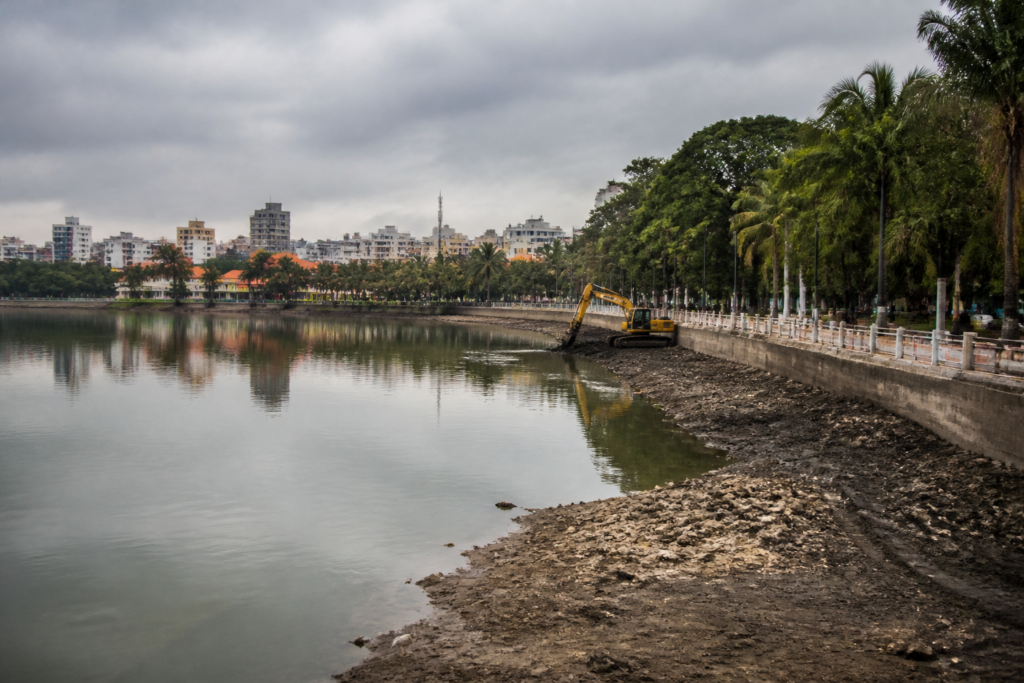
The dispute over Bengaluru’s Rs 82-crore Ulsoor Lake project is no longer limited to questions about desilting or lake beautification. It has become a test of whether large urban waterbody projects can demonstrate a clear chain of approvals, technical justification, environmental safeguards and financial accountability before work proceeds.
RRajagopalan, who approached the Karnataka Lokayukta over the rejuvenation works, has challenged the Bengaluru Central City Corporation’s clarification. In a rebuttal submitted on Thursday, he alleged gaps in approvals, technical documentation and environmental safeguards, and sought independent technical and financial audits. The allegations have not been established as findings by the Lokayukta.
The city corporation’s response, as reported by Bangalore Mirror, presents the project as a technically informed effort to improve Ulsoor Lake. The Bangalore East City Corporation said a geotechnical study had assessed silt accumulation and that its desilting plan was based on specialised recommendations. It also said the initiative would improve environmental health and local infrastructure.
The disagreement therefore centres on a basic but important governance question: what evidence should a civic agency place in the public domain to establish that a lake project is necessary, correctly designed and properly costed?
The approval trail is central to that question. Rajagopalan alleged that the corporation had not produced the final approval for the Rs 82-crore Detailed Project Report, an amended DPR or records verifying revised quantities and rates. These are not minor administrative details. A DPR normally provides the framework through which a public project is defined, measured and priced. If its scope or quantities change, the documentation connecting the original approval to the revised proposal becomes important for assessing whether the project remains within its approved purpose and cost.
The supplied report does not establish that the final approval, amended DPR or revised quantity records do not exist. It records the complainant’s allegation that the documents have not been produced, while the corporation has offered a technical explanation for its proposed works. This distinction matters because the dispute is currently about disclosure and verification, not a proven finding of financial or technical wrongdoing.
The controversy also shows why lake rejuvenation cannot be treated as a single civil-works package. Desilting, sewage management, bund alterations, walkways and retaining structures affect different parts of an urban waterbody system. Each element can change how water enters, is stored, moves through and leaves the lake. The complainant has asked for details on sewage flow and treated-water quality, as well as inspection of gabion walls and walkways allegedly extending into the lake’s water-retention area.
Those requests point to a wider problem in urban environmental projects: the visible component is often easier to communicate than the systems beneath it. A cleaned shoreline or new walkway may be immediately apparent to residents, but the long-term performance of a lake depends on less visible controls, including the quality and quantity of incoming water, the handling of sewage, the technical basis for removing silt and the protection of the water-retention area.
The city corporation’s stated reliance on a geotechnical study gives the project a technical foundation, but the report does not provide the study’s findings, methodology, measurements or recommendations. Without those details, the public cannot independently assess why desilting is considered necessary, how much material is expected to be removed or whether the proposed intervention is proportionate to the lake’s condition.
That gap between a technical claim and accessible technical evidence is particularly important in projects involving natural or semi-natural urban assets. A statement that a geotechnical study supports a tailored plan is not the same as publishing the underlying assessment. For public scrutiny to be meaningful, residents and oversight bodies need to be able to connect the study’s conclusions to the work items and quantities in the DPR.
The financial questions follow the same logic. Rajagopalan has questioned possible duplication of works and spending priorities in the 2025 DPR. The supplied material does not specify which work items may overlap or whether any duplication has been confirmed. However, the allegation highlights the need to map proposed works against earlier interventions and ongoing maintenance responsibilities.
That mapping is crucial because lake projects typically combine capital expenditure with continuing operational obligations. A project may create or repair physical assets, but the city must also maintain them, monitor water quality, manage inflows and prevent new pollution. In the Ulsoor case, the reported dispute over sewage management and treated-water quality suggests that the outcome will depend not only on construction but also on how the lake is managed after the works are completed.
The institutional structure adds another layer of complexity. The report refers to the Bengaluru Central City Corporation and the Bangalore East City Corporation in connection with the project and its clarification. The supplied material does not explain the precise division of responsibilities between these bodies. That absence itself makes institutional clarity relevant: residents need to know which agency approved the DPR, which body is executing the works, which authority is responsible for environmental safeguards and who will maintain the lake after completion.
When responsibilities are distributed across civic bodies, documentation becomes more important, not less. A consolidated public record can show how technical recommendations became a project design, how the design became a cost estimate, how changes were approved and which agency is accountable for implementation. Without that chain, even a technically justified project can appear opaque, while legitimate questions may remain unresolved.
The Lokayukta complaint places the dispute within an oversight process, but the current report does not indicate that the institution has reached a conclusion. The complainant has sought missing records, independent audits and a review of the geotechnical report. The corporation has defended the rejuvenation effort by referring to its study and proposed desilting approach. The next evidentiary step is therefore not a political argument but the production, examination and comparison of the relevant documents.
Several records are particularly important to resolving the disagreement: the final approved Rs 82-crore DPR, any amended DPR, revised quantities and rates, the geotechnical assessment, sewage-flow information, treated-water quality data and documentation for structures located near the lake’s water-retention area. Together, these records would allow an auditor or technical reviewer to test whether the proposed scope, cost and safeguards are aligned.
The case also illustrates the limits of treating public consultation as a communications exercise. Community concerns become difficult to resolve when residents receive broad assurances about environmental or infrastructure benefits but cannot access the technical material behind those assurances. Conversely, allegations of irregularity cannot be treated as established merely because they have been raised before an oversight body. Both the agency’s explanation and the complainant’s objections require documentary testing.
For Bengaluru, the larger issue is the standard applied to urban lake spending. The reported project value of Rs 82 crore is substantial, but the significance of the dispute is not limited to that figure. It concerns how a public authority defines the problem, selects an intervention, prices the work and demonstrates that the intervention will protect the asset rather than merely alter its appearance.
The Ulsoor Lake controversy therefore sits at the intersection of environmental management, civic engineering and public finance. Its outcome will depend on whether the disputed records are produced, whether the technical basis for desilting withstands review, whether sewage and treated-water arrangements are documented and whether the proposed physical works remain within a clearly approved scope.
At this stage, the available evidence confirms a dispute over approvals, technical records, environmental safeguards and spending priorities. It does not establish the complainant’s allegations as facts, nor does it provide enough information to independently evaluate the corporation’s geotechnical justification. The next meaningful development will be the disclosure and scrutiny of the project documents and any findings from the Lokayukta or independent audits sought by the complainant.


