

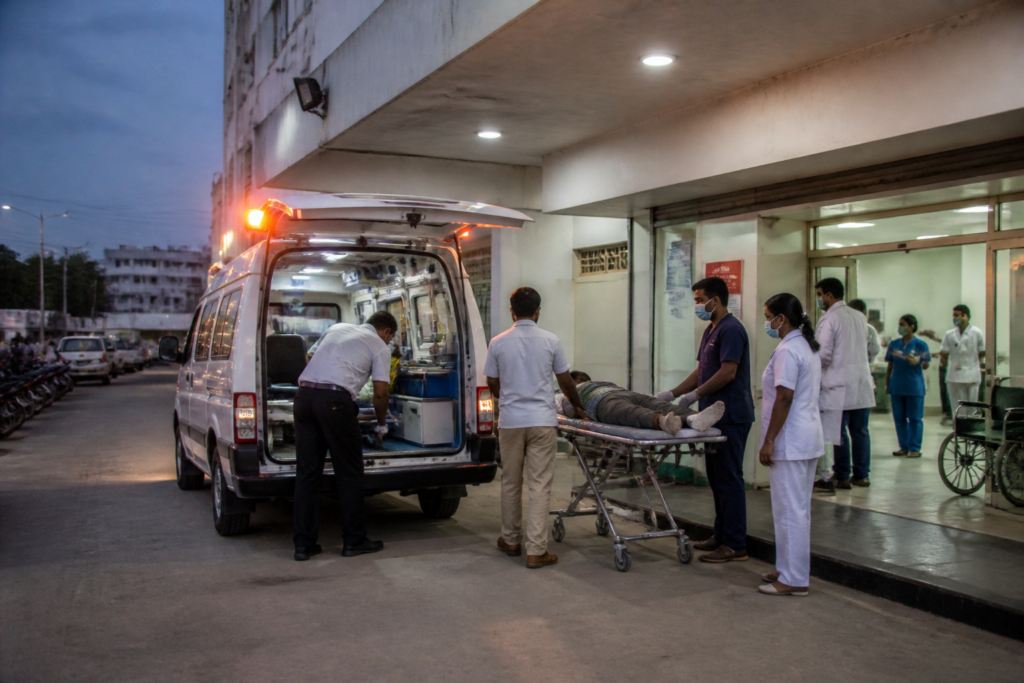
Andhra Pradesh’s Directorate of Medical Education has introduced pre-hospital notification and a State Trauma Registry to improve emergency treatment for accident victims and help hospitals prepare before patients arrive. The measures are intended to strengthen the response during the critical “golden hour” after an accident, according to DME officials.
Under the pre-hospital notification initiative, staff on 108 ambulances will alert the concerned government hospital while transporting an accident victim. The hospital’s medical emergency team, blood services, X-ray and scanning sections, and surgery units can then prepare before the patient reaches the facility.
The initiative is designed to reduce delays between arrival at a hospital and the start of treatment. In serious road accidents, the time taken to mobilise doctors, diagnostic services, blood and operating facilities can affect the treatment process. The new notification system seeks to move part of that preparation into the ambulance journey.
The second measure, the State Trauma Registry, will digitally record details of every accident victim brought to government hospitals. DME additional director Dr Satyanarayana Murthy and state Trauma and Burns nodal officer Dr Sunitha Sankar announced the initiatives in a statement issued on Friday.
The digital registry is being implemented in accordance with Supreme Court directions and Central government guidelines, the officials said. Besides recording patient details, the system is expected to help health authorities identify locations on highways where accidents occur frequently.
That information can provide a common data base for emergency healthcare planning and road-safety interventions. The DME said the registry would help authorities initiate necessary measures at locations with repeated accidents, although the statement did not specify the format of the interventions or identify the highway stretches that would be assessed first.
The initiatives place hospitals and ambulance services within a broader road-injury response system. A crash location, the ambulance network, the receiving hospital and the availability of trauma facilities all influence how quickly treatment begins. The registry is intended to connect information from those cases with decisions on accident-prone locations.
The DME office is providing special training to health staff to implement both initiatives. The success of the system will depend on the timely transmission of information by ambulance personnel, accurate digital registration at hospitals and the ability of emergency departments to act on advance alerts.
State health authorities have also advised people to call the 108 ambulance service immediately after witnessing an accident. They have asked bystanders to remain with the injured person and provide mental support until the ambulance and health personnel arrive. The authorities’ advice makes the public an important first link in the emergency response chain.
The next steps announced by the department are the training of health staff and the operational rollout of pre-hospital notifications and digital trauma records across government hospitals in Andhra Pradesh.


