

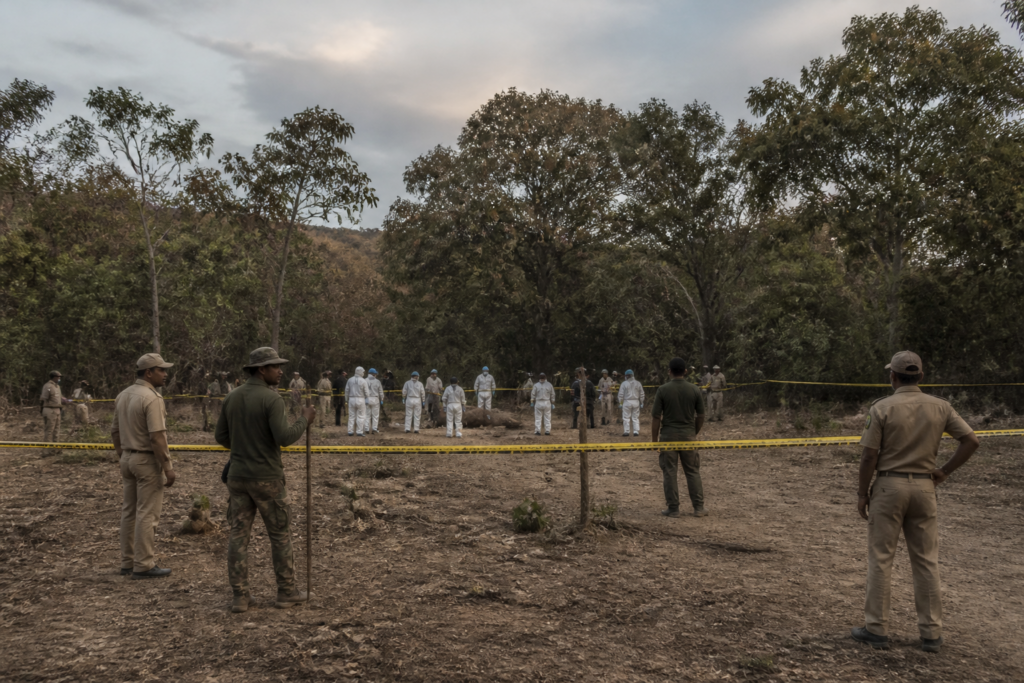
A female elephant has died of anthrax in the Gopanari Reserve Forest under the Periyanaickenpalayam range in Coimbatore district, prompting forest authorities to isolate the site and incinerate the carcass under prescribed safety protocols.
A forest patrol team found the carcass at around 4pm on Tuesday. Preliminary observations indicated that the elephant had died a day earlier. After reviewing photographs of the carcass, forest officials suspected a possible anthrax infection and arranged for further testing.
Forest veterinarians collected a blood smear on Wednesday and sent it to the district animal husbandry department. The department subsequently confirmed that the elephant had died from anthrax infection, according to officials cited in the report.
Following the laboratory confirmation, authorities established a 50-metre perimeter around the carcass. Immediate measures were taken to prevent scavengers and other animals from approaching the site while disposal arrangements were made.
The response was ordered by the field director and chief conservator of forests of the Anamalai Tiger Reserve, along with the district forest officer in charge. The carcass was incinerated at the location where it was found on Thursday.
Officials said the disposal followed guidelines issued by the Ministry of Environment, Forest and Climate Change and the Tamil Nadu Environment, Climate Change and Forests Department. The on-site disposal was carried out after the infection was confirmed through laboratory testing.
The incident places the focus on the operational procedures used when a disease is suspected in a wild animal carcass. In this case, officials moved from photographic assessment to blood-smear testing, site isolation and controlled disposal after receiving confirmation from the district animal husbandry department.
No further details about additional animal deaths, human exposure or wider restrictions in the reserve forest were provided in the report. The immediate official action described was the isolation and incineration of the infected carcass in accordance with the stated forest and environment department guidelines.


