

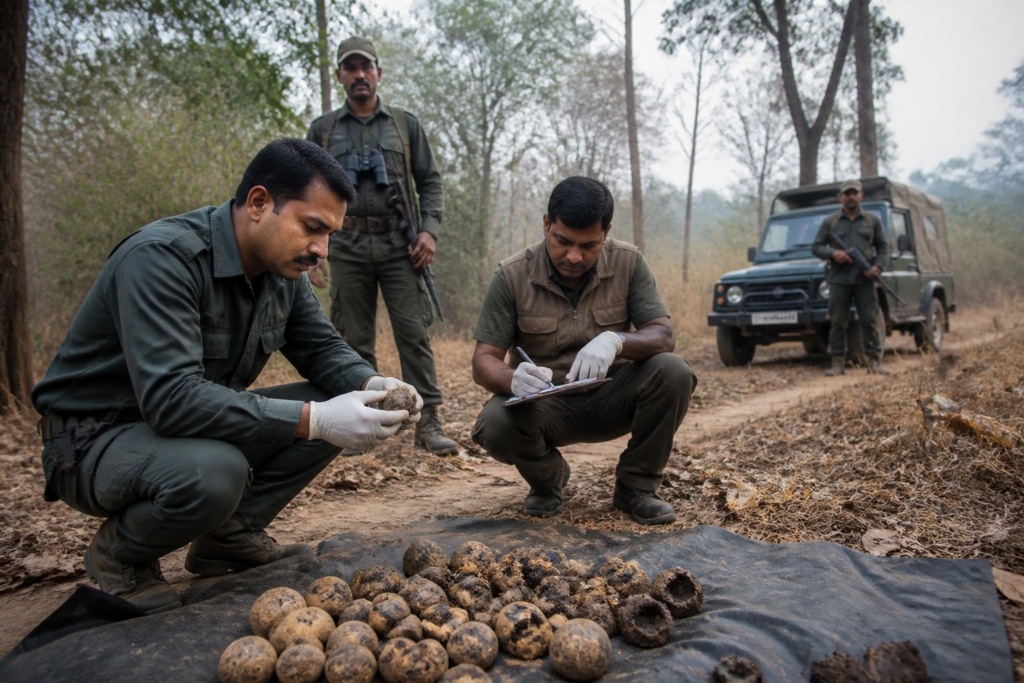
Bait bombs made with decomposed goat skin killed a wild boar in Angul district, while forest officials arrested four people and seized six live explosives during a night patrol operation, exposing a continuing threat to wildlife, livestock and people in Odisha.
The wild boar was killed on Tuesday night in Biripal reserve forest under the Angul forest division after it bit into edible material laced with an explosive. Officials said the strong smell of dried and decomposed goat skin was used to attract the animal to the device.
Forest authorities said the bombs were not manufactured in Angul but were brought from neighbouring Deogarh district. The wildlife wing has sought police assistance to trace the source of the explosives and identify those involved in making and supplying them.
“We are trying to ascertain who are making these bombs and where they are being manufactured. In this case, interrogation of the four accused revealed that the bombs were prepared in Deogarh district,” Kaniha range officer Debadatta Sutar said.
The arrests followed a night patrol conducted by the Rengali forester and his team in Gandamala beat under the Rengali section of Kaniha range. Apart from recovering the carcass of the male wild boar, officials seized six live bait bombs concealed inside edible material.
Forest authorities said the seizure prevented further wildlife casualties. Bait bombs are designed to explode when an animal bites into them, causing severe injuries or death. Their use also creates a wider safety risk because the devices can be consumed or touched accidentally by livestock, forest workers and other people moving through areas near forests.
The Angul incident has brought renewed attention to the use of bait bombs in Odisha. Two months ago, a bull on the fringes of Chandaka wildlife sanctuary near Banki accidentally consumed a bait bomb allegedly intended for a wild boar. The explosion caused severe internal injuries to the animal’s mouth. Despite prolonged veterinary treatment, the bull later died.
The incidents show how explosives placed as wildlife traps can move beyond their intended targets and affect animals in areas adjoining forests and sanctuaries. In both cases cited by officials, the devices were concealed in edible material, making them difficult for animals to distinguish from food.
The forest department is now investigating the supply chain behind the devices, including their alleged manufacture in Deogarh and movement into Angul. Officials said efforts are under way to dismantle the network involved in the production and supply of the deadly traps.


