

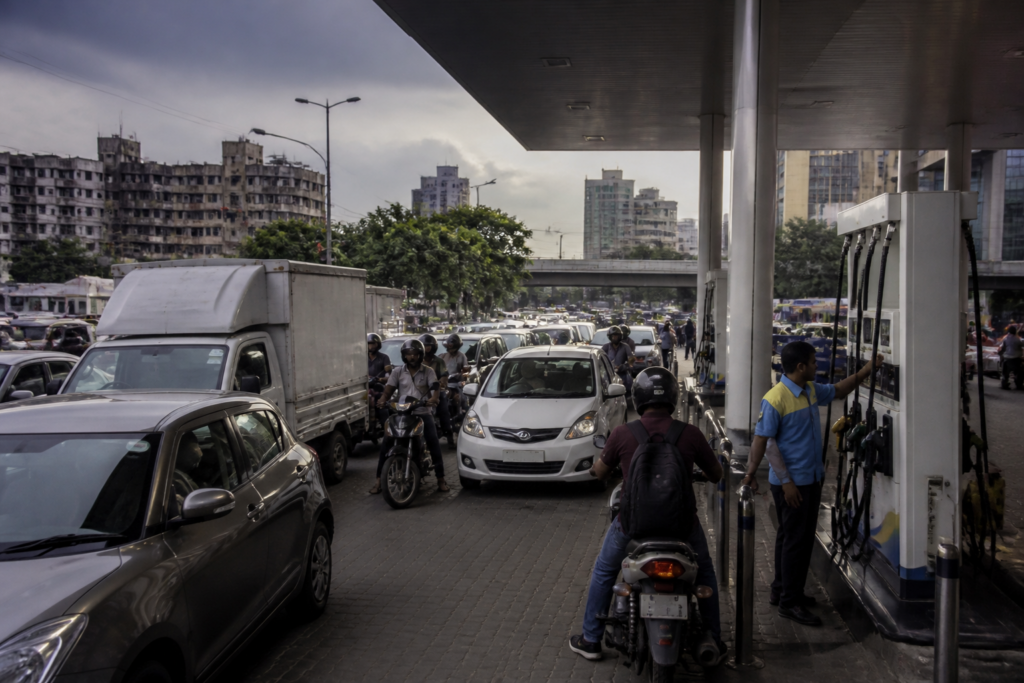
A possible increase in petrol and diesel prices in November could create a new pressure point for India’s urban economy, according to an Oxford Economics assessment reported by Bloomberg and carried by Aaj Tak Business. The forecast links higher pump prices not only to household and transport costs, but also to a possible rise in inflation and interest rates over the coming policy meetings.
The central fact is not that fuel prices have been raised. No such announcement is reported in the supplied material. Instead, Oxford Economics has identified November as a limited window in which an increase could occur before campaigning intensifies ahead of elections in seven states next year. Five of those states, including Uttar Pradesh and Punjab, are expected to vote between March and May, according to the report.
That distinction matters for cities. Petrol and diesel prices are embedded in everyday urban movement, delivery networks and operating costs, but the immediate policy question is broader: whether a fuel-price decision could pass through into inflation strongly enough to influence the Reserve Bank of India’s interest-rate path. The Oxford assessment says it could.
The report attributes the forecast to Alexandra Hermann Prasad, lead economist at Oxford Economics. It says a November increase could be half the size of the fuel-price increase made in May, when retail fuel prices rose amid tensions in the Middle East. The supplied report does not specify the expected rupee increase per litre, nor does it identify a government or oil-marketing-company decision to revise prices in November.
Instead, the analysis is built around the inflation effect. Oxford Economics estimates that a fuel-price increase could push retail inflation to 6.2 per cent in the October-December quarter and 6.5 per cent in the first three months of 2027. Those figures would exceed the Reserve Bank of India’s stated inflation target range of 2 to 6 per cent, as described in the report.
The forecast is higher than the RBI’s own estimate cited in the article. At the beginning of October, the central bank’s monetary policy review projected inflation at 6 per cent for the October-December quarter, easing to 5.7 per cent in January-March. Oxford Economics expects greater price pressure in the next financial year and forecasts inflation at 5.4 per cent for the year ending in March, compared with the RBI’s 5.2 per cent estimate.
The difference between those projections is not only a technical disagreement. It shows how the same fuel-price decision can be interpreted through two institutional lenses. The RBI’s projection forms part of its monetary-policy assessment, while Oxford Economics is modelling a possible outcome if fuel prices rise in November. Neither figure, on the evidence supplied, establishes what inflation will ultimately be.
### Why fuel prices matter to urban economies
For urban residents, the first visible effect of a petrol-price increase would be at the fuel station. But the economic transmission does not stop there. Fuel is also a cost within the movement of people and goods. The supplied report does not quantify the impact on bus fares, taxi charges, freight rates, delivery costs or household transport budgets. It therefore cannot establish how much any potential increase would add to specific urban expenses.
It does, however, identify the mechanism that makes fuel policy significant beyond private vehicles. A higher retail fuel price can become part of the operating environment for transport and distribution. If that pressure contributes to a wider increase in consumer prices, the consequence is measured not only in litres purchased but also in the purchasing power available for rent, food, services and mobility. The report’s inflation projections are the evidence offered for that wider risk.
The absence of detailed city-level numbers is important. The supplied material does not compare fuel dependence across cities, distinguish between petrol and diesel users, or show how the effects would vary between households using private vehicles and those relying on public transport, taxis or delivery services. Those questions remain outside what the report establishes.
The urban significance therefore lies in the connection between a national pricing decision and local cost pressures. Cities do not set the inflation rate or the RBI’s policy rate, but residents experience the consequences through daily travel and household expenditure. The article provides the macroeconomic link, while leaving the city-level distribution of the impact unresolved.
### The interest-rate channel
Oxford Economics says that if officials do not announce a fuel-price increase in November, its inflation estimates for the coming quarters could fall by 10 to 30 basis points. Even without the proposed increase, however, the firm expects inflation to remain elevated. It says this could encourage the RBI to raise interest rates by 25 to 50 basis points at its December and February policy meetings, following a 25-basis-point increase in October.
This is a forecast of possible policy action, not a confirmation of the RBI’s future decisions. The report does not state that the central bank has committed to the December or February increases. Its argument is conditional: higher inflation could create pressure for further monetary tightening, while the absence of a November fuel-price increase could reduce the inflation forecast.
For the built environment and urban economy, interest rates matter because borrowing conditions influence household finance, business activity and project economics. The supplied material does not provide data on home loans, construction finance, real-estate sales or municipal borrowing, so it cannot quantify those effects in this case. The evidence supports only the narrower conclusion that a fuel-price shock could become part of the inflation backdrop against which borrowing costs are decided.
That conditional chain is the main analytical value of the report. A price at the petrol pump could affect the inflation outlook; the inflation outlook could influence monetary policy; and monetary policy could alter the financial conditions facing households and businesses. Each link depends on factors that are not fully detailed in the supplied report.
### Elections and the timing question
The report also places the possible November increase in a political timetable. India is due to hold elections in seven states next year, with five, including Uttar Pradesh and Punjab, expected to vote between March and May. Oxford Economics describes November as a limited opportunity to raise pump prices before campaigning becomes more intense.
This does not establish the motive of any government or pricing authority. It presents a timing assessment made by the economic consultancy and reported by Bloomberg. The supplied material contains no official statement confirming that election considerations will determine fuel prices, and no announcement from the central government or oil companies setting out a November schedule.
The timing is nevertheless relevant to how fuel pricing operates as a public policy issue. Petrol and diesel are highly visible prices, and changes can be noticed immediately by households and businesses. The report suggests that the decision could carry both economic and political consequences, but it does not provide evidence of how authorities will weigh those considerations.
### Currency pressure adds another layer
Alexandra Hermann Prasad also said recent RBI measures in currency markets should help control volatility in the rupee. However, she added that intervention alone was unlikely to ensure lasting currency stability because of high oil prices and continuing external funding pressures.
This part of the assessment connects fuel costs to the external economic environment. The supplied article does not specify the RBI measures, the level of rupee volatility, the price of oil or the scale of external funding pressure. It therefore supports no numerical conclusion about the currency. It does show that Oxford Economics views the fuel-price question as connected to inflation and currency conditions rather than as an isolated retail-price issue.
For Indian cities, that connection is significant because urban costs are shaped by both domestic policy and international energy conditions. Yet the report also makes clear that a single intervention cannot settle the wider pressure permanently, according to the economist quoted. The statement remains an assessment, not an official finding or policy commitment.
The evidence currently confirms a risk scenario, not a price revision. Oxford Economics expects a possible November fuel-price increase to lift inflation above the RBI’s target range and potentially increase pressure for further rate hikes. The RBI’s own inflation projections are lower, while the timing of any fuel-price decision remains unconfirmed in the supplied material. The developments requiring monitoring are an official announcement on petrol and diesel prices, the RBI’s next policy decisions, and whether subsequent inflation data support either forecast.


