

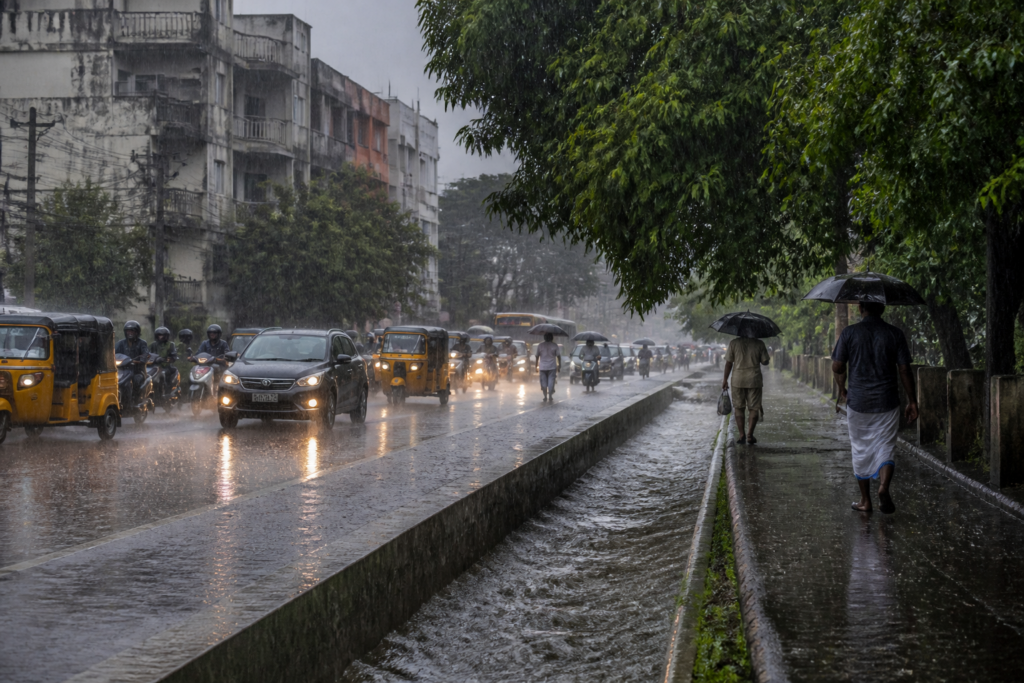
The Northeast Monsoon 2026 season has begun across southern India after the southwest monsoon withdrew from the remaining parts of the country, the India Meteorological Department (IMD) said. The transition occurred on October 15, the normal date for the end of the southwest monsoon season and the beginning of the northeast monsoon.
The IMD said the southwest monsoon’s withdrawal from India began on September 19 and was completed within the normal seasonal window. The monsoon generally remains active in the country for about 137 days, from its arrival in Kerala to its final withdrawal. This year, it remained active for 133 days, according to the report.
The northeast monsoon is currently showing activity over southern India and adjoining areas of the Bay of Bengal. Near the surface, winds are moving from the northeast towards the southwest over southern India, the southern and central Bay of Bengal and the adjoining northwestern Bay of Bengal. The change in wind direction is one of the indicators used to identify the onset of the northeast monsoon.
The IMD said widespread rainfall was recorded in Tamil Nadu, coastal Andhra Pradesh, Puducherry, Rayalaseema, southern Karnataka and parts of Kerala. Some locations also received heavy rainfall. These areas typically receive a substantial share of their seasonal rain during the northeast monsoon, making the onset important for water availability, agriculture and local infrastructure management.
The seasonal transition also comes after a weak post-monsoon start across much of the country. During the first fortnight of the post-monsoon season, India recorded 69% less rainfall than the average, according to the report. Rajasthan, Gujarat, Madhya Pradesh, Chhattisgarh, Odisha, Jharkhand, West Bengal, Telangana, Andhra Pradesh and Karnataka recorded rainfall at least 60% below their respective averages during the period.
The uneven distribution has different implications for cities and regions. While rainfall in southern states can support reservoirs, groundwater recharge and water-intensive agriculture, intense spells can also place pressure on drainage systems, roads and low-lying urban areas. The IMD’s identification of heavy rainfall in parts of the region underlines the need for local authorities to monitor rainfall intensity as well as seasonal totals.
The southwest monsoon and northeast monsoon do not affect all parts of India in the same way. The withdrawal of the southwest monsoon reduces rainfall over much of central, western and northern India, while the northeast monsoon becomes the principal rainfall system for parts of the southeastern peninsula. This makes the timing and distribution of the transition significant for municipal water planning and weather-sensitive infrastructure.
The IMD’s latest assessment establishes that the seasonal change has taken place on schedule. Rainfall conditions across the southern states, including the possibility of heavy spells in some locations, will remain the immediate operational concern for local administrations as the northeast monsoon becomes active.


