

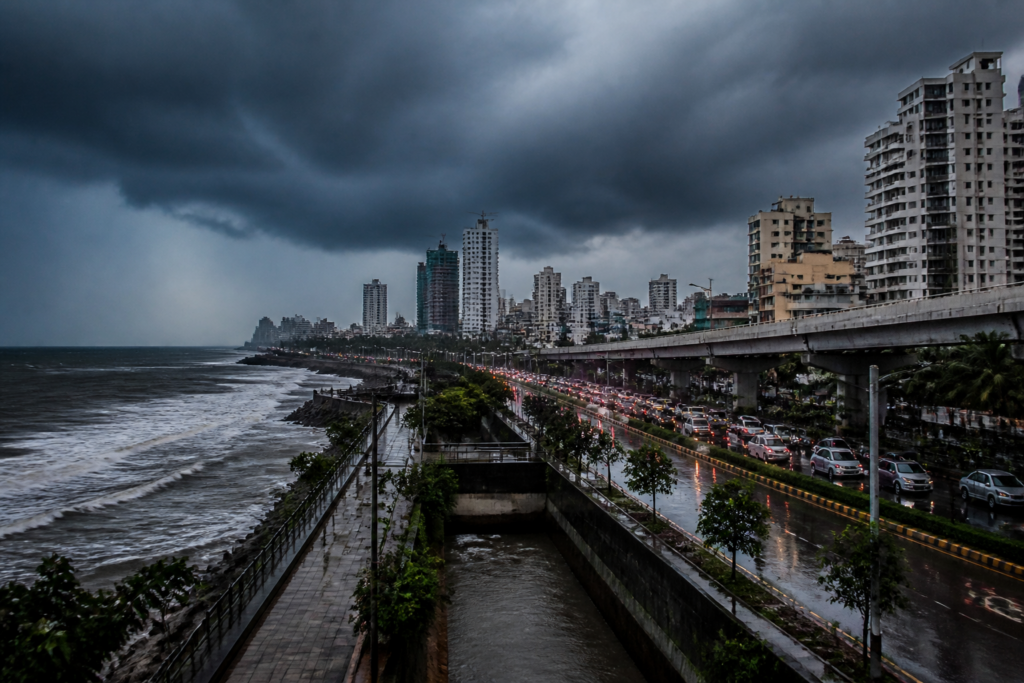
The reported Arabian Sea cyclone threat places Mumbai and Maharashtra’s weather preparedness under scrutiny, with a low-pressure area said to be developing over the sea and a possibility of cyclone formation near Ratnagiri on October 26. The report, published by Pudhari, says the system could move towards Mumbai and bring heavier rain after a spell of moderate rainfall across the state. However, the central forecast has not been independently established in the supplied material and requires confirmation from an identifiable official weather bulletin.
According to the report, moderate rain is expected across Maharashtra from October 16 to October 21. The forecast covers Konkan, Madhya Maharashtra, Marathwada and Vidarbha, indicating that the weather system could have implications beyond the immediate coastal belt if it develops as described. The report says rainfall intensity may increase after October 26 if the cyclone forms.
The report attributes the projected cyclone formation and Mumbai-facing movement to scientists, but does not name them or cite a specific forecast bulletin. It separately states that the weather department announced the southwest monsoon’s withdrawal from the entire country after the monsoon had retreated from the country on October 15. This distinction matters because a forecast of a possible cyclone is not the same as an official cyclone warning, and the supplied report does not establish that the system has reached a stage at which its track or intensity can be confirmed.
For Maharashtra’s urban areas, the reported possibility is significant because the state’s largest population centres are closely connected to the Konkan coast and its weather systems. Mumbai, Navi Mumbai and other coastal settlements depend on functioning roads, rail services, drainage networks, power systems and emergency response arrangements during periods of intense rain. Even a forecast of moderate rainfall can require authorities to monitor low-lying areas, transport corridors and sites where construction or excavation may obstruct drainage. The supplied material, however, does not report any government advisory, municipal preparedness order, school instruction, transport restriction or evacuation measure.
The report also places the forecast against an unusually dry October. It says Maharashtra recorded a 69 per cent rainfall deficit between October 1 and October 15. The article links the broader rainfall pattern to an El Nino influence and says the monsoon withdrew five to six days earlier than usual. It reports that the retreat began from western Rajasthan on September 5 and that the monsoon left the country on October 15 without producing substantial rain during the first half of the month.
That combination of an early monsoon withdrawal, an October rainfall deficit and a possible post-monsoon cyclone highlights the uneven way in which cities experience seasonal weather. A dry period does not remove flood risk. Instead, rainfall can shift from regular monsoon distribution to shorter, more concentrated events associated with changing weather systems. The supplied report does not provide rainfall intensity projections, expected wind speeds, storm-surge estimates or location-specific warnings, so it cannot establish the level of risk for particular urban communities.
The report says the possibility of three successive cyclones over the Arabian Sea and the Bay of Bengal after the retreating monsoon had been forecast by scientists in September. It identifies the possible system near Ratnagiri as the first of these, but gives no names, institutions, model outputs or published document for that earlier forecast. Those details are necessary to assess the basis of the claim and distinguish a broad seasonal outlook from a current operational warning.
The weather conditions described in the report are also occurring alongside continued heat in parts of Maharashtra. Ratnagiri recorded 39.4 degrees Celsius on October 15, according to the article. The combination of high temperatures and a possible shift towards rain creates a difficult operating environment for cities, where residents, public agencies and infrastructure systems must respond to rapidly changing conditions. Yet the report does not specify whether the temperature reading was an official observation, nor does it provide comparable readings for Mumbai or other districts.
For municipal administrations, the immediate institutional question is not only whether a cyclone will form, but how early and clearly risk information reaches the agencies responsible for urban services. A confirmed warning would normally need to be translated into operational decisions involving disaster management authorities, civic bodies, transport operators, electricity providers, hospitals and local communities. The supplied article does not record such coordination or identify any response by the Maharashtra government, the Mumbai civic administration, the state disaster management authority or the India Meteorological Department.
This absence of an official response is one reason the reported forecast should not be treated as a confirmed event. The article establishes that a low-pressure area is reportedly forming over the Arabian Sea and that cyclone development is considered possible. It does not establish the system’s exact location, pressure, wind speed, movement, landfall probability or likely rainfall distribution. It also does not state that Mumbai is expected to face a direct landfall or that any public warning has been issued.
The urban significance of the report lies in the gap between seasonal weather information and actionable city-level preparedness. Residents need to know whether public transport will operate, whether schools or offices will be affected, whether coastal areas face restrictions and which localities may experience flooding. Authorities need verified forecasts before deploying resources or issuing instructions. Between these two needs lies the role of official communication: converting uncertain atmospheric conditions into clear, location-specific guidance without overstating the risk.
At present, the evidence supplied by Pudhari supports reporting that Maharashtra may receive moderate rain from October 16 and that a cyclone could possibly develop near Ratnagiri on October 26. It does not support treating a Mumbai-bound cyclone as confirmed. Primary-source verification from the relevant weather authority, along with updated information on the system’s formation, movement, intensity and expected rainfall, is required before the forecast can be published as established fact.


