

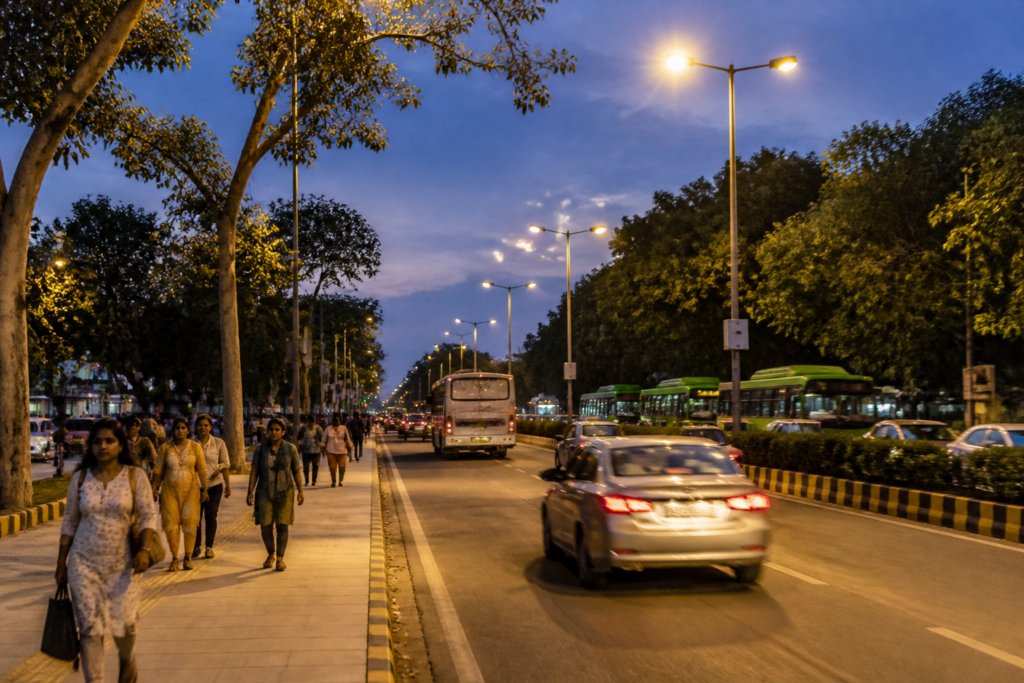
Delhi has launched a project to install one lakh smart LED street lights across the city, targeting dark spots, women’s safety, lower energy consumption and faster repairs through a central monitoring system. The initiative was launched by Chief Minister Rekha Gupta from the Andrews Ganj bus stop in South Delhi on Thursday under the government’s Seva Sankalp Abhiyan.
The project follows concerns raised by women students during Gupta’s recent interaction at Delhi University, who pointed to inadequate lighting and dark spots in several parts of the Capital. Around one lakh existing street lights will be replaced or upgraded, including approximately 45,000 high-pressure sodium vapour lamps.
The new system will include smart feeder pillars and individual monitoring of each light. The Public Works Department will track the network through a central command centre that will receive real-time information on whether lights are operational. The government has set a target of maintaining 99% functionality across the system.
Under the service arrangement, faulty lights are required to be repaired within 48 hours of a complaint. Agencies that fail to meet the deadline will face a penalty of Rs 2,000 per light per day, according to the details reported by The Indian Express. Each light will also carry a QR code that citizens can scan to access information and register complaints.
The lights will use smart scheduling to increase illumination during the evening and reduce it in the morning. The government projects savings of around Rs 100 crore over five years through lower energy consumption. The system is also intended to maintain average illumination levels of 35 lux on main roads and 25 lux on service roads for seven years.
The project specifies a colour temperature of 3,000 kelvin and a minimum luminous efficacy of 150 lumens per watt. Lux is the standard measure of illuminance, while luminous efficacy indicates how efficiently a light source converts electricity into visible light.
Gupta said the initiative was part of efforts to create a safer Delhi and improve public services through technology, transparency and accountability. PWD Minister Parvesh Sahib Singh said better visibility on roads and public spaces would make night-time travel safer, while adding that monitoring and timely repairs would be essential to maintaining the system.
The programme’s next operational test will be whether the central monitoring system, complaint QR codes and repair penalties translate into consistently functioning lights across neighbourhood streets, service roads and other identified dark spots.


