

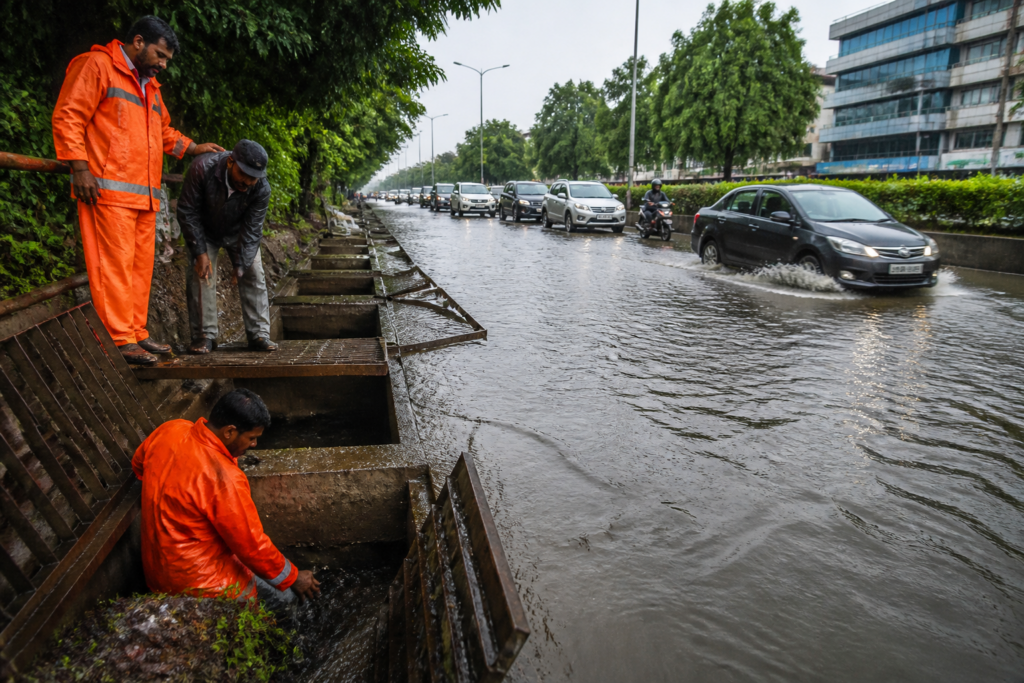
Chandigarh’s municipal corporation and the UT administration’s engineering department do not own a super suction machine to clean deep sections of stormwater drains, an RTI response has revealed, raising concerns about the city’s ability to prevent waterlogging during intense monsoon spells.
The finding, reported by the Times of India, shows that both civic agencies depend on manual cleaning for drain maintenance. According to environmental activist L R Budhania, who filed the RTI application, manual work generally clears debris from the surface but cannot adequately remove deep silt and compacted blockages.
Budhania said the absence of suitable machinery indicated that the city lacked a proper system for cleaning the deeper sections of its drainage network. He said the limitation contributed to recurring waterlogging because blockages below the surface could remain even after visible debris had been removed.
The municipal corporation had previously hired a super sucker on rent through one of its wings, but its use was limited to a small portion of a single sector, according to the report. The arrangement therefore did not provide city-wide access to mechanised equipment for maintaining deep stormwater drains.
The equipment gap has become more significant as heavy rainfall places sudden pressure on Chandigarh’s drainage system. During a recent spell, the city received 72.4 mm of rain in two hours. Roads were inundated, traffic was disrupted and stretches of Madhya Marg were damaged. Water also entered basements, showrooms and residential units in Sector 16, Sector 22 market and the Sector 26 grain market.
Stormwater drains are designed to move rainwater away from roads, markets, homes and other built-up areas. Their performance depends not only on the size and layout of the network, but also on regular removal of silt and blockages from sections that cannot be reached effectively through surface-level cleaning. The RTI finding identifies a maintenance constraint affecting that second requirement.
The issue involves two separate public agencies: the Chandigarh municipal corporation and the UT administration’s engineering department. The response reported by the Times of India does not indicate that either agency currently owns the required super suction equipment. It also does not establish whether a city-wide rental arrangement, a dedicated procurement plan or another mechanised cleaning system is being considered.
Budhania said intense rainfall would continue to put pressure on the drainage system, while the lack of specialised machinery could limit the agencies’ ability to prepare for such events. He called attention to the need to strengthen mechanised drain-cleaning capacity to improve monsoon preparedness and reduce the risk of waterlogging.
The latest finding places the focus on the maintenance capacity behind Chandigarh’s stormwater infrastructure. The immediate questions for the civic agencies are whether deep drains are being cleaned across the city, how often mechanised equipment is available, and what system will be used before the next period of intense rainfall.


