

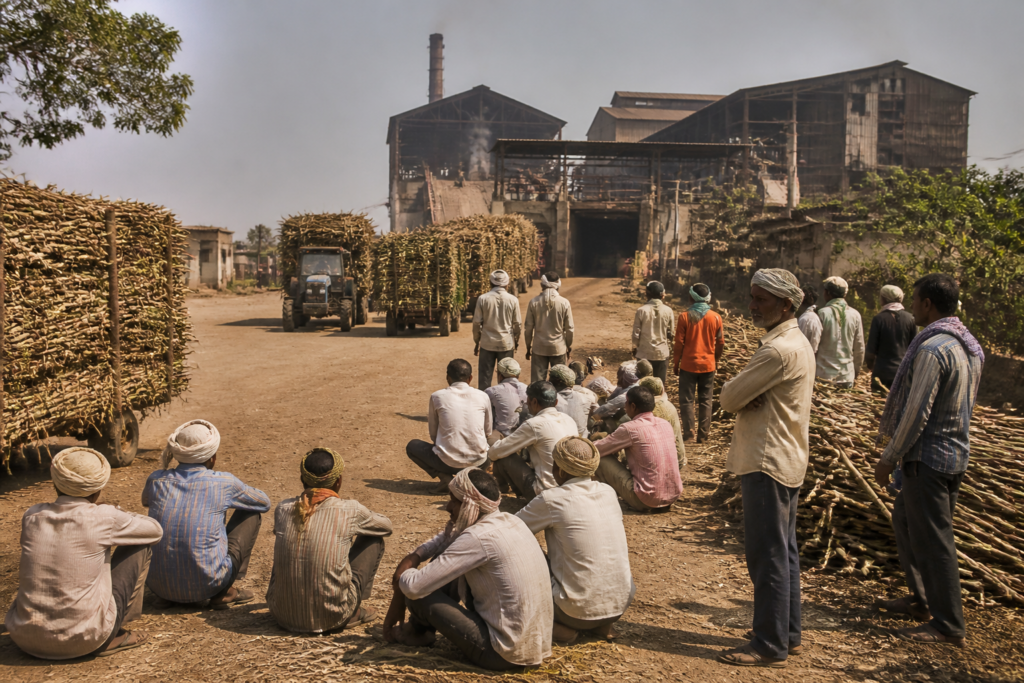
A fresh dispute over sugar-cane prices has put the crushing season under pressure in western Maharashtra, with farmer leader Raju Shetti urging cooperative mills to suspend operations while National Federation of Cooperative Sugar Factories president Harshvardhan Patil warned that a delay could deepen losses for farmers and migrant harvesting workers.
Shetti, president of the Swabhimani Shetkari Sanghatana, intensified his agitation on Thursday by visiting the Krishna sugar factory in Karad, Kranti in Kundal, Sonhira in Kadegaon and Hutatma near Ashta. He led protests outside the mill gates and called for crushing to remain suspended until the Centre takes a decision on higher sugar and ethanol prices.
The demand centres on a cane payment of Rs5,000 per tonne. Shetti said that level would be feasible only if the minimum selling price of sugar were increased to Rs50 per kg and the procurement price of ethanol were fixed at Rs70 per litre. He argued that factories had begun crushing under government pressure despite the risk that processing immature cane could cause losses to both farmers and mills.
The latest protests followed a 31-hour blockade of the Mumbai-Bangalore national highway led by Shetti on Wednesday. The highway is a key transport link between Maharashtra and Karnataka, and the blockade added a road-disruption dimension to the dispute, although the supplied report does not provide details of the traffic impact or any official response to the blockade.
Addressing mill authorities, Shetti said factories should stop crushing at midnight on Thursday. He also said harvested cane could continue to be transported to factories to prevent losses to farmers, while maintaining that the crushing process itself should be suspended.
Mill officials, however, said cane cutters from drought-hit Marathwada had already arrived for the season. They warned that stopping harvesting and crushing would adversely affect these workers. Patil, who supports Shetti’s demand for higher sugar prices but opposes postponing the crushing season, said standing cane in drought-affected areas was withering because of water shortages.
“If it is not harvested and given to factories for crushing, farmers will face losses,” Patil said. He added that cane cutters from Marathwada, one of the worst drought-affected regions, could lose income if they were not allowed to work, adding to the difficulties caused by the drought.
The disagreement has exposed the operational link between farm prices, mill finances, seasonal labour and water availability. A decision to halt crushing would affect not only growers and cooperative factories but also harvesting workers who travel from Marathwada to cane-producing districts at the start of the season.
Patil said the minimum selling price of sugar had not been increased for more than eight years. The NFCSF, along with organisations including the Vasantdada Sugar Institute, has written to the Centre seeking a higher price, he said. The Centre has constituted a committee headed by agricultural economist Ramesh Chand to examine demands from representatives of sugar-cane-growing states.
The committee’s examination and the Centre’s response are now the next formal steps in the price dispute, while the immediate question for mills is whether crushing will continue despite the protests and competing concerns over standing cane, drought and seasonal labour.


