

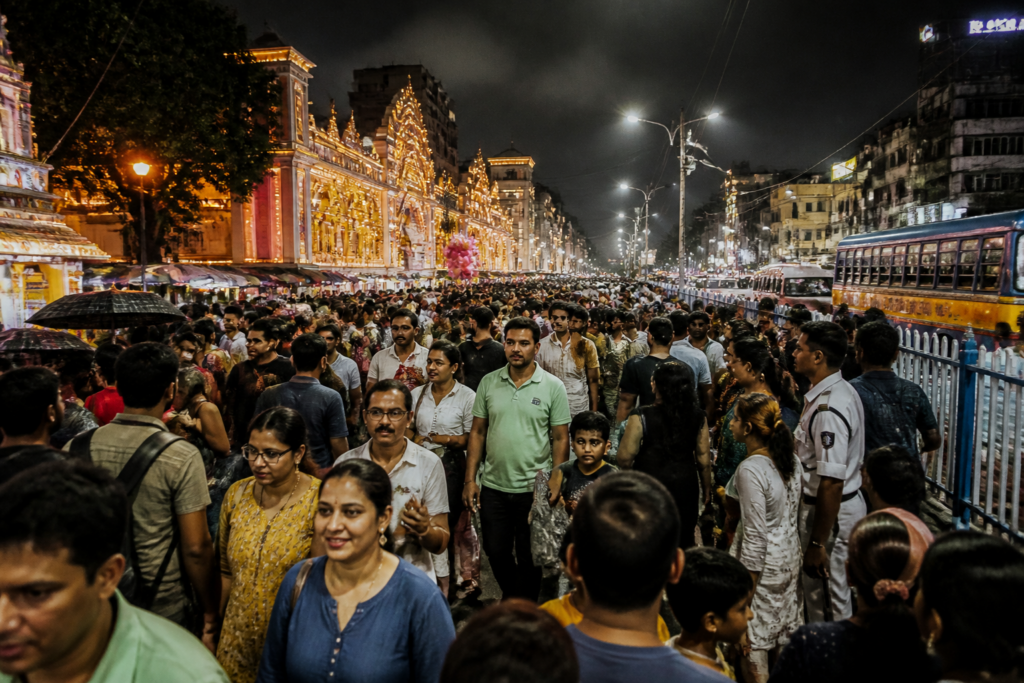
Kolkata’s Durga Puja crowd surged across north and south Kolkata on Panchami, overwhelming several popular pandal zones, slowing buses and prompting restrictions on vehicle movement as police and volunteers struggled to manage the flow of visitors, Bartaman Patrika reported.
The largest concentrations were reported around Bagbazar, Kumartuli Park, Hatibagan Sarbojanin, Kashi Bose Lane, Sikdar Bagan, Hatibagan Nabin Palli, Telengabagan and Tala Pratyay in north Kolkata. In the south, visitors gathered heavily at Chetla Agrani, Alipore Sarbojanin, Suruchi Sangha, Tridhara, Singhi Park, Ballygunge Cultural and Ekdalia.
The crowd extended beyond the pandal entrances and into surrounding roads. The report said several puja routes saw vehicle movement being controlled, while autos stopped operating from the afternoon in some areas. Buses remained available, but moved slowly because pedestrians continued to occupy road space even after traffic signals changed.
The result was a form of congestion driven less by private cars than by the volume of people walking between pandals. Routes linking Vidhan Sarani, Hatibagan, New Market, Gariahat and New Alipore became difficult to navigate as visitors combined pandal-hopping with last-minute shopping and street-food stops.
The crowd also reflected the city’s distinctive festival economy. Food stalls outside the pandals, including vendors selling phuchka, chicken pakora and kebabs, remained busy. Balloon and toy sellers were also benefiting from the footfall, according to the report. The concentration of temporary commerce alongside moving crowds added another layer to the challenge of keeping roads clear.
Visitors travelled across the city in search of specific themes and idols. The report cited groups arriving from Garia, Dum Dum and Sonarpur, with some planning overnight routes covering Alipore, Chetla, Tridhara, Desapriya Park, Ekdalia, Lebutala Park and other major venues before returning home by train or bus.
The movement pattern showed how Kolkata’s festival transport system changes during the puja period. With road access restricted and autos unavailable in parts of the city, walking became the primary link between many pandals. Public transport remained important for longer journeys, but buses were affected once pedestrian flows spilled across main roads.
Police and volunteers were deployed at crowded locations, using repeated public announcements to ask visitors to keep to the right or left side while moving. The report said security arrangements were tightened across the routes, with crowd-control instructions continuing through the night.
Weather also supported extended outdoor movement. Visitors described the conditions as mildly cool, while some carried umbrellas in case of rain. The combination of relatively comfortable weather, holiday activity and the approaching Shashthi celebrations contributed to sustained footfall through the evening and late night.
The Panchami experience offers an early indication of the operational pressure Kolkata faces as the festival progresses. The immediate challenge for authorities is to keep pedestrian streams moving while maintaining access for buses, emergency services and local residents. Further crowd-control and traffic measures will determine how the city manages the larger flows expected at the major pandal corridors in the days ahead.


