

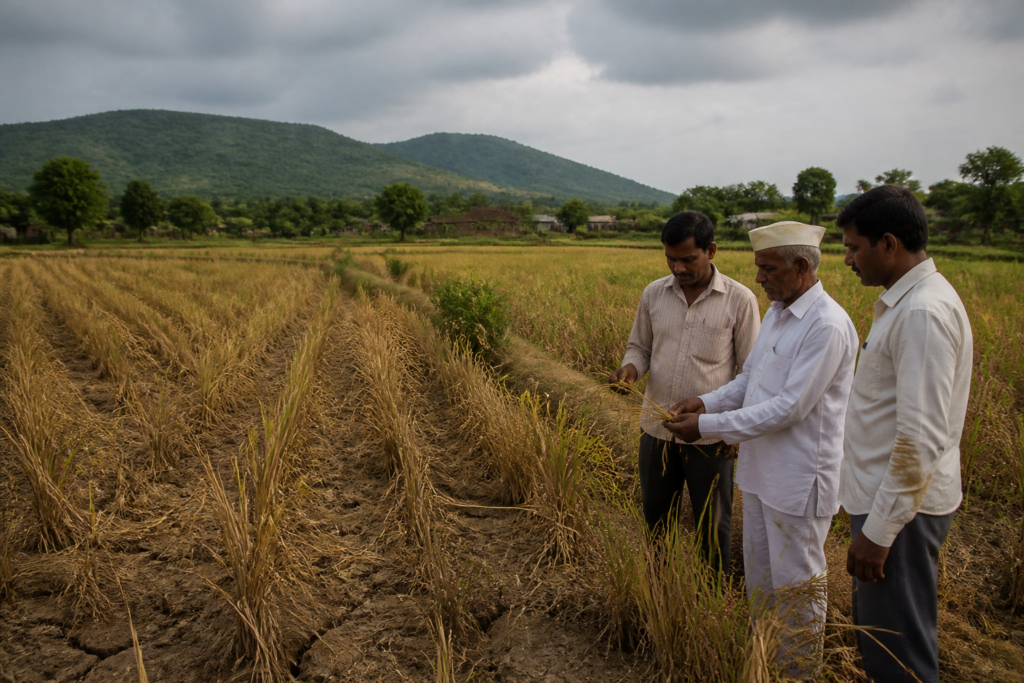
Farmers in Mulshi tehsil of Pune district face losing access to 12 drought-relief measures after the Maharashtra government left the tehsil out of its list of drought-affected areas, according to a report by Sakal. The exclusion has triggered concerns over crop losses, loan repayments, irrigation power bills, drinking water and fodder support during an extended dry spell.
The relief package has been applied as a special measure to 305 drought-affected talukas in the state. The measures include a waiver of land revenue, restructuring of crop loans, suspension of recovery of agriculture-related loans and concessions on current electricity bills for agricultural pumps with capacity above 7.5 horsepower. Electricity bills for pumps up to 7.5 horsepower had already been waived, according to the report.
Other provisions include exemption from examination fees for school and college students, relaxation of norms for works under the Rural Employment Guarantee scheme, tanker-based drinking-water supply where necessary and protection against disconnection of agricultural pump connections in villages officially declared to be facing water scarcity. The package also provides for arrangements to prevent shortages of foodgrains for farmers and agricultural labourers, supply of fodder for livestock, water-conservation works and planning for drinking water for people and animals under existing government directions.
Farmers cited in the report said rainfall had stayed away from all parts of Mulshi for five weeks, damaging paddy crops. They said the kharif season had effectively been lost and that crops in the coming rabi season could also fail if the dry conditions continued. Their central grievance is that the drought criteria used to include 305 talukas have not been applied to Mulshi, despite neighbouring Bhor and Rajgad being included in the drought-affected list.
The dispute has also moved beyond crop damage and immediate relief. Farmers said local elected representatives and politicians from different parties had raised the matter with officials ranging from the tehsildar to the chief minister. A bullock-cart march was also held, but the report said there had been no clear government response to these representations.
Farmers further raised questions about compensation for damage caused by rainfall between June and October last year, saying payments had still not been received and that the position of the government and administration remained unclear. They also expressed concern that this year’s crop-insurance claims could face difficulties because Mulshi has not been formally declared to be facing drought-like conditions.
The exclusion therefore determines more than the label attached to the tehsil. It affects whether households can access a defined package of administrative, financial, employment, water and livestock support. Farmers have asked the government to explain why Mulshi was left out, clarify the status of pending compensation and take steps to support families facing crop losses. The report did not include a detailed response from the state government on the exclusion or the demands raised by farmers.


