

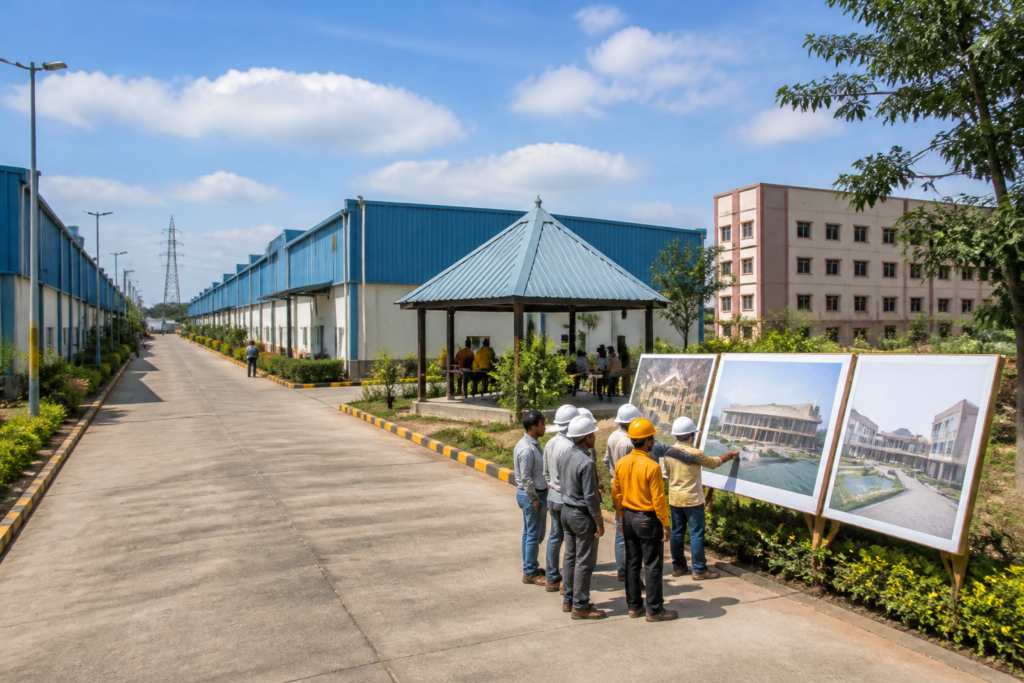
Muzaffarpur is set to receive a new architecture university while a Rs 140 crore leather, footwear and accessories cluster has been inaugurated at Mahal industrial area in Motipur block, Bihar chief minister Samrat Choudhary said on Thursday. The announcements form part of the state government’s wider push to build local industrial capacity and reduce migration for work.
The chief minister inaugurated the leather and footwear cluster along with a common facility centre during a programme attended by ministers, legislators, senior officials and entrepreneurs. The project is intended to support industrial growth, strengthen manufacturing activity and create employment opportunities in the state.
Choudhary announced that the proposed institution would be named Shaheed Jubba Sahni architecture university. The report did not specify the university’s proposed site, project cost, academic structure, construction timeline or accreditation process.
The chief minister said around 12 lakh people from Bihar travel outside the state for employment. He said the government’s priority was to ensure that factories were established after industrial proposals were received, rather than limiting its role to attracting investment commitments. The administration would promote micro, small and medium enterprises as well as heavy industries, he said.
Choudhary also said investor proposals would be examined and sector-specific policies introduced within 30 days wherever required. He directed the district administration to ensure timely land availability for industrial projects. Under the existing policy, entrepreneurs who voluntarily provide land for industrial use would receive compensation 10% above the prescribed amount, he said.
During the programme, industrial units received sheds and land allotment letters. The industries department also signed a memorandum of understanding with the Footwear Design and Development Institute to support skill development and strengthen the footwear sector. Industrial clusters were planned for Muzaffarpur and Darbhanga, while an integrated manufacturing cluster was being developed in Gaya, according to the chief minister.
The state’s industrial expansion plans are also linked to power and transport infrastructure. Choudhary said Bihar’s electricity supply had risen from less than 500 MW in the past to around 10,000 MW at present. The government aims to provide about 10,000 MW of electricity to the industrial sector over the next five years, he said.
He said Bihar was targeting data centres with a combined capacity of 1,000 MW by 2030, potentially attracting investments of around Rs 10 lakh crore. A 12 MW data centre established by CtrlS had already been launched in Patna, he said.
The chief minister also referred to proposed rapid rail links between Muzaffarpur and Patna and between Patna and Gaya. The proposed connectivity could reduce travel time between Muzaffarpur and Patna to 30-40 minutes, and between Patna and Gaya to around one to one-and-a-half hours. He said better connectivity and dry-port-like facilities in Muzaffarpur would help local businesses reach domestic and international markets.
The next stages for the architecture university, the proposed rapid rail links and the planned industrial clusters were not detailed in the report. Their implementation will depend on project approvals, land availability, institutional planning and subsequent government action.


