

King George’s Medical University (KGMU) has been named Uttar Pradesh’s first centre of excellence in acute care precision medicine, a move aimed at expanding faster, more personalised and more affordable treatment for critically ill patients across the state.
The designation will allow the Lucknow-based university to strengthen advanced diagnostic and therapeutic services for acute-care patients, according to officials cited in the announcement. Precision medicine uses a patient’s genetic profile, medical condition, test results and response to drugs to guide treatment, rather than applying the same approach to every patient.
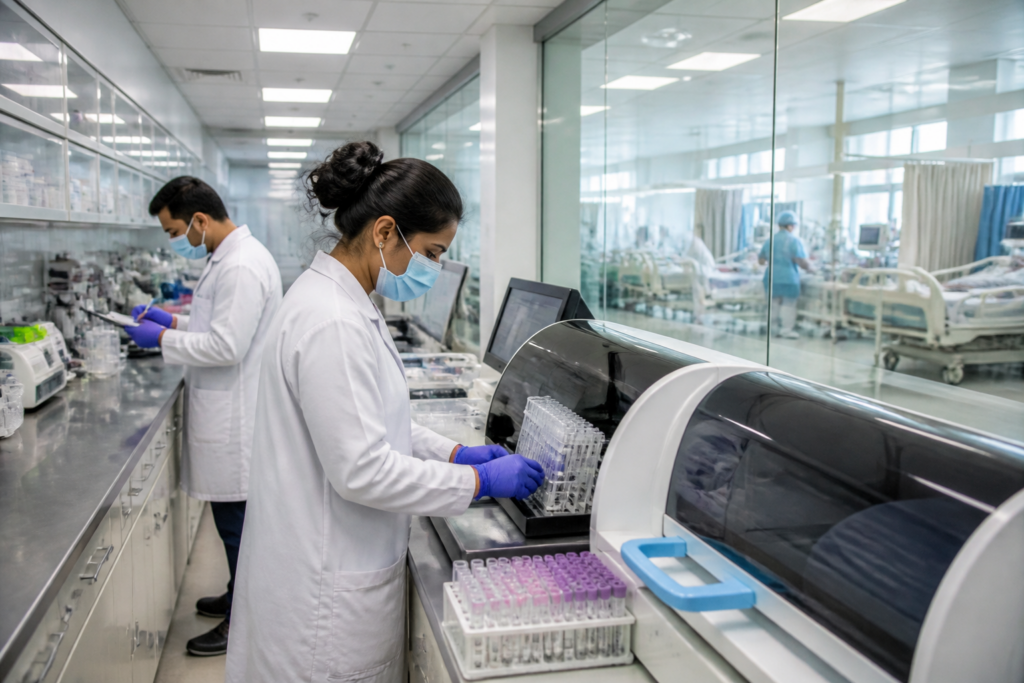
A key service being expanded at KGMU is multiplex polymerase chain reaction (PCR) testing, which can identify infections and provide important diagnostic results in around eight hours. Conventional testing can take nearly 72 hours, doctors said. In intensive care, the shorter turnaround time can help clinicians make treatment decisions earlier, particularly when infection and antibiotic selection are involved.
The testing is also positioned as a lower-cost alternative to similar services in private hospitals. KGMU offers multiplex molecular screening for about Rs 2,000, while comparable testing can cost around Rs 15,000 in private hospitals. The price difference could make advanced diagnostics accessible to a wider group of patients who may otherwise face delays or high out-of-pocket expenses.
The centre has introduced pharmacogenomic testing as well. The service examines how a patient’s genes may influence the response to medicines, allowing doctors to assess treatment choices more closely. KGMU is also focusing on antimicrobial resistance by identifying infections and resistance markers more rapidly, with the stated aim of supporting more targeted antibiotic use.
Prof Avinash Agrawal of KGMU’s department of critical care medicine said the centre has conducted more than 80,000 tests since 2023, including molecular diagnostics and pharmacogenomic investigations. He said the new designation would further strengthen its capabilities.
The initiative places a public medical university at the centre of a wider effort to bring advanced diagnostics into routine critical care. Its immediate significance lies not only in the technology, but also in the university’s stated effort to provide these services at substantially lower prices than private hospitals. For patients in acute-care settings, the combination of faster diagnosis and affordable testing may influence how quickly treatment decisions can be made.
Vice-chancellor Prof Soniya Nityanand said the objective was to translate scientific advances into routine care and extend precision medicine to ordinary citizens. KGMU’s next phase will involve expanding the capabilities associated with the centre of excellence and incorporating precision-medicine services more widely into patient care.


