

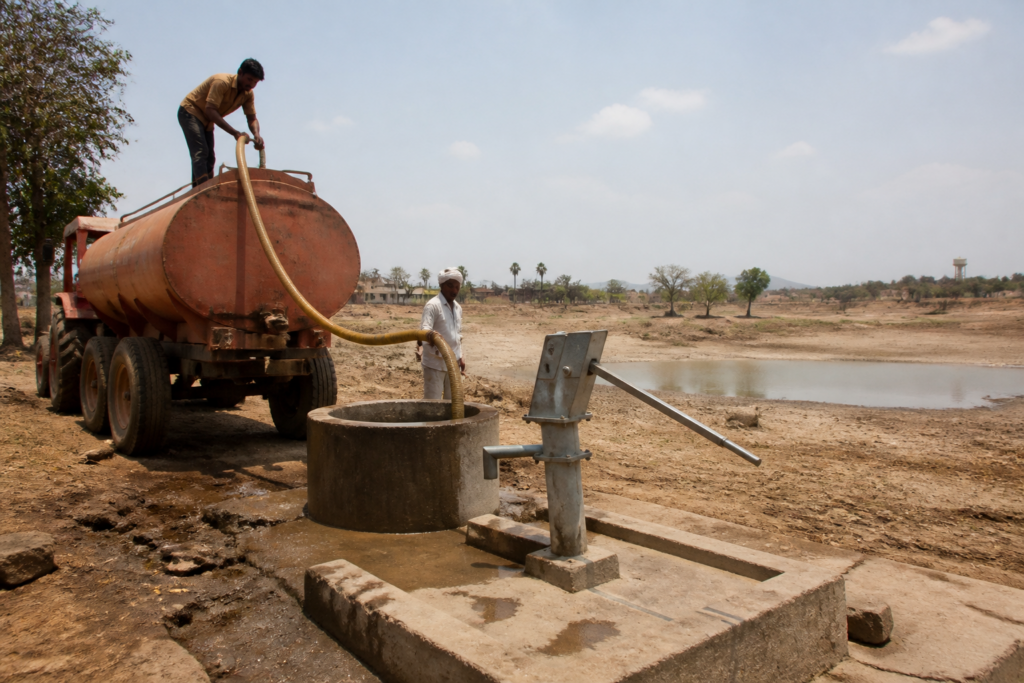
Maharashtra Revenue Minister Chandrashekhar Bawankule has directed district collectors to submit district-wise drought mitigation proposals within 15 days, with the plans to be placed before the chief minister as the state assesses water, fodder and agricultural risks across 305 talukas.
Chairing a meeting of the cabinet subcommittee on drought, Bawankule said drinking water tankers should be treated as a last resort and that existing water supply schemes must be revived before shortages worsen. The instructions place the immediate focus on repairing and completing local infrastructure rather than relying primarily on emergency tanker distribution.
The minister asked districts to use 15th Finance Commission funds to clear pending electricity bills for water supply schemes. Districts unable to do so were told to explore a one-time settlement scheme. The energy department was also directed to provide transformers to schemes stalled because of their absence, with priority given to projects that had previously been operational.
Officials were instructed to take over available wells for public use, complete water supply schemes that are between 75% and 80% complete, repair defunct hand pumps and strengthen existing water sources. Bawankule also directed authorities to operationalise a tanker app and GPS tracking system before tanker supplies begin, creating a digital monitoring layer for distribution and movement.
The measures extend beyond drinking water. Bawankule said districts should assess fodder availability and identify areas that could face shortages. The current assessment did not indicate a requirement for cattle camps until December, but farmers are to be encouraged to grow short-duration fodder crops. Rates and district-wise production targets are to be set according to estimated demand.
District collectors will head committees responsible for fodder planning, while the agriculture department will implement the measures and the animal husbandry department will monitor them. The agriculture, animal husbandry and rural development departments, along with other agencies, have been asked to prepare a standard operating procedure within a week covering fodder cultivation through distribution.
The plan also calls for surplus fodder from one district to be supplied to neighbouring districts facing shortages. The government is exploring fodder cultivation on forest department land and silted land near water bodies, while self-help groups may be allotted land for production. Agriculture officers have been asked to gather village-level information on water and fodder availability.
At the meeting, Fisheries and Ports Minister Nitesh Rane suggested supplying surplus paddy and fodder from Sindhudurg, Ratnagiri and Raigad to neighbouring districts. Agriculture Minister Dattatray Bharne sought village-level data, while Animal Husbandry Minister Pankaja Munde stressed that water supply schemes must be made operational before shortages intensify.
Bawankule also asked officials to identify water bodies near ongoing road projects so that excavated murum, or hard soil, could be used for road construction. Desilting and repairs of lakes and reservoirs will be prioritised, with the fisheries department assisting in the work. Funds for drought-related works are to be made available through district planning committees.
Additional Chief Secretary for Relief and Rehabilitation Vinita Ved Singhal said agricultural damage assessments would be completed in the coming days. The state government plans to submit its final proposal seeking central drought assistance by the end of October. A survey across 305 talukas is underway to determine which trigger-1 and trigger-2 drought criteria apply.


