

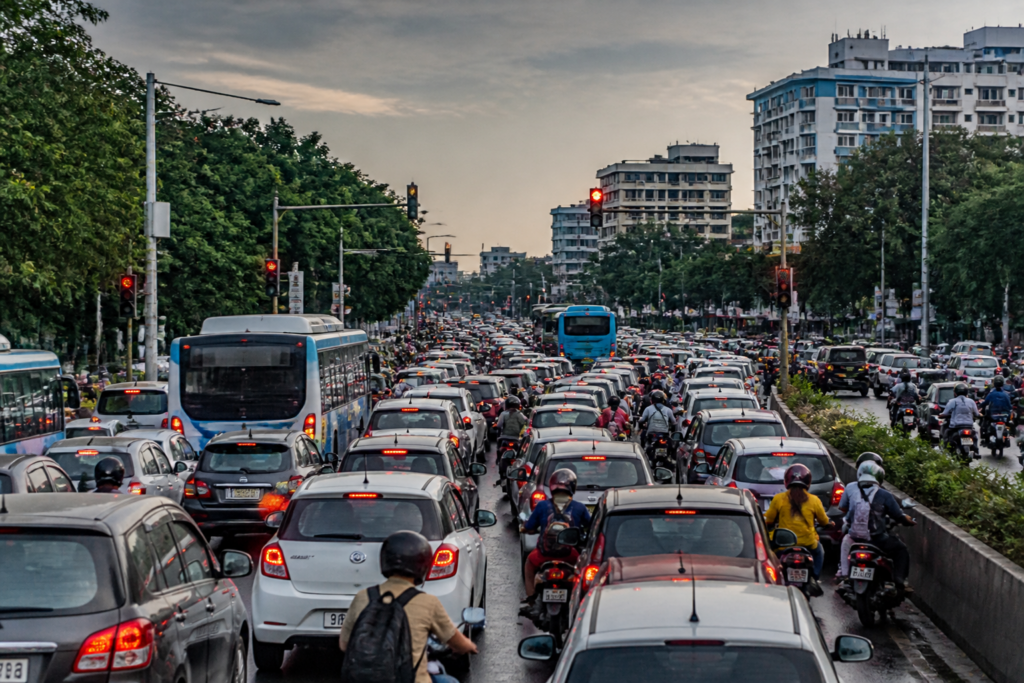
Pune traffic study plans have moved forward with IIM Mumbai experts meeting officials from multiple transport agencies to examine the city’s congestion and recommend long-term solutions, Union minister of state for civil aviation and Pune MP Murlidhar Mohol said on Thursday.
Mohol said he had approached IIM Mumbai to conduct a comprehensive assessment of Pune’s traffic system and transport infrastructure. The institute responded positively, and a preliminary meeting between its professors and subject experts and officials from various departments was held in Pune, he said.
The proposed study will examine gaps in the city’s transport system and identify ways to make better use of existing infrastructure while addressing future requirements. Its scope is expected to cover major arterial roads, recurring traffic bottlenecks, signalling systems, public transport, the Metro network and the proposed ring road.
The announcement comes as Pune’s vehicle population continues to rise. According to figures cited by Mohol, the number of registered vehicles in the city increased from around 52 lakh in 2018 to approximately 82 lakh in 2026. More than 1,300 new vehicles are being added every day, he said, placing additional pressure on the road network.
The Pune metropolitan region has a population of approximately one crore and is projected to reach two crore over the next three decades, Mohol said. The figures were cited as the basis for examining the city’s transport needs through a longer-term and integrated approach rather than relying only on short-term congestion measures.
The study will require coordination among the Pune Municipal Corporation, Pune Metropolitan Region Development Authority, Maha Metro, Pune Mahanagar Parivahan Mahamandal Ltd, the Regional Transport Office and the traffic police. These agencies oversee different parts of the city’s mobility system, including roads, regional planning, public buses, Metro infrastructure, vehicle registration and traffic enforcement.
The proposed institutional coordination is significant because traffic conditions in Pune are shaped by infrastructure and decisions spread across multiple jurisdictions. Road capacity, signal management, public transport operations, Metro connectivity and regional growth are administered by separate agencies, making a citywide assessment dependent on their participation and access to data.
Mohol said the study’s recommendations would enable the concerned agencies to take further action. He described congestion as a serious issue affecting the daily lives of citizens and said long-term planning was necessary as the city expanded and vehicle numbers increased.
The next steps, including the detailed scope, timeline and process for the study, were not specified in the statement. The participating agencies will need to work with IIM Mumbai experts to determine the data requirements and prepare recommendations for Pune’s transport system.


