

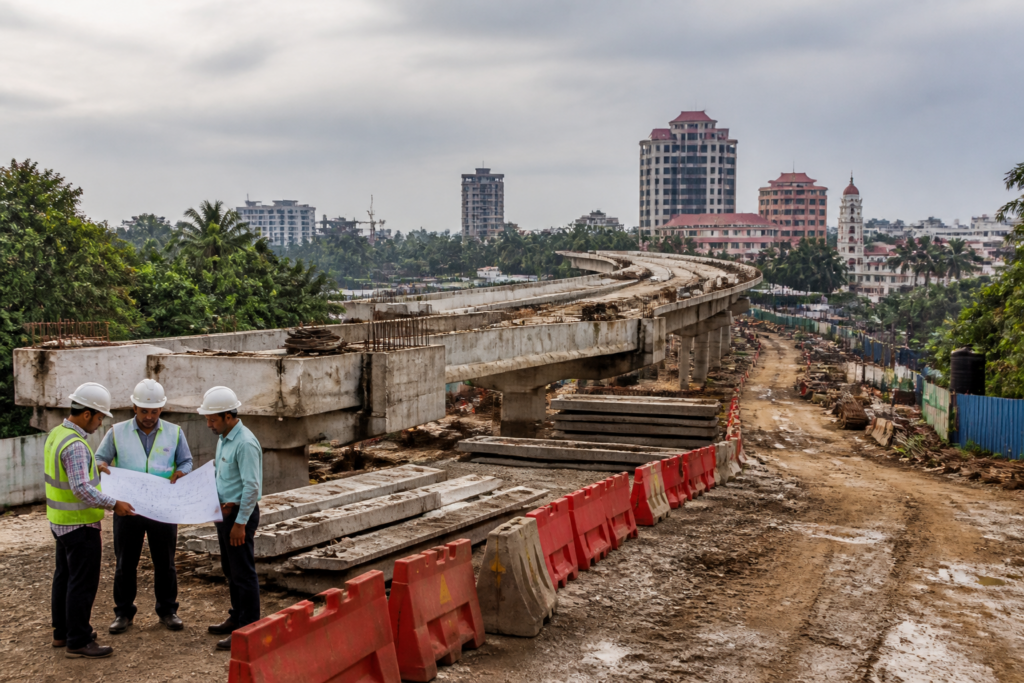
Kerala’s proposed overhaul of the Kerala Infrastructure Investment Fund Board (KIIFB) is not merely a decision about stopping one channel of borrowing. It is a test of whether the state can separate infrastructure ambition from the financial structure used to fund it. An expert committee has recommended that KIIFB stop fresh market borrowings, while the state government takes over its outstanding debt and funds unfinished projects through the budget.
The recommendation follows findings that place KIIFB’s outstanding borrowings at Rs 31,681.15 crore as on June 30, 2026, with Rs 25,932.55 crore already deducted from Kerala’s borrowing space. The committee also estimated financial commitments of Rs 70,415.54 crore up to 2041-42. These figures turn KIIFB from an institutional financing arrangement into a long-term state liability whose repayment, project completion and administrative control will have to be managed through the government’s core fiscal system.
The report was tabled in the Assembly after being prepared by a committee chaired by former IAS officer Sudha Pillai. Its members included Tarun Bajaj, Shyam Srinivasan, Nilesh Vikamsey and H Subhalakshmi Narayanan. Chief minister V D Satheesan said the cabinet would decide the next steps based on the report, while alleging that KIIFB had functioned as an independent institution that bypassed government and Finance Department controls.
The central issue is therefore institutional, not only financial. KIIFB was created to support infrastructure investment outside the conventional budget process. The committee’s recommendations suggest that the model may have shifted the state’s infrastructure spending from an apparently separate financing platform back into the government’s balance sheet, without eliminating the underlying obligations.
### The cost of financing infrastructure
The committee estimated that KIIFB’s financing model created additional costs of Rs 13,103 crore. It also found that KIIFB’s borrowing costs were higher than the state’s own market borrowing rates by 85 to 179 basis points in most comparisons. That difference was estimated to add about Rs 396 crore a year to the cost of KIIFB’s outstanding debt.
The finding is significant because the purpose of an infrastructure financing institution is not simply to raise money, but to do so at a cost and risk that can be justified by the public value of the assets created. If the borrowing vehicle pays more than the state would have paid directly, the additional expense must be offset by faster project delivery, stronger asset utilisation or another measurable benefit. The supplied report does not establish that such benefits consistently materialised.
The committee also put the excess cost of KIIFB’s masala bond, including interest and issue expenses, at Rs 181.73 crore. In addition, it flagged the practice of placing borrowed funds in lower-yielding deposits while KIIFB continued to pay higher interest on its loans. This creates a mismatch between the cost of idle funds and the return earned on them, adding another layer to the financing burden.
The scale of the debt must also be read alongside the flow of state support. Between 2021-22 and 2024-25, government transfers to KIIFB accounted for 99.4% of its debt servicing, according to the report. The committee’s finding indicates that transfers were being used overwhelmingly to service existing obligations rather than to create fresh infrastructure investment.
That is the point at which an alternative funding mechanism begins to lose its original distinction. If the state must provide nearly all the resources required to service the institution’s debt, while the institution’s borrowings reduce the state’s borrowing space, the financial separation becomes difficult to sustain in practical terms.
### From off-budget ambition to budget responsibility
The recommendation to stop fresh market borrowing and fund unfinished projects through the budget would bring KIIFB’s future spending closer to the normal legislative and fiscal process. It would also make the state’s choices more visible: which projects are completed first, which commitments are deferred, and how much annual budgetary space is available after debt servicing and other obligations.
The proposal does not remove the existing liability. Instead, it shifts responsibility for the outstanding debt and unfinished projects to the state government. The cabinet’s decision will therefore determine how the transition is structured, including the treatment of ongoing projects, debt repayment and the institutional role that remains for KIIFB.
The report’s estimate of Rs 70,415.54 crore in financial commitments up to 2041-42 shows why the transition cannot be treated as a simple administrative merger. Long-term commitments extend well beyond the immediate political and budget cycles. They also constrain future governments, which may have to allocate funds to projects approved under an earlier financing model.
The chief minister alleged that KIIFB had sidelined the Finance Department. He cited a decision against providing a government guarantee that was later overturned at a meeting chaired by the then chief minister, arguing that this violated the rules of business because only the cabinet could override the department. The report’s wider implication is that the state’s infrastructure institutions require clearly defined boundaries on borrowing, guarantees, approvals and financial oversight.
The committee also flagged the simultaneous role of former KIIFB chief executive officer K M Abraham as an ex-officio government secretary, describing it as a case of dual positions. The concern is not limited to one individual. Dual institutional roles can create ambiguity over accountability, particularly when the same person or office is connected to both the implementing agency and the government machinery responsible for supervision.
### Projects, land and uneven allocation
The financial questions are closely linked to the way infrastructure projects were selected and implemented. Satheesan pointed to irregularities in consultancy payments and land acquisition. In Kannur, he said, about 1,000 acres had been acquired but only 50 acres were in use. He also questioned why land was purchased at several times the prevailing cost and why a notification was issued to acquire another 4,000 acres.
These claims were made while presenting the committee’s findings and should be distinguished from a final determination of wrongdoing. The report’s recommendation for scrutiny indicates that land acquisition, procurement and supporting documentation require closer examination. The core planning question is whether land is being acquired in step with a clear project schedule, or whether acquisition is running ahead of demonstrated need.
The geographic distribution of approved infrastructure outlay was also concentrated. Thiruvananthapuram, Kannur and Ernakulam accounted for 41.6% of the approved outlay, while Kannur alone represented 52.9% of the land acquisition pool. Concentration is not automatically evidence of an improper decision, since project size and land requirements vary by location. But it does make project selection and acquisition standards more important, especially when the state is carrying the debt associated with those decisions.
For residents, the consequence of this concentration is practical. Delayed or incomplete projects can leave land locked up, disrupt local planning and create uncertainty for affected owners and communities. At the same time, projects in other districts may compete for budgetary resources after the proposed shift away from fresh KIIFB borrowing.
### Oversight and the cost of institutional expansion
The committee has recommended an audit of Rs 203.72 crore shown as publicity and promotional expenditure in 2025-26, compared with Rs 21.16 crore under the corresponding head. It also flagged vendor selection, procurement and supporting documentation. These findings do not by themselves establish that the higher figure was unlawful or improperly spent, but they identify areas where public financial reporting requires clarification.
The issue is especially relevant because money raised through borrowings carries a financing cost. Expenditure on publicity, consultancy or institutional operations must therefore be assessed not only against a departmental budget, but also against the interest burden attached to the funds being used. The report’s recommendation for a comprehensive audit is an attempt to establish that connection.
KIIFB had 498 personnel against 40 sanctioned posts, according to the report. The committee recommended rationalising the establishment because KIIFB would no longer raise market funds or implement projects under the proposed restructuring. This recommendation suggests that the proposed change is intended to alter the institution’s operating model, not simply its borrowing policy.
A smaller or differently structured KIIFB could still have a role in monitoring projects, managing contracts or supporting implementation, but the supplied report does not specify the final institutional design. That decision will matter because the state will need administrative capacity to complete projects while also controlling costs and monitoring inherited obligations.
### The larger infrastructure question
Kerala’s KIIFB debate highlights a recurring challenge in public infrastructure: the pressure to build quickly can encourage governments to create financing structures that appear to expand fiscal capacity, even when the eventual liabilities remain connected to the state. Such structures can be useful when their borrowing terms, governance arrangements and project pipelines are transparent and financially sound. They become vulnerable when debt service absorbs public transfers, borrowing costs rise and project execution does not keep pace.
The committee’s findings show that Kerala’s problem is not simply that KIIFB borrowed money. It is that the relationship between borrowing, budget support, project delivery and accountability became difficult to evaluate. The proposed shift to budget funding may make future choices more visible, but it also brings existing debt and unfinished work into direct competition with other public spending priorities.
The immediate facts are clear: the committee has recommended an end to fresh KIIFB market borrowing, state takeover of its outstanding debt and budget funding for unfinished projects. It has identified Rs 31,681.15 crore in outstanding borrowings, Rs 70,415.54 crore in commitments up to 2041-42, higher borrowing costs and several areas requiring audit or administrative review. What remains to be determined is how the cabinet will restructure KIIFB, sequence pending projects and account for the long-term financial commitments created by the existing model.


