

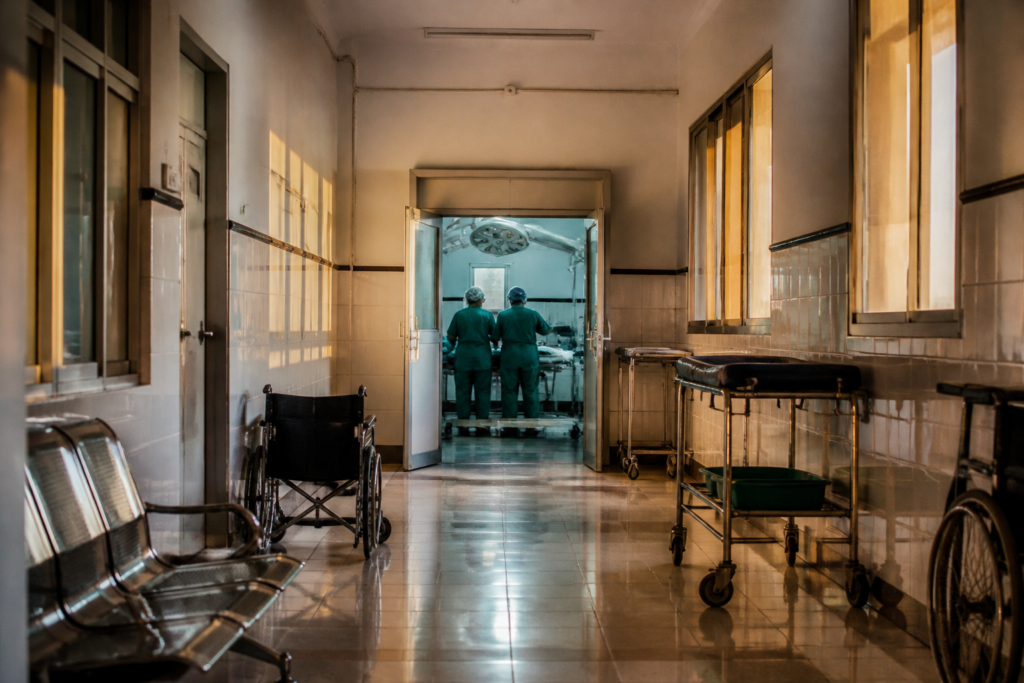
The underuse of the dedicated orthopaedic operation theatre at Pt Deendayal Upadhyay Hospital in Jaipur exposes a familiar weakness in public infrastructure: creating a facility does not guarantee that the service it was designed to provide will function. Hospital figures cited in a Times of India report show that only 19 orthopaedic surgeries were performed between January 1 and September 30, 2026, while trauma patients requiring urgent surgery continued to be shifted to SMS Hospital’s Trauma Centre.
The facility at Gangori Bazaar was sanctioned as part of a full orthopaedic unit intended to strengthen specialist care, handle trauma cases locally and reduce pressure on SMS Hospital. Yet the operating theatre has remained largely idle. The report said only three surgeries had been conducted since June, despite the hospital having a dedicated theatre meant exclusively for orthopaedic procedures.
That gap between sanctioned capacity and actual service delivery is the central fact in the case. The issue is not simply that one operating theatre is being used less than expected. It is that a public hospital infrastructure investment, created to decentralise care within Jaipur’s government health system, is not operating as the administrative plan appears to have intended.
The hospital functions under SMS Medical College, which also runs SMS Hospital. This institutional relationship is important because the two facilities are not operating as entirely separate parts of the city’s public healthcare network. If patients continue to be referred from Deendayal Upadhyay Hospital to SMS for orthopaedic surgery, the city’s existing concentration of specialist services at the larger hospital remains intact, even when another facility has been equipped for the same broad purpose.
The available figures indicate the scale of the mismatch. Nineteen orthopaedic surgeries over nine months represents a limited use of the service when measured against the stated objective of managing specialist and trauma cases locally. The report does not provide the theatre’s designed capacity, the number of available orthopaedic surgeons, the staffing roster, or the number of patients assessed and referred. Those missing figures prevent a full calculation of utilisation, but they do not erase the operational problem identified by the hospital’s own numbers and staff comments.
The history of the unit adds another layer. Until 2018, two orthopaedic units of SMS Medical College were operating from Deendayal Upadhyay Hospital. The report said that later only one unit continued, and that no dedicated orthopaedic unit is currently functioning there. The change suggests that the infrastructure remained while the institutional arrangement needed to run it weakened or disappeared.
This is a distinction often blurred in public project reporting. A sanctioned service can exist on paper, while the actual service depends on several linked conditions: specialist doctors, nursing staff, operating theatre personnel, equipment, scheduling, emergency coordination and an administrative authority able to keep the unit functioning. The report specifically raises questions about manpower deployment, administrative planning and accountability. It does not establish which one of these factors is decisive, but it shows that the theatre’s physical presence has not translated into a reliably available orthopaedic service.
The operational consequences are visible in the referral pattern. Doctors and staff told the publication that patients needing urgent orthopaedic trauma surgery are still being shifted to SMS Trauma Centre. Such transfers keep critical cases within the government system, but they also preserve the pressure on the city’s main trauma facility. The report does not quantify the number of patients shifted, the time taken for transfers, or whether any patient outcome was affected. These limitations matter, particularly because the effect on citizens cannot be measured from surgery counts alone.
Even without those details, the arrangement raises a basic planning question: what was the purpose of creating or sanctioning a dedicated orthopaedic theatre at Deendayal Upadhyay Hospital if trauma surgery continues to depend on SMS Hospital? If the answer is a shortage of specialists, the problem is workforce deployment rather than construction. If the theatre lacks supporting staff or equipment, the investment is incomplete. If referrals are driven by administrative protocols, then the issue lies in coordination between the hospital and the medical college. The supplied report does not resolve these possibilities, but it makes clear that the physical asset and the clinical service are not aligned.
The case also illustrates why utilisation figures need to be read alongside institutional history. A low number of procedures can reflect low demand, but the report provides evidence against treating that explanation as sufficient. The hospital was intended to provide specialist orthopaedic care and manage trauma cases locally. Patients are still being sent elsewhere, and hospital officials said there is no dedicated orthopaedic unit functioning at the facility. In that context, low surgery numbers are not merely a performance statistic; they are an indicator that the planned service has not been fully established.
For Jaipur’s public healthcare network, the question is therefore not only how many operations were conducted. It is whether the system has distributed capacity in a way that matches patient needs. A hospital may have a theatre, but patients experience the system through the complete chain of care: where they are assessed, whether a specialist is available, whether surgery can be scheduled, and whether emergency cases can be treated without another transfer. The reported dependence on SMS shows that the chain remains centralised at the point where operative orthopaedic care is required.
The administrative responsibility is equally significant. Deendayal Upadhyay Hospital operates under SMS Medical College, while SMS Hospital remains the destination for urgent orthopaedic trauma surgery. That relationship should, in principle, make coordination possible, but the report indicates that the sanctioned unit has not been sustained. The evidence does not identify a single decision-maker responsible for the gap. It does, however, point to a need for clearer accountability over sanctioned services: who is responsible for staffing the unit, who monitors the theatre’s use, and who determines whether the service is functioning as approved?
The story also challenges a narrow definition of infrastructure success. A completed or designated facility is often treated as an achievement in itself. In healthcare, however, a theatre without a functioning specialist unit is not equivalent to accessible surgical capacity. The value of the asset depends on operational readiness. The reported figures show why public agencies need to track service delivery after infrastructure is sanctioned, not stop at the stage of creating space and assigning a purpose.
There is not enough information in the supplied report to determine whether the theatre can safely handle the full range of orthopaedic trauma cases, whether all required equipment is available, or whether doctors have been formally posted and rostered. Nor does it establish whether the state government has issued a recent response or a timeline for restoring the dedicated unit. These are important gaps because the remedies would differ depending on the cause.
What the evidence does establish is narrower and more consequential: Deendayal Upadhyay Hospital has a dedicated orthopaedic OT that has recorded only 19 surgeries through September 30, 2026; only three surgeries were conducted since June, according to the report; no dedicated orthopaedic unit is currently functioning there, according to officials; and urgent orthopaedic trauma patients continue to be transferred to SMS Trauma Centre. The next stage for the health administration is to clarify whether the sanctioned service will be staffed and operated as intended, and how its performance will be monitored.


