

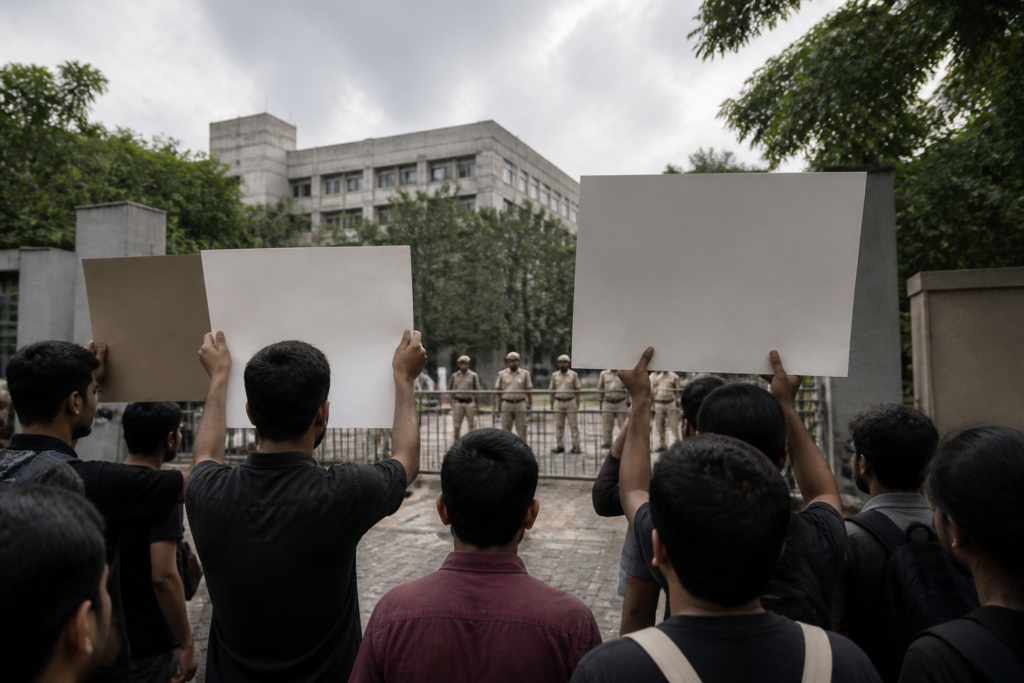
The Satyajit Ray Film and Television Institute (SRFTI) in Kolkata has seen its campus standoff intensify after the institute alleged that a student manhandled Vice-Chancellor Santosh Ajmera and that his office was vandalised, while protesting students demanded his resignation and an independent inquiry into alleged attacks on campus.
Classes at the premier central government-run film institute have remained suspended since September 28. The students’ protest entered its fourth day on Thursday, with the Students’ Union saying its academic halt and indefinite sit-in would continue until the administration addressed its demands.
According to an SRFTI press release, department heads and section heads gathered in the vice-chancellor’s meeting hall to condemn overnight damage to Ajmera’s office. The institute said stones were thrown at the office windows during the night between Wednesday and Thursday, shattering glass panes and damaging water and air-conditioning lines. Broken glass, stones and damaged furniture were found inside the office the following morning, it said.
The institute further alleged that students surrounded Ajmera as faculty members and officials were leaving the meeting hall, raised slogans and abused him before one student allegedly manhandled him. Ajmera, who took charge about 15 days ago, described the incident as “unacceptable and intimidating” and called for strict action against those found guilty. He also acknowledged the students’ democratic right to protest while calling the alleged attack “cowardly, extremely disturbing and unfortunate”.
The administration said a group of students had disrupted peace, order and normal academic activity and intimidated others into staying away from classes. It alleged that some students had been forced to leave the campus and return home during the past eight days. An SRFTI official denied that institute staff members or security personnel had assaulted students.
The Students’ Union has presented a different account. In a letter dated October 14 to SRFTI chairman Suresh Goel, union president Blossom Hazarika and vice-president Shubham Waydande sought his intervention, saying the academic halt and sit-in would continue until the demands were addressed. The union alleged that members of the Akhil Bharatiya Grahak Panchayat, an RSS-affiliated consumer awareness group, attacked students on September 27 and again on October 4 during a rally by the Bangiya Hindu Jagran Manch near the institute gate.
The students said several protesters were injured and accused the administration of failing to ensure their safety or take adequate action. They also sought independent inquiries into the September 27 and October 4 incidents, as well as allegations that staff intimidated, harassed and manhandled protesters on October 6 and 7. The union claimed staff members had tried to forcibly remove protesters from the vice-chancellor’s office during the sit-in.
The administration has served show-cause notices on eight protesting students. An institute official said the notices cited allegations including objectionable graffiti on campus walls, posters put up in violation of campus discipline, failure to heed the vice-chancellor’s appeal to resume classes and an alleged assault on security personnel in his room the previous week. Students have accused the institute of using disciplinary proceedings to intimidate those questioning its handling of the crisis.
The union has demanded withdrawal of all disciplinary and show-cause notices issued during the protests. “Our academic halt and sit-in will continue simultaneously and we are consulting with lawyers to take legal steps about the show-cause,” union spokesperson Sudip Chakraborty told PTI.
The students have also sought unconditional rescheduling of all classes missed since September 28, and an independent mechanism to address complaints of violence and intimidation. They said their requests for accountability and dialogue with the chairman, vice-chancellor and Information and Broadcasting Minister Ashwini Vaishnaw had not produced a satisfactory response.
The dispute has also exposed pressures around student accommodation and access to institutional facilities. The union said SRFTI faced a shortage of about 100 hostel beds and sought temporary accommodation, including vacant staff quarters, until a proposed new hostel is built. According to the students, the hostel proposal has been pending for three years. They have also raised concerns about medical assistance for injured students and access to campus facilities for shoots, screenings and workshops.
The students said they wanted to return to classes, resume shoots and workshops and make films, while urging Goel to facilitate talks and help end the standoff. The immediate next steps are dialogue over the union’s demands, the handling of the show-cause notices and the institute’s response to calls for independent inquiries.


