

Russian diesel exports have resumed after an agreement linked to US President Donald Trump, but the quantities announced are too small to transform fuel markets on their own. The development shows how dependent transport systems remain on a complex chain of refinery output, shipping access, diplomatic agreements and energy infrastructure, even when governments seek an immediate reduction in fuel prices.
The Kremlin said Russian diesel had begun reaching global markets and could have a positive effect on oil-market stability. Kremlin spokesman Dmitry Peskov, quoted by Reuters, also acknowledged that the supplies would not be sufficient to fully stabilise those markets. That qualification is central to understanding the arrangement: the deal may add barrels to international trade, but it does not remove the structural pressures that determine fuel prices.
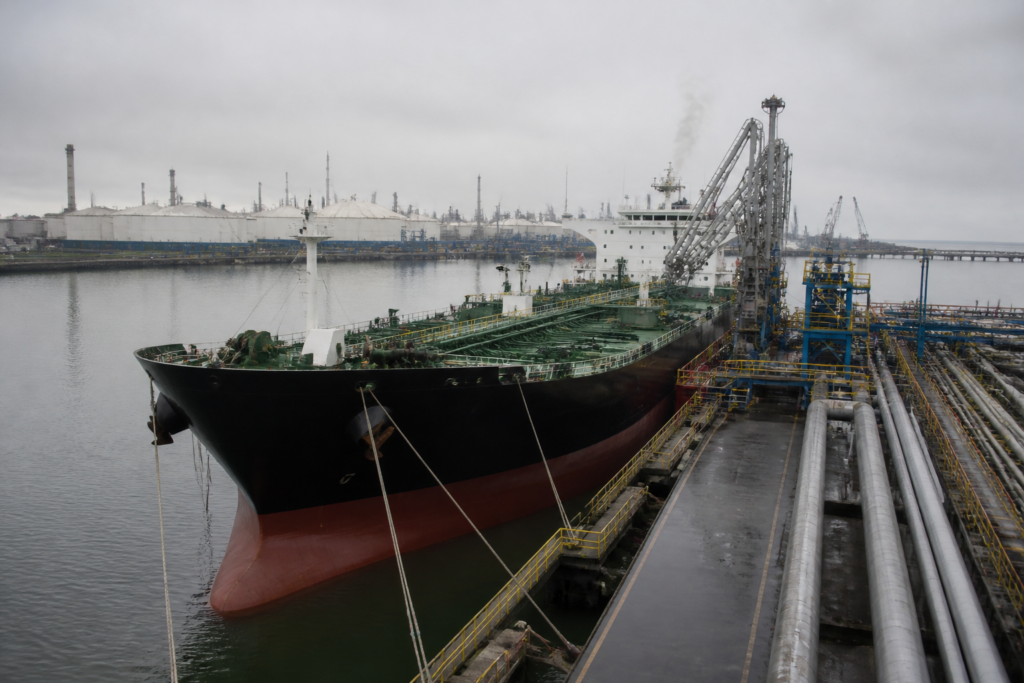
The immediate evidence of resumed trade came from LSEG shipping data. The data showed that diesel export loadings had restarted at Russia’s Baltic port of Primorsk. A tanker carrying about 40,000 metric tonnes of ultra-low sulphur diesel was loaded on October 13 and was heading towards Morocco, according to the shipping information cited by Reuters.
The movement from Primorsk matters because diesel reaches cities and economies through physical networks rather than through political declarations alone. Refineries must produce the fuel, ports must load it, tankers must carry it and receiving markets must be able to accept and distribute it. Any interruption at one of these points can affect freight operators, public transport systems, construction activity and other fuel-dependent urban services. The supplied report, however, does not establish how the resumed shipments will affect prices in any particular city or country.
Trump said Russia had agreed to supply more than 300,000 metric tonnes, or 2.25 million barrels, of diesel to US and global markets. He also said another 500,000 tonnes would be supplied in November, followed by a further 1 million tonnes immediately thereafter. These volumes are significant in absolute terms, but their effect depends on the scale of demand in the markets they are intended to serve and on how quickly the fuel can be delivered.
The comparison with US transport demand illustrates the limitation. US Energy Information Administration data cited in the report puts daily consumption in the transport sector at about 2.94 million barrels. The initial 2.25 million barrels would therefore represent less than one day of that sector’s demand. The additional volumes announced by Trump would amount to less than four days of US transport demand. These figures do not describe global consumption, but they demonstrate why the announced supply cannot by itself reset the international diesel market.
That gap between political messaging and market scale is important for urban economies. Diesel is used across systems that residents may not see as connected to fuel markets: goods movement, buses, road maintenance, construction equipment and service vehicles. A supply announcement may improve sentiment or increase available cargoes, but it does not automatically translate into lower fares, cheaper deliveries or reduced operating costs. Those outcomes depend on the price at which the fuel is traded, transport and insurance costs, taxes, distribution margins and the competitive conditions in each market. None of those local factors is detailed in the supplied report.
The agreement also shows that fuel supply is increasingly shaped by diplomacy as well as by commercial demand. Moscow partially lifted its ban on diesel exports from October 10 following the agreement. The resumption therefore came within a political framework rather than simply through a routine change in refinery or shipping activity. The Kremlin’s statement presented the exports as a contribution to oil-market stability, while Trump has linked the arrangement to efforts to lower US diesel prices before the country’s midterm elections on November 3.
This political timing creates a second layer of uncertainty. The same fuel movement can be described as a market intervention, a diplomatic concession or an effort to influence domestic prices. The supplied report does not establish whether the agreement contains enforceable delivery schedules, pricing terms or mechanisms for monitoring the promised volumes. Without those details, the practical durability of the arrangement cannot be assessed from the available evidence.
The deal has also faced criticism from Ukrainian President Volodymyr Zelenskyy, European officials and some Republican politicians. European criticism was rejected by Russia as cynical, with Moscow arguing that European countries continue to buy some Russian oil and liquefied natural gas. The dispute underlines the fragmented policy environment surrounding Russian energy exports. Fuel may be needed by transport and industrial systems, while governments simultaneously use restrictions, exemptions and diplomatic pressure to respond to the war in Ukraine.
The energy arrangement is also connected to competing claims about an energy ceasefire. The Kremlin said Ukrainian strikes on Russian oil refineries contradicted US efforts to initiate peace talks. Peskov said Moscow did not believe Kyiv had complied with the ceasefire announced by Trump on Sunday. Ukraine said it had paused strikes on Russian oil refineries for three days but resumed them after Russia continued attacks on Ukrainian energy infrastructure.
The report says those competing claims about compliance could not be independently verified. That limitation is important because attacks on refineries can affect the availability of refined products, while restrictions on exports can alter where fuel is sold. Yet the supplied material does not establish the volume of production lost through the reported attacks, the scale of any damage or whether the resumed exports will continue at the announced level.
The reported strike on a refinery in Russia’s Ryazan region adds to the uncertainty. The Associated Press reported that a drone attack started a fire at the facility, while a senior Ukrainian official confirmed that Ukraine had hit it. Russia’s Defence Ministry and the regional governor also reported the attack. The Kremlin said Ukraine had struck Russian facilities, while Russia said it had hit seven Ukrainian energy infrastructure facilities on Wednesday, according to Reuters. These claims form part of a wider contest over energy infrastructure, but the evidence supplied does not permit an independent assessment of the operational consequences.
For cities, the broader lesson is not that one shipment will determine fuel prices. It is that urban mobility and everyday logistics remain exposed to decisions made far outside municipal control. A tanker leaving a Baltic port, a refinery operating under threat and a diplomatic agreement between national governments can all influence the cost and reliability of services used in urban areas. Municipal agencies and local transport operators may manage routes and fleets, but they do not control the international supply chain on which diesel availability depends.
The numbers also caution against treating supply announcements as equivalent to durable energy security. The first stated volume is less than a day of US transport demand, and even the combined announced quantities amount to less than four days of that demand. The Kremlin itself said the supplies would not fully stabilise oil markets. The evidence therefore supports a narrower conclusion: Russian diesel exports may add supply and improve market sentiment, but the arrangement is not large enough, on the figures provided, to resolve the underlying market pressures.
What happens next depends on whether the promised shipments continue, whether the energy ceasefire holds and whether refineries and ports remain operational. The next stated milestone is the additional 500,000 tonnes expected in November, followed by a further 1 million tonnes. Until those volumes are delivered and their destination, pricing and market effect become clearer, the agreement remains a limited intervention in a fuel system shaped by war, diplomacy and demand on a much larger scale.


