

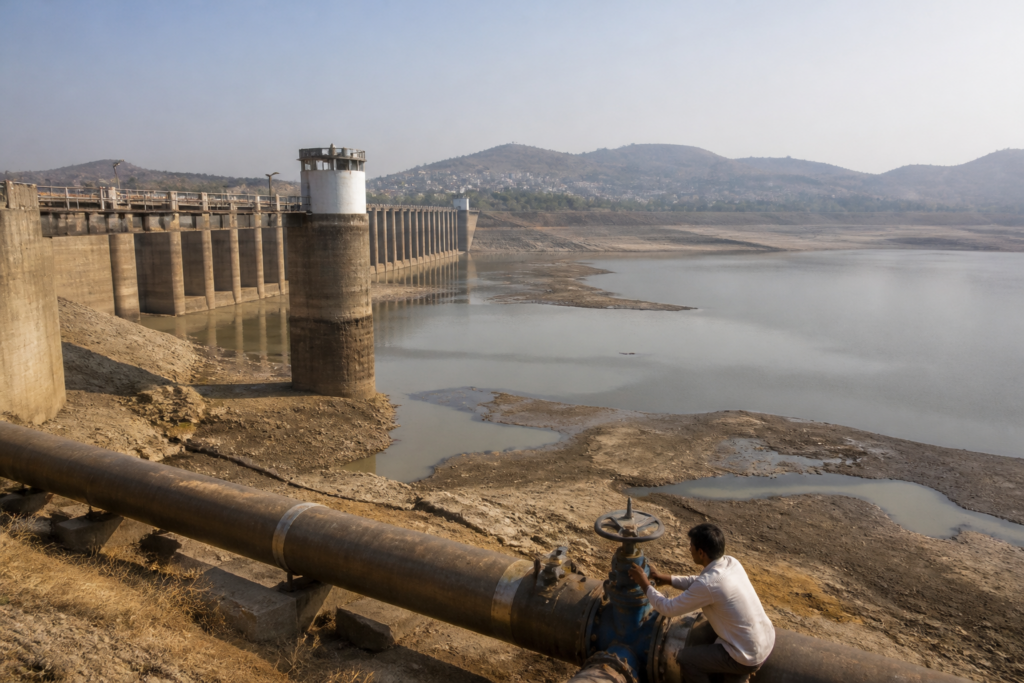
Pune’s water supply could face significant restrictions after district authorities said available storage in the Khडकवासला project was about 25% lower than usual and instructed local self-government bodies to plan for a 20% reduction in water use until August 31, 2027. The measures were discussed at a meeting chaired by Pune district collector Jitendra Dudi against the backdrop of a possible El Niño impact and drought declared in 265 talukas across Maharashtra.
The meeting was held at the district collector’s office and was attended by Pune Municipal Corporation commissioner Navalkishor Ram, Pune Zilla Parishad chief executive officer Gajanan Patil, Water Resources Department chief engineer Amol Kolhe, superintendent engineer Prithviraj Phalke and senior officials from the civic administration and other departments.
Officials said approximately 20 thousand million cubic feet (TMC) of water was available in the Khadakwasla project on October 15, excluding dead storage, evaporation and buffer reserves. The available quantity was estimated to be around 25% lower than the annual average. This will require tighter allocation as the same water systems serve drinking water and irrigation needs.
The Water Resources Department said Pune city may need to reduce its water supply by 25%. Phalke also proposed supplying water to the city on alternate days. The report did not specify whether the proposed reduction or alternate-day schedule has been formally approved, or when either measure would begin.
Local self-government bodies were instructed to plan for a 20% reduction in water use to ensure supplies continue until August 31, 2027. The instruction applies even though the Pavana, Bhama Askhed, Chaskaman and Nira irrigation systems were reported to have storage levels between 90% and 95%. Authorities said the longer supply period and competing demands require conservation planning across these systems.
The district administration said irrigation releases for the rabi season would be decided after assessing available storage. However, officials told the meeting that there may not be enough water remaining for a summer irrigation cycle after supplies are planned across all projects. As a result, summer irrigation releases may not be possible.
The water allocation plan follows a government decision dated October 5, 2026, under which the Water Resources Department has undertaken detailed planning for careful and economical use of available storage across different purposes. The administration said drinking water would receive priority in the allocation process.
Authorities also ordered the formation of joint flying squads comprising the revenue, Maharashtra State Electricity Distribution Company, police and Water Resources departments to prevent unauthorised water extraction. The teams will be empowered to seize pumps and motors used for illegal withdrawals. The electricity distribution department was instructed to disconnect power connections where water theft is detected.
Police deployment and preventive measures may also be arranged where required to manage law-and-order concerns. Collector Dudi said coordinated action by all departments would be necessary to reduce the risk of water shortages during the coming summer. The next steps will depend on storage assessments, allocation decisions and the implementation plans prepared by local bodies.


