

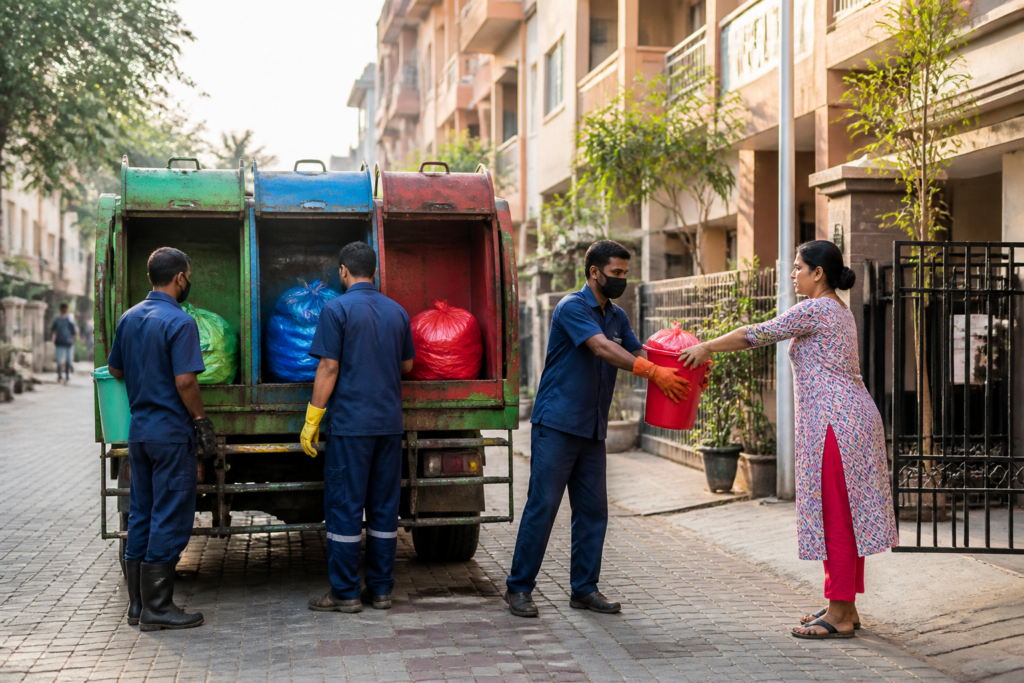
Pimpri’s sanitary waste system is facing a basic collection failure: residents are continuing to mix used sanitary pads and diapers with dry waste even though municipal collection vehicles have separate compartments for them. The practice is forcing waste pickers to handle sanitary material while sorting recyclable waste and is sending a significant share of the material into mixed waste streams.
The Pimpri Chinchwad Municipal Corporation’s City Climate Action Plan 2026 estimates that sanitary waste accounts for an average 10 per cent of the city’s total waste. The civic health department estimated that the city generated 1,389 tonnes of waste every day in 2025. Based on those figures, sanitary waste could amount to approximately 139 tonnes a day.
To prevent this material from entering the mixed waste stream, municipal garbage collection vehicles, commonly known as ghantagadis, have separate compartments for sanitary waste. Residents have also been instructed to use red bins for used sanitary pads and diapers. However, the civic system continues to face problems when these items are wrapped and handed over along with paper and other dry waste.
The issue becomes particularly difficult at the sorting stage, where waste workers separate paper and other recyclable material. According to the report, waste pickers have previously described the difficulties they face when sanitary products are found mixed with dry waste. The immediate consequence is additional handling of potentially contaminated material, while the wider effect is reduced efficiency in recycling and segregation.
The municipal corporation has repeatedly appealed to residents to separate waste before handing it to collection workers. The administration’s instructions cover wet waste, dry waste, domestic hazardous waste and sanitary waste. The civic body has also undertaken awareness activities through door-to-door contact, printed notices and campaigns in housing societies.
Residents say the collection arrangement alone may not be enough unless people are shown how sanitary products should be wrapped and handed over. “The ghantagadi has a separate compartment. However, everyone does not know how pads and diapers should be wrapped and given. If notices are displayed in housing societies and collection staff provide guidance, people will develop the habit of giving waste separately,” said Sangeeta Jagtap, a resident of Akurdi.
The city also lacks updated information on how much sanitary waste is being collected separately and how much continues to arrive mixed with other waste. Such records are important for assessing whether the separate-compartment system is working and for planning treatment capacity. The municipal corporation’s environmental report records that sanitary waste is being sent to landfill, indicating that separately collected sanitary waste is not currently undergoing a dedicated treatment process.
Municipal deputy commissioner Dr Pradeep Thengal urged residents not to mix wet and dry waste and to cooperate with the administration by separating waste into the prescribed streams before handing it to collection vehicles. The civic appeal places responsibility on households to segregate sanitary waste at source while the municipality continues its awareness and collection efforts.


