

Mulshi taluka in Pune district has been left out of Maharashtra’s drought-affected list, according to a report by Sakal, leaving farmers concerned that they will not receive a package of relief measures announced for 305 other talukas.
The measures include land revenue concessions, restructuring of crop loans, a stay on recovery of agriculture-related loans, and concessions on electricity bills for eligible agricultural pumps. Farmers in Mulshi are also expected to remain outside support measures covering examination fee waivers, expanded employment works, drinking-water tankers, protection against disconnection of agricultural power connections, foodgrain arrangements, cattle fodder and water conservation works.
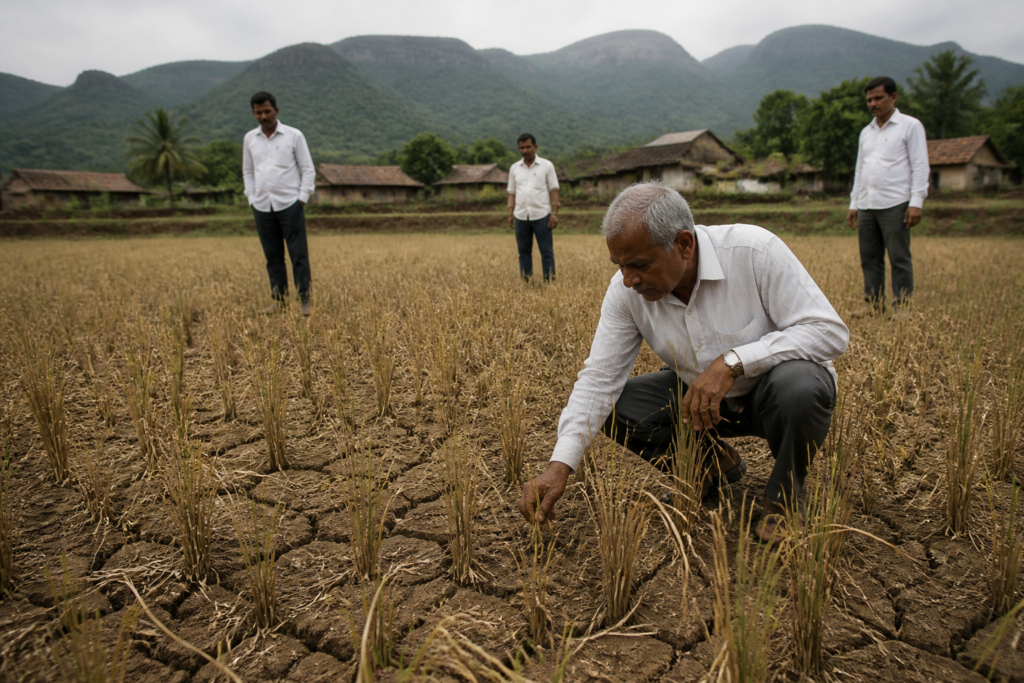
The exclusion has become a major concern in the taluka after farmers reported that rain had stopped across the area for about five weeks. According to the concerns reported by Sakal, the prolonged dry spell has damaged paddy crops during the kharif season, while farmers fear that the coming rabi season may also be affected.
The drought-relief package was extended as a special measure to 305 talukas after the government applied what farmers described as Trigger One criteria. Farmers have questioned why Mulshi was excluded when neighbouring Bhor and Rajgad talukas were included in the drought-affected list.
The dispute highlights how the classification of a drought-affected administrative area determines access to several forms of state support. Relief is not limited to direct compensation. It can also affect the timing of loan repayment, agricultural electricity supply, public employment works, drinking-water arrangements and fodder provision. For farmers, exclusion from the notified list can therefore influence both immediate assistance and the ability to manage the next cultivation cycle.
Local representatives and political leaders from different parties have reportedly raised the issue with officials ranging from the tehsildar to the chief minister. A bullock-cart march was also organised, but farmers said the government had not yet taken action on their demand to include Mulshi in the drought-affected category.
Farmers have also raised the issue of pending compensation for crop losses caused by rainfall between June and October last year. The Sakal report said affected farmers were still waiting for compensation and that the position of the government and administration on the matter remained unclear.
Another concern relates to crop insurance. Farmers who purchased crop insurance this year fear that the absence of a formal drought declaration could create difficulties in securing claims, even though they describe conditions in the taluka as drought-like. The report does not provide details of the number of insured farmers or the process being followed for assessing their claims.
The farmers’ demands also raise questions about how drought conditions are assessed across adjoining talukas. While Bhor and Rajgad have been included in the notified list, Mulshi farmers are seeking an explanation for the different treatment of their area. The government’s stated criteria, the assessment data for Mulshi and the administrative basis for its exclusion were not included in the report.
The immediate issue now is whether the state government will review Mulshi’s status and extend the twelve relief measures to the taluka. Until such a decision is taken, farmers in the area face uncertainty over loan restructuring, electricity support, drinking water, fodder and compensation for crop losses.


