

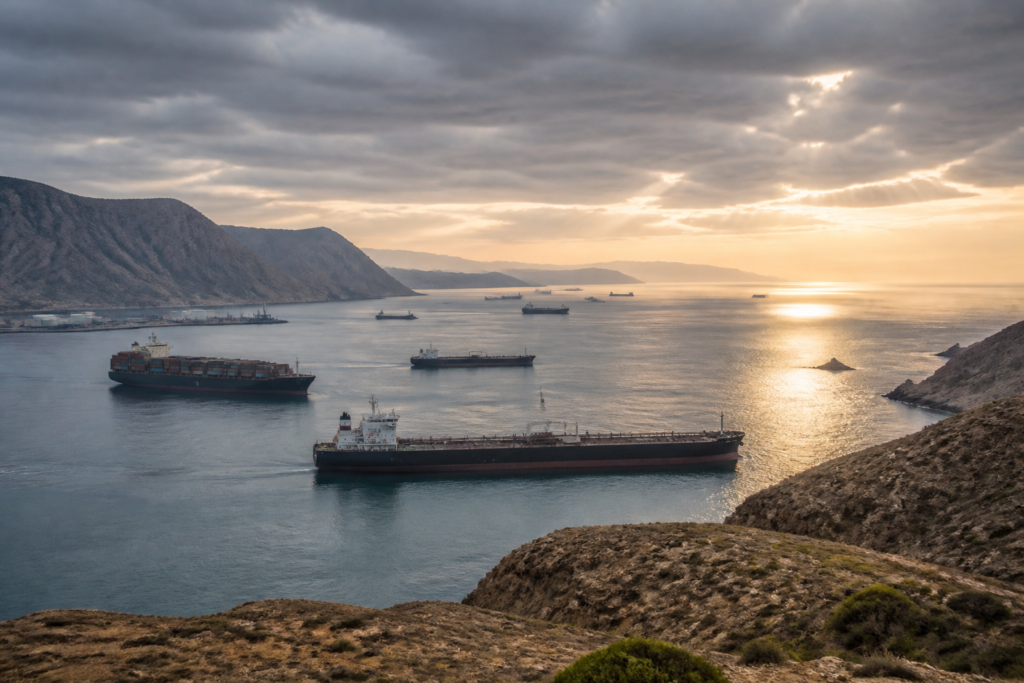
Oil prices fell by more than $1 in early trade on Thursday even as investors assessed the risk of further disruption to shipping through the Strait of Hormuz and the possibility of US sanctions relief for some oil-carrying vessels.
Brent crude declined 1.30% to $104.70 a barrel, losing $1.38, while West Texas Intermediate fell 1.07% to $94.07, down $1.02, according to the report. The fall followed a sharp rise in WTI during the previous session, when the benchmark reached a three-week high.
The recent rally came after attacks linked to the wider regional conflict. The report said the Houthis attacked Saudi Aramco’s headquarters, while Iran announced new tactics to target vessels travelling through the Strait of Hormuz, saying the objective was to keep oil prices elevated. Maritime traffic in the surrounding waters has remained under pressure.
Two vessels—a container ship and a dry bulk carrier—sank near the strait within 24 hours after separate projectile strikes, maritime officials said on Wednesday, according to the report. Attacks in nearby waters have increased over the past 10 days, adding to concerns about the security of a major route for oil and other cargo shipments.
Iran has said it is intensifying strikes in retaliation for the US blockade of Iranian ports and tougher sanctions imposed last month. The disruption linked to the conflict has pushed freight costs to record highs, raising the significance of shipping conditions for energy markets and cargo movement.
The Trump administration is considering easing restrictions on vessels used to transport oil from sanctioned countries, a US official said on Wednesday. The possible relief would apply to so-called shadow fleet vessels that have carried oil and petroleum products from Russia, Iran and Venezuela. The measure is intended to help reduce petroleum shipping costs, the report said.
Supply from Russia and the Middle East has also helped contain the upward pressure on prices. Russia’s crude oil output rose by 65,000 barrels per day in September to 8.43 million barrels per day, according to the International Energy Agency. Production, however, remained 870,000 barrels per day below the level recorded a year earlier.
The IEA also reported that crude oil exports from Middle East Gulf producers increased by 4.4 million barrels per day in September. Exports reached approximately 75% of their prewar levels, indicating that supply has not fallen as sharply as the security situation might suggest.
For cities and businesses, the immediate market movement matters through the cost of fuel-intensive transport, freight and other petroleum-linked activities. The supplied report does not establish how the latest price change will affect retail fuel prices or urban transport fares. It does, however, show that shipping security, sanctions decisions and production levels are moving together in an already volatile oil market.
The US-Iran conflict has continued for more than seven months, keeping markets unsettled. The current price increase remains below the $126-a-barrel levels recorded earlier in the crisis. Investors are now weighing further maritime attacks, possible US sanctions relief and the next supply figures as the main factors shaping prices.


